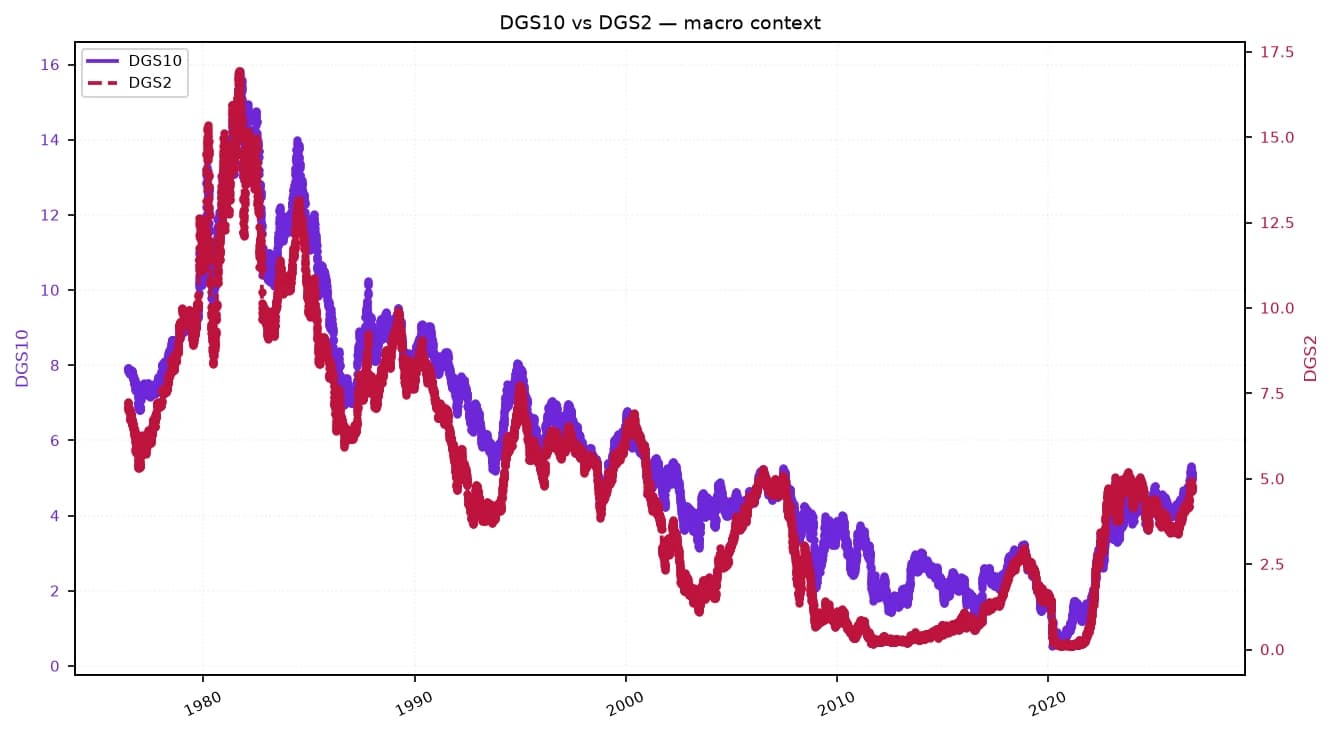
The 10-year Treasury yield has slipped back below 5% as traders rush into government debt, a sharp reversal that suggests markets are increasingly worried about slowing growth rather than just inflation.
10-Year Treasury Yield Falls Below 5%

The move matters because Treasuries are once again acting like a haven, not a casualty of higher rates. A 19-basis-point drop in the 10-year yield was the largest single-day decline since March 10, 2023, when Silicon Valley Bank failed, underscoring how quickly the tone in rates can change when investors start to question the economic outlook.
Sentiment Indicators
That shift is hitting the market in two ways. First, it is squeezing investors who had been betting yields would keep rising and forcing some to cover short Treasury positions. Second, it is reviving demand for duration just as concerns build around the funding costs and payback risk tied to the AI investment boom.
Oil’s move higher at the same time makes the signal more striking. For much of the past year, rising crude prices and rising yields moved together on inflation worries; now, falling Treasury yields alongside firmer oil prices point to a market that is more focused on a potential growth scare than on a simple inflation trade.
DGS10 vs FEDFUNDS — macro contextadalytica.com
Explore this data interactively — full history, time series and cross-market comparisons.

Evercore ISI vice chair Krishna Guha framed the shift as a reminder that Treasuries are a poor hedge against supply shocks but a good hedge against a deflationary AI bust. That distinction matters for portfolio positioning because it ties the bond rally not just to macro nerves, but to a reassessment of the durability of the AI-led investment cycle that has powered much of the equity market.
For stocks, lower yields can ease financing pressure and support valuation multiples, but the reason behind the rally matters more than the rally itself. If the move reflects a deeper slowdown, it could eventually outweigh any valuation lift and put the broader risk complex under pressure.
Investors now turn to the Federal Reserve for the next read on whether policy makers see the same weakening in growth expectations that the bond market is pricing in.
| Entity | Gains | Losses |
|---|---|---|
| Treasury bulls | ▲Higher bond prices | ▼Short positions |
| Rate-sensitive stocks | ▲Lower discount rates | ▼Banks with bond losses |
| AI-heavy equities | ▲Cheaper funding narrative | ▼Expensive capex assumptions |
| Fed watchers | ▲Clearer growth signal | ▼Confidence in a soft-landing call |