100% mortgages do exist, but in the current U.S. market they are a niche product: expensive, tightly underwritten and available mainly to highly solvent borrowers.
100% Mortgages Stay Niche as Rates Pinch Buyers
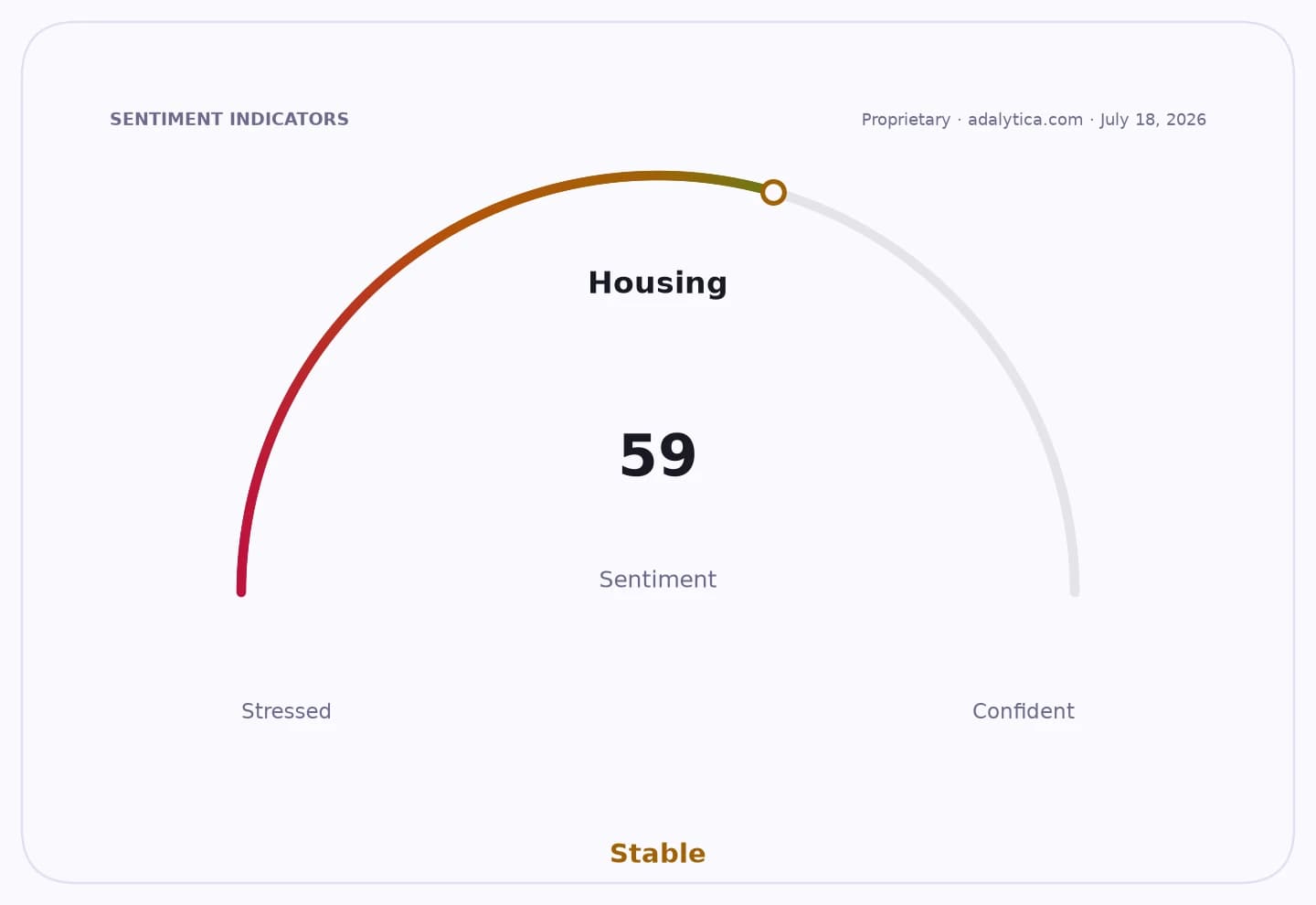
That matters because the barrier to buying a home is still being set by financing costs, not just house prices. The average 30-year fixed mortgage rate is running at 6.55%, near the highest levels of the year and above the 6.43% seen at the start of July, while the latest forecast points to only a modest pullback to 6.534% next week. At those rates, full-financing loans become a tool for a narrow slice of buyers rather than a broad-based answer to affordability.
The housing backdrop is still strained. U.S. housing starts fell to an annualized 1,199,000 in May before rebounding to 1,427,000 in June, but the forecast for July points to a drop to 1,333,300. Home prices, meanwhile, remain far above pre-pandemic levels, with the S&P CoreLogic Case-Shiller index at 332.678 in April versus 308.065 in June 2022, leaving many would-be buyers squeezed between expensive homes and high borrowing costs.
For lenders, that keeps the 100% mortgage market selective and profitable. Banks and mortgage originators are limiting residential loans mostly to prime borrowers, pricing the risk into the loan, and leaning on collateral or compensating factors such as strong income and cash flow. That protects balance sheets, but it also means these loans are not a mass-market fix for affordability.
MORTGAGE30US vs HOUST — macro contextadalytica.com
Explore this data interactively — full history, time series and cross-market comparisons.Open AlphaPulse
Investors are watching the implications for the biggest mortgage and bank names. Wells Fargo, which remains exposed to housing credit and mortgage origination, has seen its shares rise to $87.51 from $73.58 in May, while JPMorgan has climbed to $341.10 from $294.37 over the same span. Rocket Companies, a direct mortgage play, has lagged, slipping to $14.54 from $20.06, underscoring how tough the financing environment remains for pure lenders even as large diversified banks regain momentum.
The policy backdrop adds another layer of caution. Fresh regulatory guidance has already led to a wave of rejected loan applications and sharpened scrutiny of consumer treatment, reinforcing the idea that full-financing products will stay punctual, expensive and restricted to the most solvent profiles. Unless mortgage rates ease meaningfully or home-price growth slows, 100% loans are likely to remain a small, high-margin corner of the market rather than a driver of a housing recovery.
| Entity | Gains | Losses |
|---|---|---|
| Prime borrowers | ▲Access to full financing | ▼Higher borrowing costs |
| Banks/mortgage lenders | ▲Higher margins on niche loans | ▼Smaller addressable market |
| Homebuyers without strong balance sheets | ▲Limited access | ▼Affordability stays constrained |
| Rocket Companies | ▲Potential volume from niche demand | ▼Pressure from weak mortgage market |