The biggest labor-market change now is not more jobs, but a wholesale rewiring of how work is measured, rewarded and staffed — and that is becoming a real investment theme for human-capital software, payroll and compliance providers.
ADP, Workday gain from pay transparency rules
That was the message from Zagreb’s Startover conference, where more than 200 attendees and a roster of HR leaders, executives and policymakers argued that the classic eight-hour office day is already obsolete for a growing share of employers. The shift matters because it is moving from conference-stage rhetoric into corporate operating models just as Europe’s pay transparency rules, hybrid work practices and skills shortages are forcing companies to rebuild their labor systems.
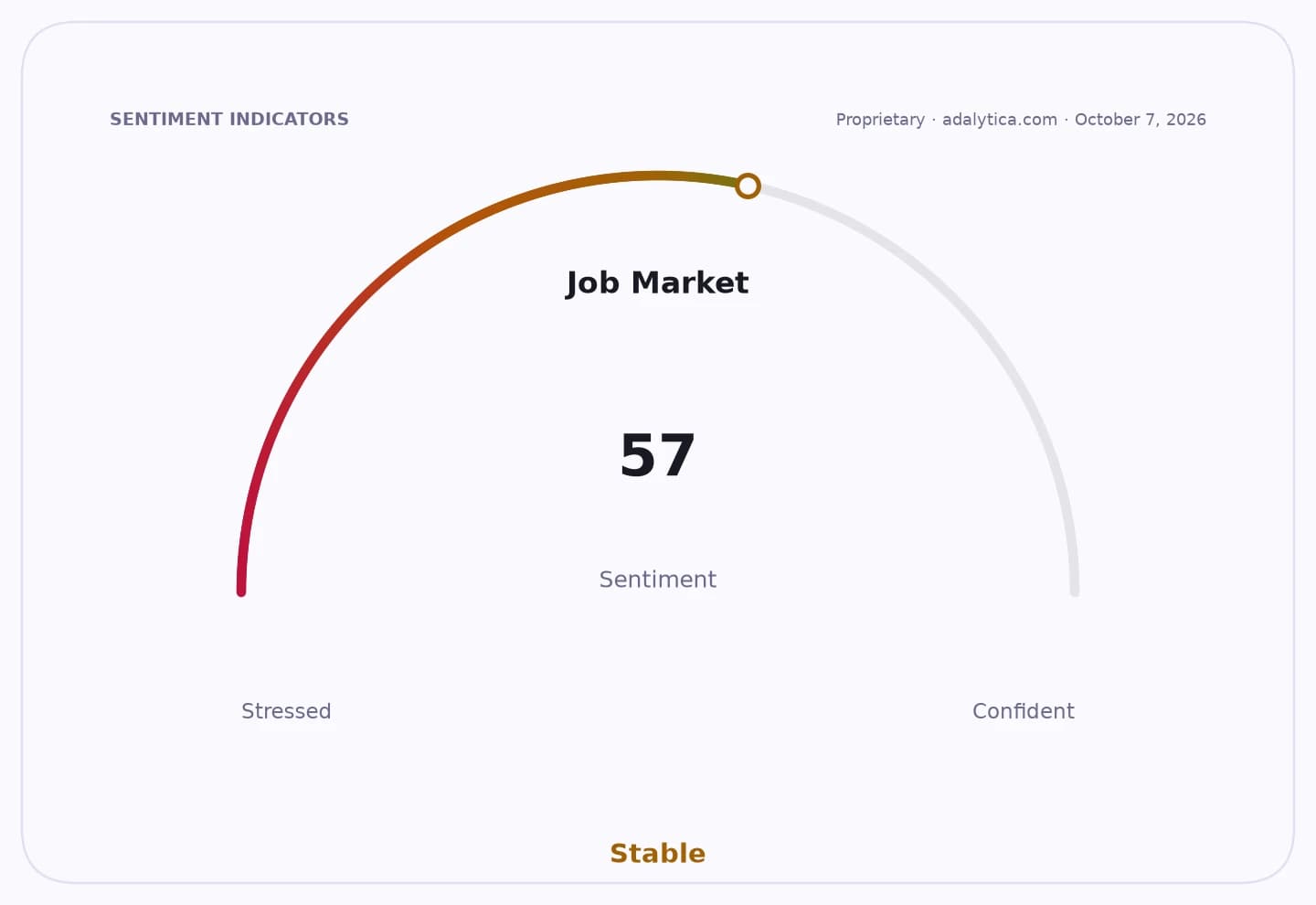
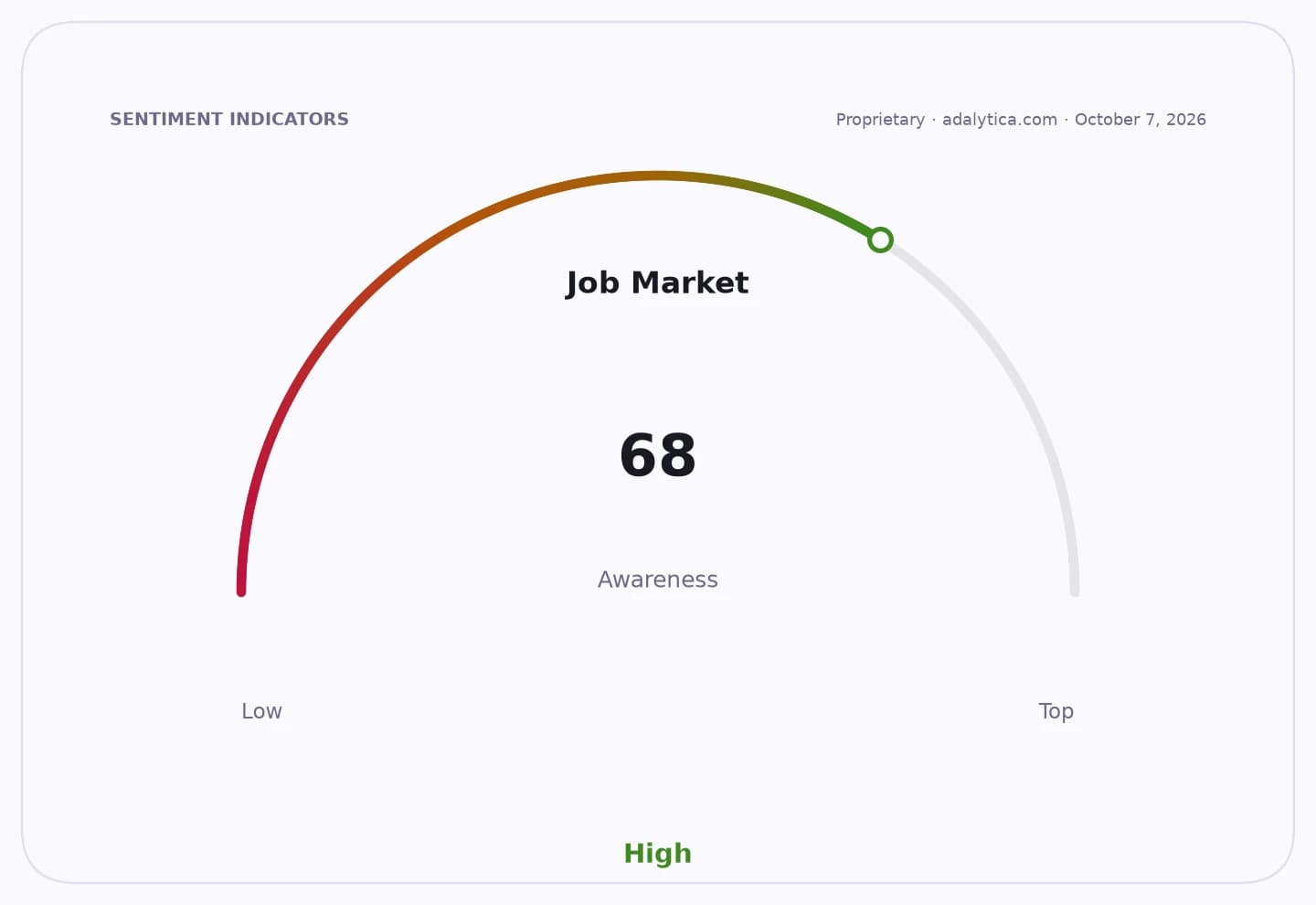
Sentiment IndicatorsⓘProprietary · adalytica.com · October 7, 2026
This is a snapshot — live sentiment, awareness and momentum for 130+ markets update continuously in the dashboard.Open AlphaPulse
The most direct takeaway for investors is that labor is becoming more data-driven and more regulated at the same time. Companies can no longer rely on opaque wage bands, legacy job titles and rigid schedules. They need software and consulting to value roles, track performance by output, manage mixed workforces and document compliance. That creates a secular tailwind for the infrastructure around work — from payroll and human-capital management platforms to firms that help employers prepare for pay disclosure rules and workforce redesign.
At the conference, speakers from Holcim Hrvatska, Telemach Hrvatska, INA and KONČAR said they have been preparing for Europe’s pay-transparency directive by mapping jobs, standardizing criteria and redesigning compensation frameworks. That is not a cosmetic exercise. It forces companies to confront internal pay gaps, harmonize grading across business units and defend promotion decisions in public. For large employers, especially conglomerates with multiple subsidiaries, the compliance burden can become a permanent operating cost.
The other big message was that work itself is changing. Alma Career Croatia’s Siniša Komnenović said the “eight-hour model, with a half-hour lunch, is outdated” and that performance should be measured through agreed tasks. That view is increasingly mainstream, especially as hybrid work normalizes output-based management and companies rely more heavily on external specialists and gig labor. In other words, the labor market is moving away from hours sold and toward outcomes delivered.
That has implications well beyond Croatia. Europe’s aging workforce, skills mismatch and chronic labor shortages are making flexibility less of a perk and more of a necessity. Employers that cannot adapt risk losing talent, particularly women and younger workers who now expect more autonomy, clearer pay structures and better work-life design. The state secretary at Croatia’s Ministry of Demography and Immigration reinforced that point by highlighting predictable shifts, extra days off and phased returns after parental leave as tools to keep workers attached to the labor force.
For investors, the opportunity is in the picks-and-shovels. ADP, with its scale in payroll and compliance, is one obvious beneficiary of the broader move toward regulated, digitized labor administration. Workday is another, given its role in workforce planning and the market’s demand for systems that can handle hybrid work, pay governance and organizational redesign. Workiva also stands to benefit as companies need better reporting and audit trails around compensation, ESG-linked workforce policies and regulatory documentation.
The market underestimates how structural this change is. A one-off pay survey or policy update does not capture the bigger trend: companies are being forced to industrialize HR. That means more software seats, more consulting spend and more recurring revenue tied to labor compliance rather than discretionary HR projects. It also means businesses that cling to old staffing models will face higher turnover, weaker engagement and slower hiring.
The inclusion panel pointed to a similar pattern. Speakers argued that employing people with disabilities works when organizations prepare managers, adapt processes and build a culture around inclusion rather than treating it as a legal checkbox. That is another sign that labor market advantage is shifting toward companies that can operationalize flexibility and inclusion at scale.
My view is simple: the eight-hour workday is not disappearing overnight, but the pricing power in labor is moving toward firms that can measure output, manage complexity and comply with tougher rules. That makes the next wave of winners the software and service companies that sit between employers and a more fragmented, more transparent labor market. Investors should treat work redesign, pay transparency and hybrid staffing as a multi-year capex cycle for corporate operating systems.
| Entity | Gains | Losses |
|---|---|---|
| ADP | ▲Payroll and compliance demand | ▼Legacy manual HR processes |
| Workday | ▲Workforce planning upgrades | ▼Rigid time-based management |
| Workiva | ▲Reporting and audit needs | ▼Opaque pay systems |
| Employers adapting early | ▲Better retention and hiring | ▼Compliance shocks and turnover |