The far-right Alternative for Germany is now polling clearly ahead of the governing bloc in a sign that political fragmentation in Europe’s largest economy is becoming a market risk, not just an electoral one.
AfD Surge Raises Germany Policy Risk
That matters because Germany sits at the center of the euro zone’s industrial base, fiscal policy debates and coalition politics. When the AfD pulls ahead of mainstream parties, it raises the odds of a more volatile policy environment, tougher coalition math and a louder anti-establishment agenda at a time when growth is already fragile and investors are looking for evidence that Berlin can still deliver reform.
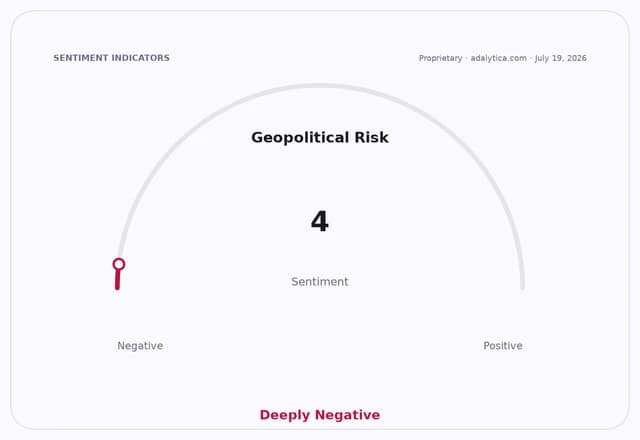
The latest evidence from Germany’s state-level political mood is not a one-off protest vote but a widening challenge to the traditional parties. The AfD’s campaign launch in Saxony-Anhalt underscores how the party is trying to convert discontent over migration, living costs and economic stagnation into durable regional power. Its leaders are framing the party as a potential governing force rather than a perpetual opposition movement, which is significant because it normalizes the far right as a fixture in policymaking debates even where coalition barriers remain high.
For investors, the issue is less about the AfD immediately taking power in Berlin and more about what sustained strength means for policy continuity. A stronger AfD complicates fiscal expansion, climate policy, labor-market reform and Germany’s stance on European integration. It also raises the chance that mainstream parties respond with more defensive, less ambitious platforms, which could weigh on the structural reforms investors have long wanted in Europe’s biggest bond market and manufacturing hub.
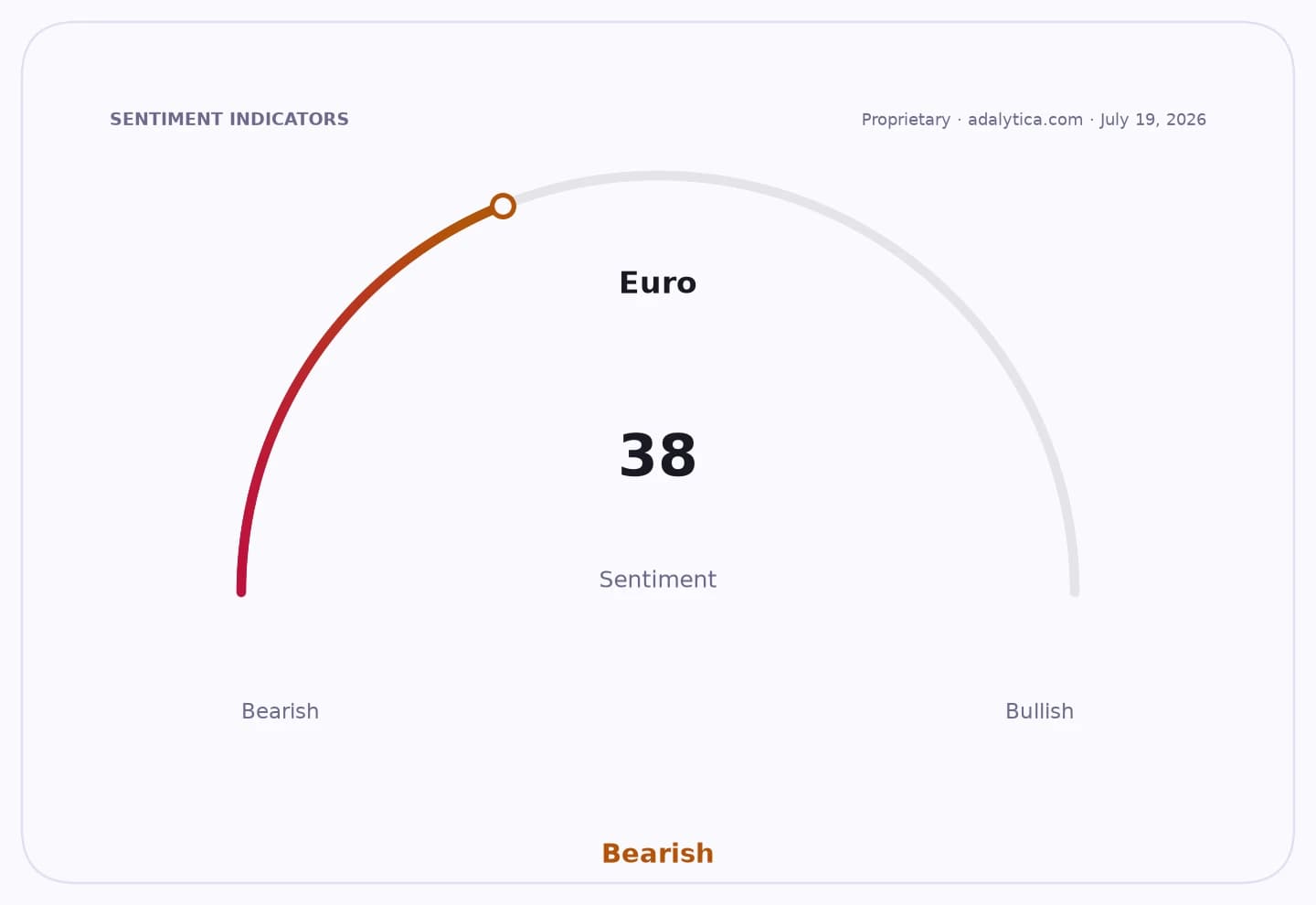
Euro — 30-day sentimentadalytica.com
Explore this data interactively — full history, time series and cross-market comparisons.Open AlphaPulse

The market backdrop suggests political risk is already being priced more cautiously. German equities, as reflected by the EWG ETF, have been trading well below earlier-year levels and sit only modestly above their 200-day moving average, a sign of a market that is not assigning a strong growth premium to Germany. The DAX has also lost momentum after a mid-year rally, with the benchmark hovering near its 50- and 200-day averages and momentum indicators softening. That does not mean the AfD alone is driving markets, but it does show investors are unwilling to overlook Germany’s political drift.
The euro is offering a similar read. Adalytica’s Euro Trade Signals show neutral sentiment but extremely low awareness, while global stability sentiment is in extreme fear territory. In practice, that combination usually reflects a market that is alert to political and macro shocks but not yet committed to a strong directional trade. For Europe, the risk is that Germany’s political uncertainty becomes another reason global capital prefers the US or other higher-growth markets.
The bullish case for Germany is that the mainstream bloc still has institutional advantages and can contain the AfD while preserving policy continuity. The bearish case is that repeated gains by the far right erode the credibility of centrist coalitions, making Germany harder to govern and slower to adapt to weak competitiveness, high energy costs and external trade pressures. That second scenario would matter for exporters, banks, utilities and industrials across the euro zone.
What investors should watch next is whether the AfD’s polling edge broadens beyond protest sentiment into a sustained governing narrative. If it does, the economic implications go beyond one election cycle: Germany could face a longer period of policy caution, weaker reform momentum and a higher political risk premium in European assets.
| Entity | Gains | Losses |
|---|---|---|
| AfD | ▲Polling momentum | ▼Mainstream isolation |
| Governing bloc | ▲Coalition urgency | ▼Electoral support |
| German exporters | ▲Policy continuity | ▼Reform delay |
| Euro zone assets | ▲Clarity if contained | ▼Higher political risk |




