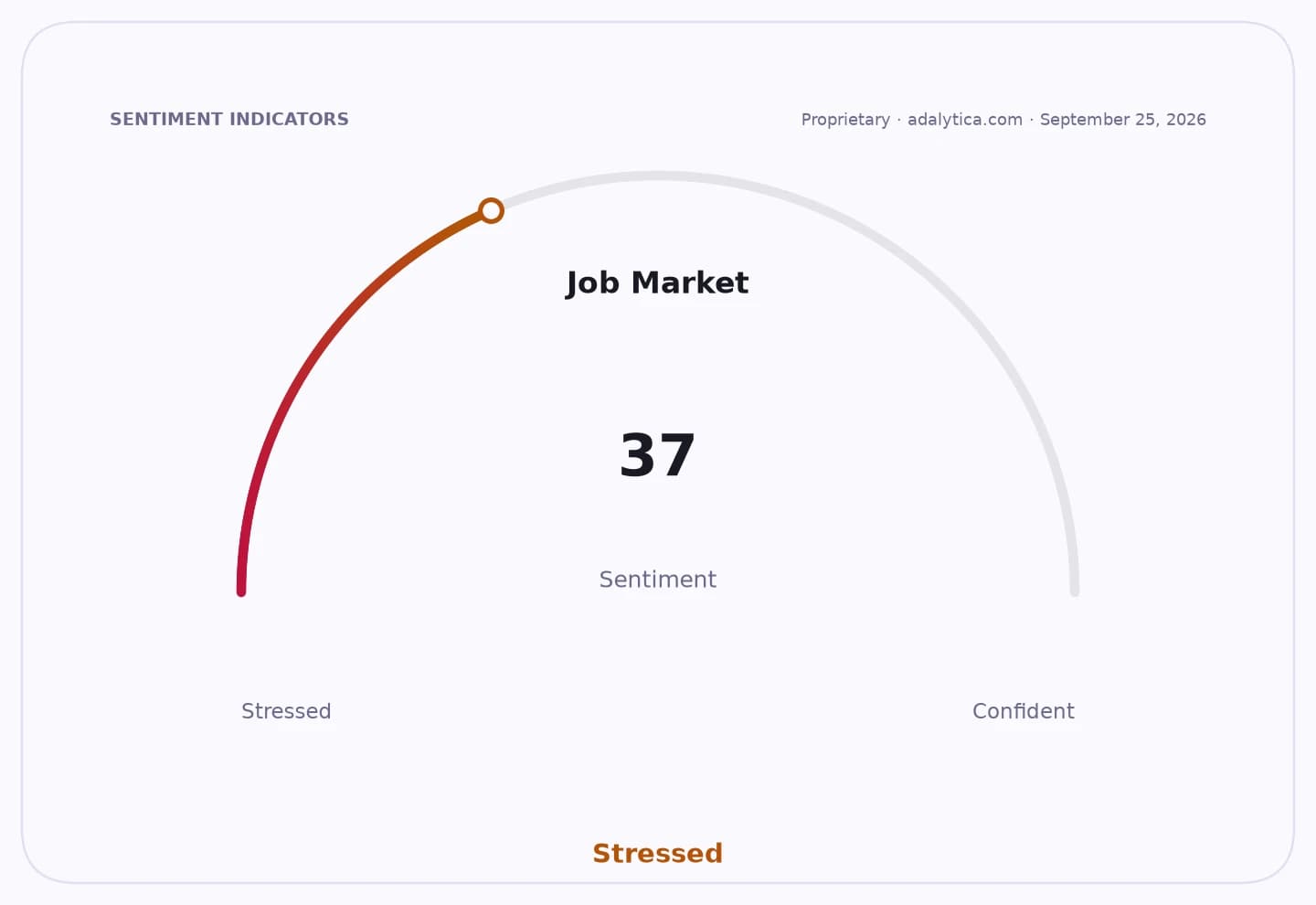
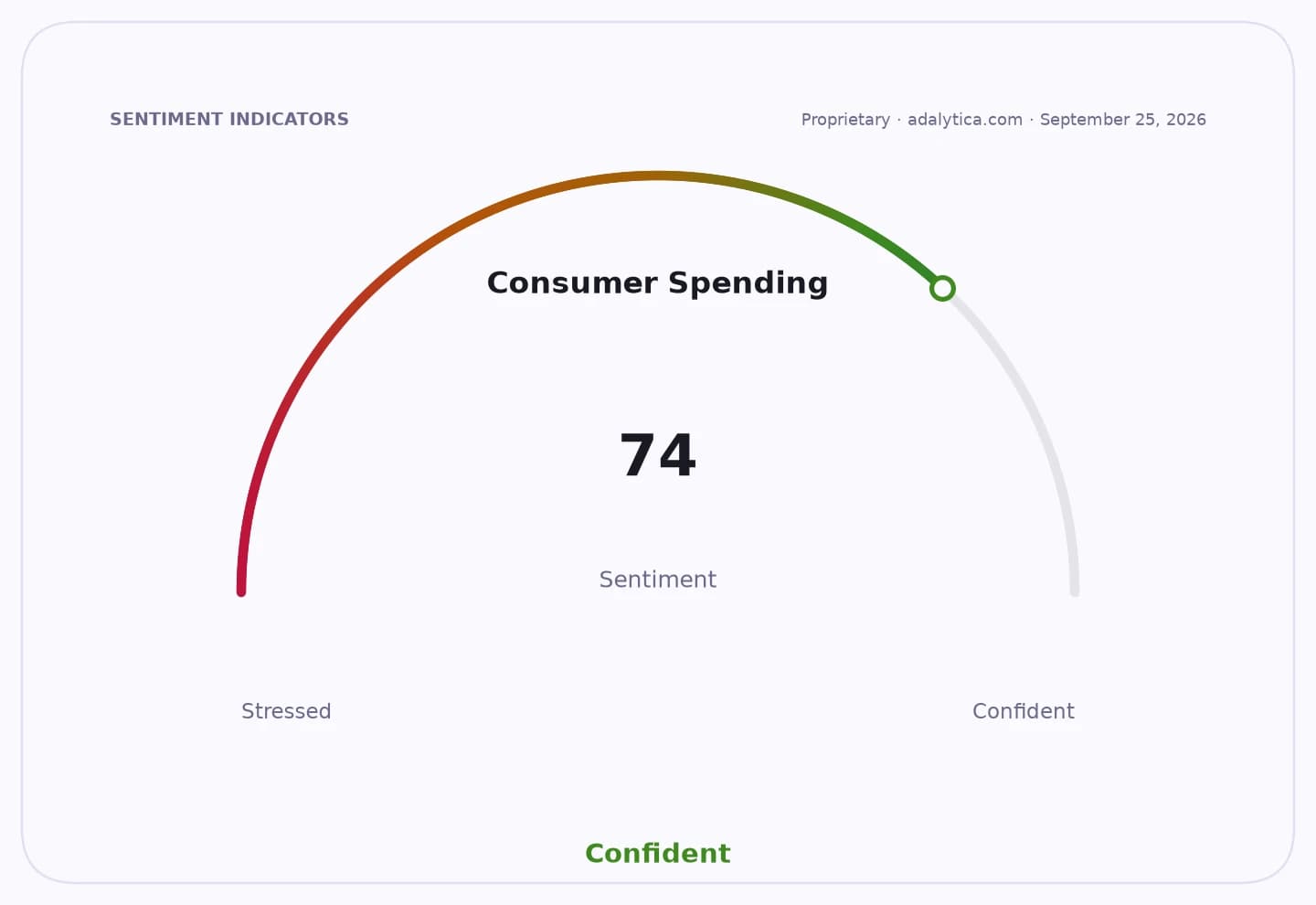
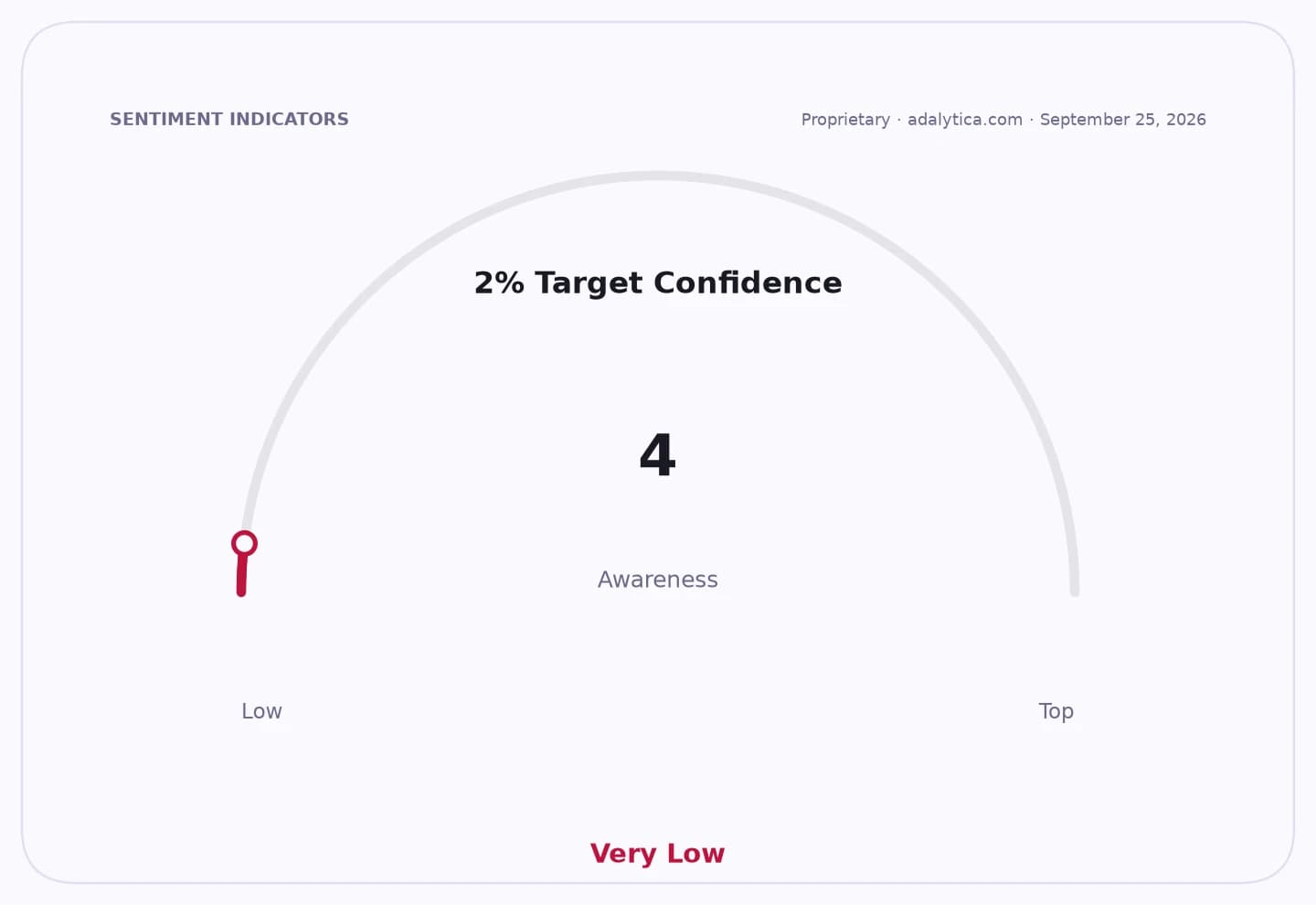
Alphabet and Amazon are under pressure as investors begin to question whether the next leg of their AI buildout will pay back fast enough to justify the spending, a shift that risks dragging both stocks lower as “no-conviction” holders step aside.
AI Capex Fears Pressure Alphabet and Amazon
The market is moving from rewarding artificial intelligence investment to scrutinizing the bill. That matters because the AI rally has been built not just on faster growth, but on the assumption that cloud, advertising and e-commerce leaders can keep pouring cash into data centers, chips and networking gear without damaging returns. When the market starts to doubt that assumption, the multiple compression can be swift.
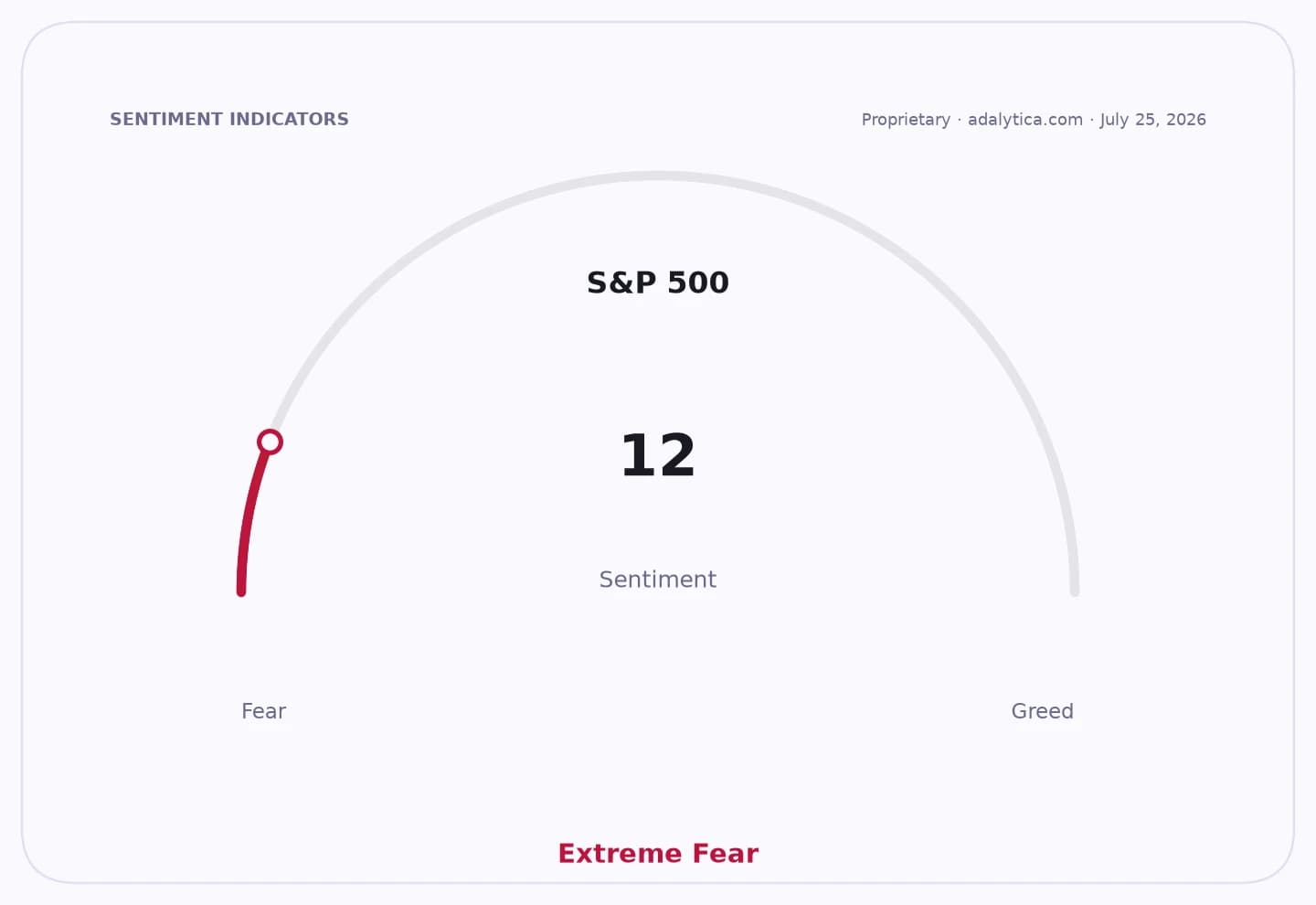
Sentiment IndicatorsⓘProprietary · adalytica.com · July 25, 2026
This is a snapshot — live sentiment, awareness and momentum for 130+ markets update continuously in the dashboard.Open AlphaPulse
Alphabet’s latest numbers have already shown the tension. Its cloud revenue is still growing strongly, but investors were disappointed by capital spending, a sign that the market wants clearer evidence that incremental spending is translating into durable earnings power. The company’s 10-Q also points to heavy investment in technical infrastructure, including servers, network equipment and data-center construction, and to a roughly $24.1 billion backstop tied to data-center and energy infrastructure. That is the sort of commitment that can support long-term capacity, but it also raises the near-term burden on free cash flow.
Amazon faces the same basic problem, only with a different business mix. The stock has been trading well below its recent highs, and the chart has softened: shares are sitting below the 50-day moving average, while the relative strength index has fallen into the high-30s, a sign of fading momentum after a sharp run-up earlier this year. Investors are now weighing whether Amazon’s spending on logistics, cloud capacity and AI infrastructure will preserve its competitive position or simply defer margin expansion.
That is why big capex numbers can be a catalyst for selling even when top-line fundamentals are intact. Long-only investors with conviction may look through the spending if they believe the returns on capital will emerge later. But less committed holders often do not wait for that proof. They sell first, especially when technicals weaken and the broader market mood turns defensive. The result can be an exaggerated move lower, particularly in the megacap tech names that have carried the index.
The backdrop is already fragile. Adalytica’s S&P 500 trade signal shows extreme fear, while its Treasury bond signal reflects strong demand for safety. At the same time, a selloff in semiconductor shares has reminded investors that the AI ecosystem is expensive to build and not evenly shared across the supply chain. That creates a tougher environment for any company asking shareholders to tolerate another year of heavy investment.
The bull case is straightforward: Alphabet and Amazon are building the infrastructure that underpins the next phase of cloud and AI demand, and scale advantages could widen if rivals pull back. The bear case is equally clear: capex may stay elevated for longer, free cash flow may look weaker than the market expects, and a higher bar for returns could compress valuations.
For investors, the key issue is no longer whether AI spending is real. It is whether the market is still willing to finance it at premium multiples. If upcoming earnings confirm another large step-up in capex without a corresponding lift in near-term profitability, both stocks could see further de-rating before fundamentals catch up.
| Entity | Gains | Losses |
|---|---|---|
| Alphabet | ▲Long-term cloud capacity | ▼Near-term free cash flow |
| Amazon | ▲AI and logistics scale | ▼Margin expansion hopes |
| Conviction buyers | ▲Buy the dip opportunity | ▼Need to wait for payoff |
| No-conviction holders | ▲Exit before downgrade risk | ▼Exposed to valuation compression |