Artificial intelligence is already reducing job postings in the most exposed occupations, with a Coface study estimating 25,000 fewer ads at France Travail in the third quarter alone and showing the squeeze extends beyond entry-level roles to experienced workers as well.
AI cuts France Travail job postings in exposed roles
Artificial Intelligence
The French credit insurer said generative AI has cut recruitment in jobs where a larger share of tasks can be automated, turning an abstract productivity theme into a measurable labor-market hit. For occupations with 10% AI exposure, the number of France Travail listings fell 12.4% in the quarter, while similar declines were seen in Germany and Sweden, suggesting the effect is not tied to one economy or labor system.
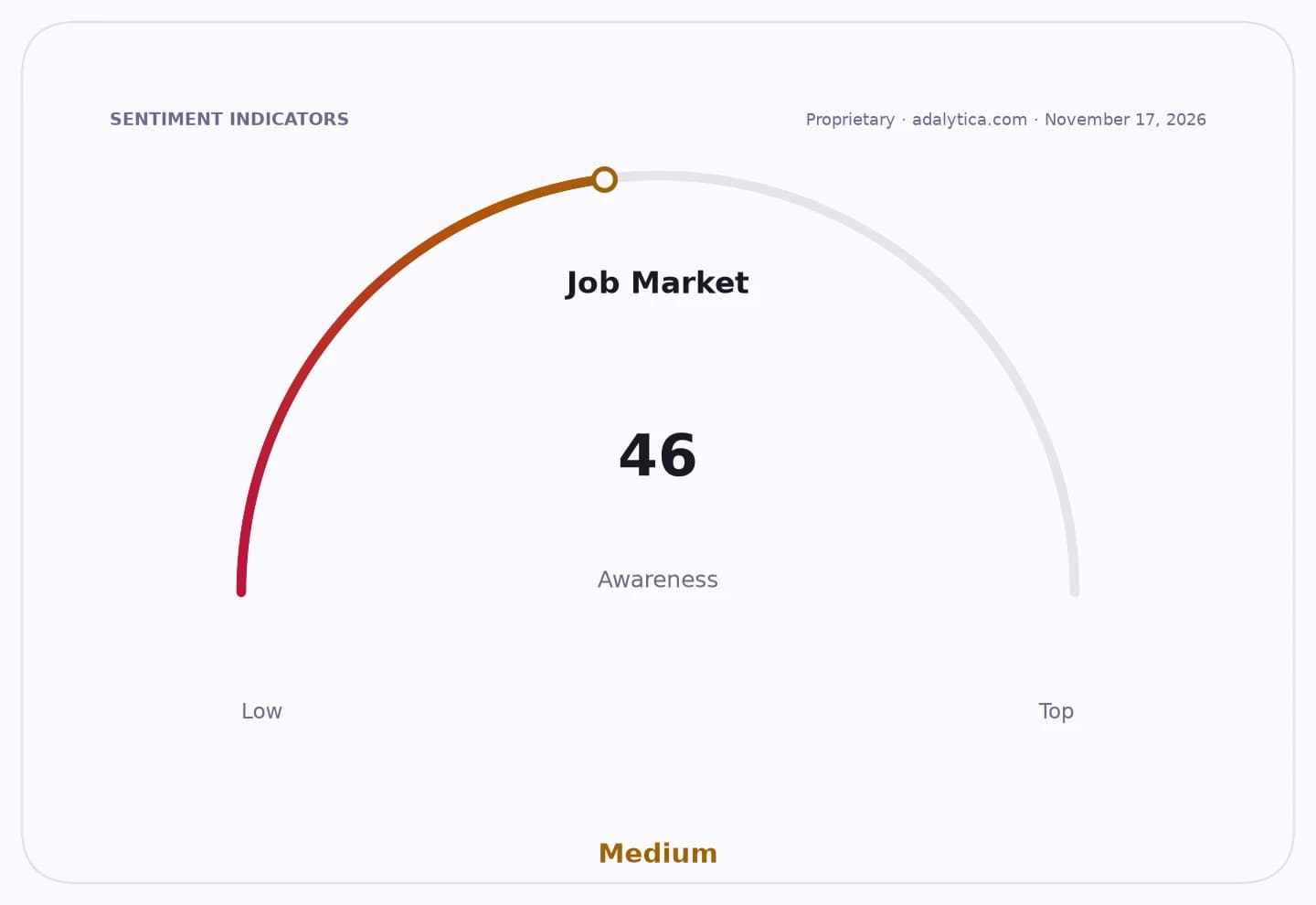
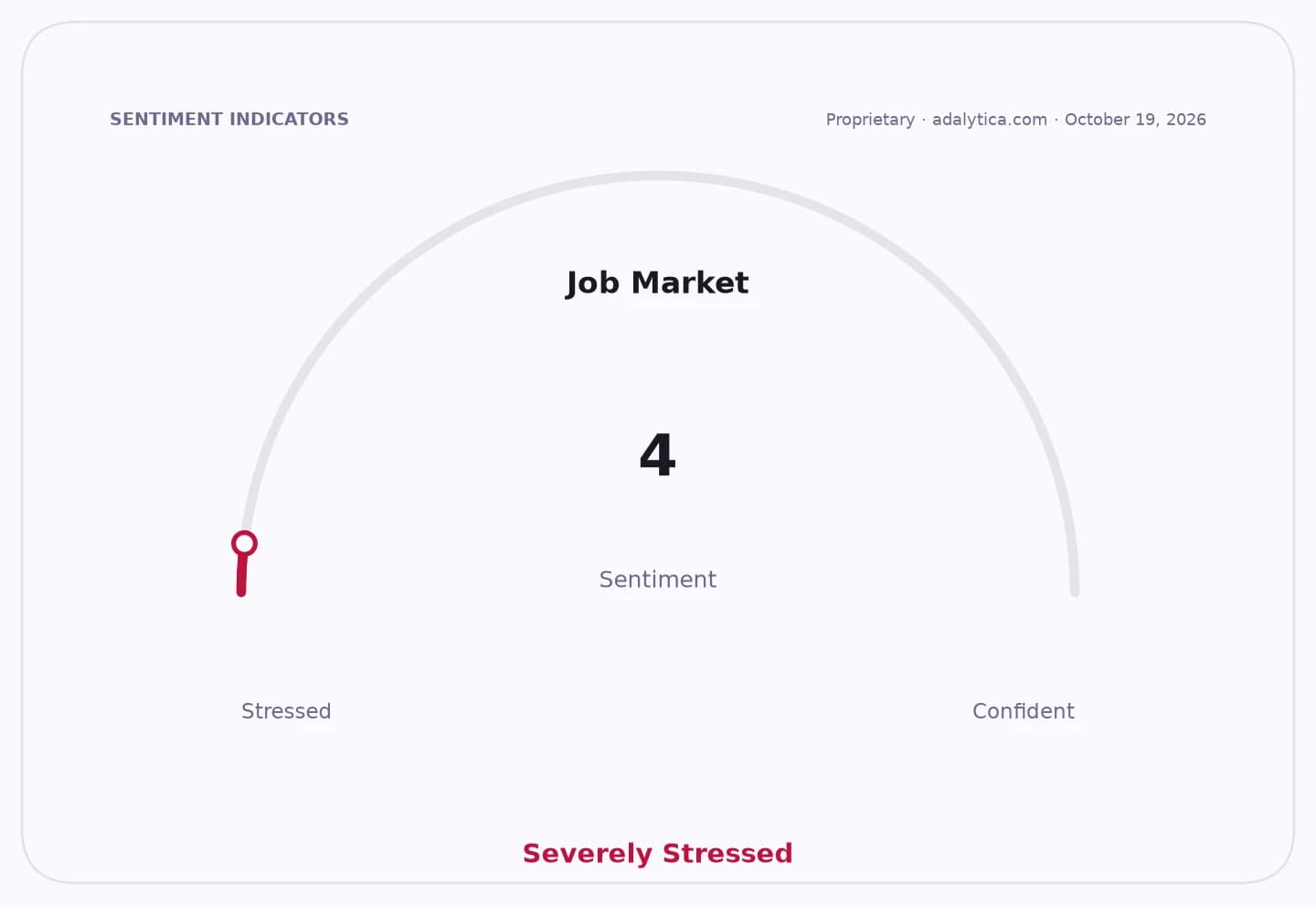
Sentiment Indicators
The biggest pressure is showing up in cross-company support functions that are common across industries. Human resources, where Coface said 25.9% of tasks are already automatable, saw job ads plunge 42.8% versus the average for sectors where those roles exist. Sales, telemarketing, accounting, IT and telecoms, and engineering and R&D in industry and construction were also cited among the most affected fields.
That matters economically because fewer openings in white-collar support roles point to slower hiring rather than immediate mass layoffs. Coface said European companies are still waiting to see how best to deploy AI, but warned that once a downturn forces cost cutting, automation could accelerate sharply.
The findings also underscore a shift investors are watching closely: AI is no longer just boosting output, it is starting to reshape labor demand. Coface said the slowdown is not confined to new entrants, with job ads down 14% for roles requiring less than one year of experience and still down for workers with more than four years on the job, challenging the idea that only young workers face the first wave of disruption.
For investors, the study reinforces the case that AI winners may increasingly be software and infrastructure providers, while companies with high exposure to clerical, administrative and support functions face longer-term workforce pressure and possible margin relief. In the U.S., the authors said white-collar employment growth has already weakened since the public launch of generative AI in late 2022 even as value added per job rose.
France Travail’s own observatory separately flagged assistant accountants, legal assistants and administrative secretaries as among the roles most vulnerable to substitution, with secretarial job ads down about 40% since 2022. The next test will be whether the current hiring slowdown deepens into broader job losses as businesses move from experimentation to large-scale deployment of AI.
| Entity | Gains | Losses |
|---|---|---|
| AI software and infrastructure providers | ▲More enterprise adoption | ▼Longer-term labor disruption |
| Employers in HR, sales, accounting | ▲Potential productivity gains | ▼Lower hiring demand |
| Job seekers in exposed roles | ▲Possible reskilling opportunities | ▼Fewer vacancies |
| Workers in Europe’s white-collar support jobs | ▲Some protection for now | ▼Rising automation pressure |