The Reserve Bank of Australia says artificial intelligence is already starting to alter hiring patterns, with younger workers appearing most exposed even as the central bank sees no evidence yet of broad labour-market disruption.
RBA says AI is reshaping Australia hiring patterns
That matters because the first economic effects of AI may show up less in headline unemployment than in the composition of demand for labour, wages and entry-level opportunity. If firms are advertising for roles that explicitly require AI skills at a rapidly rising pace, the change is likely to be gradual but persistent, reshaping which workers gain bargaining power and which sectors bear the adjustment costs.
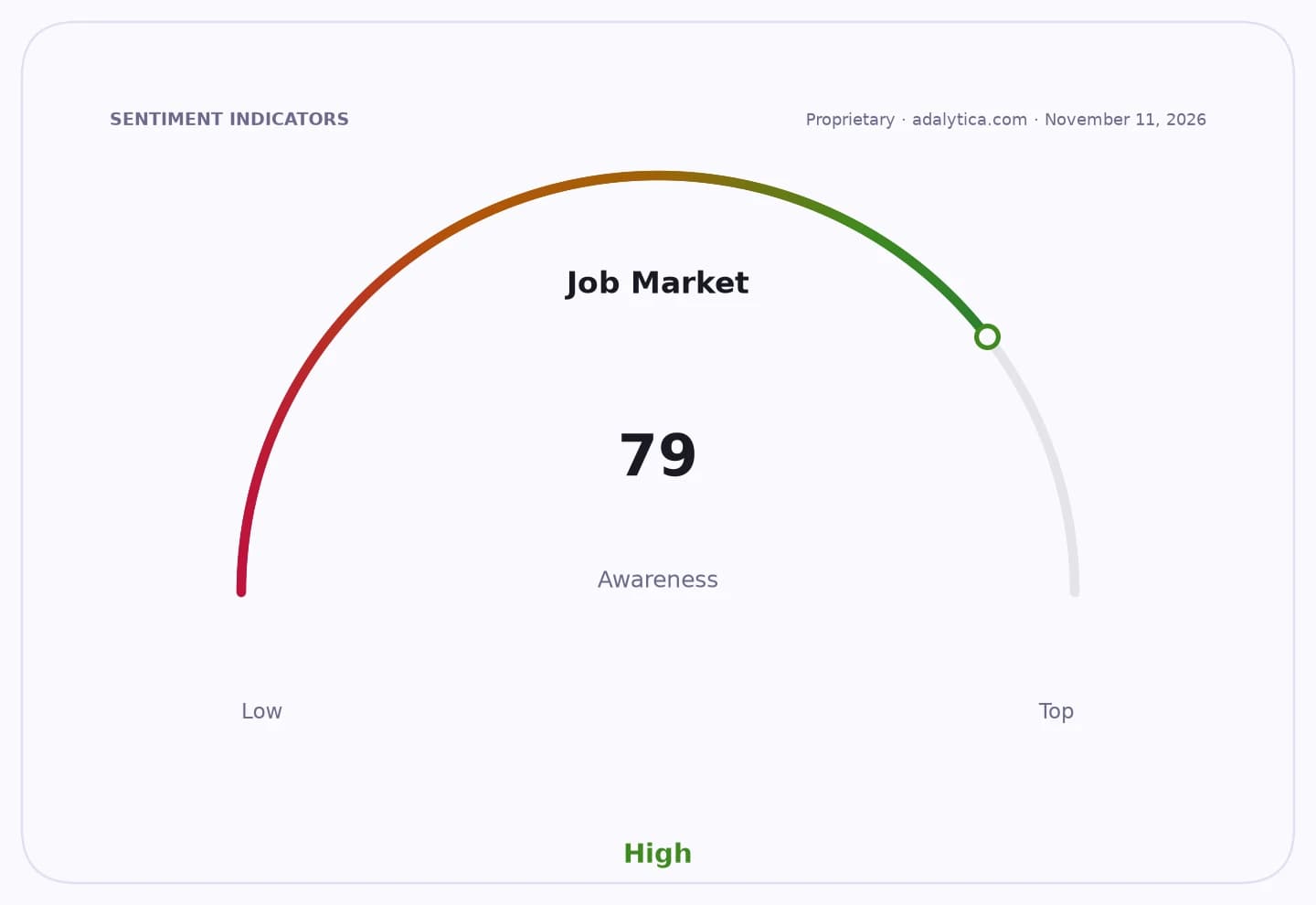
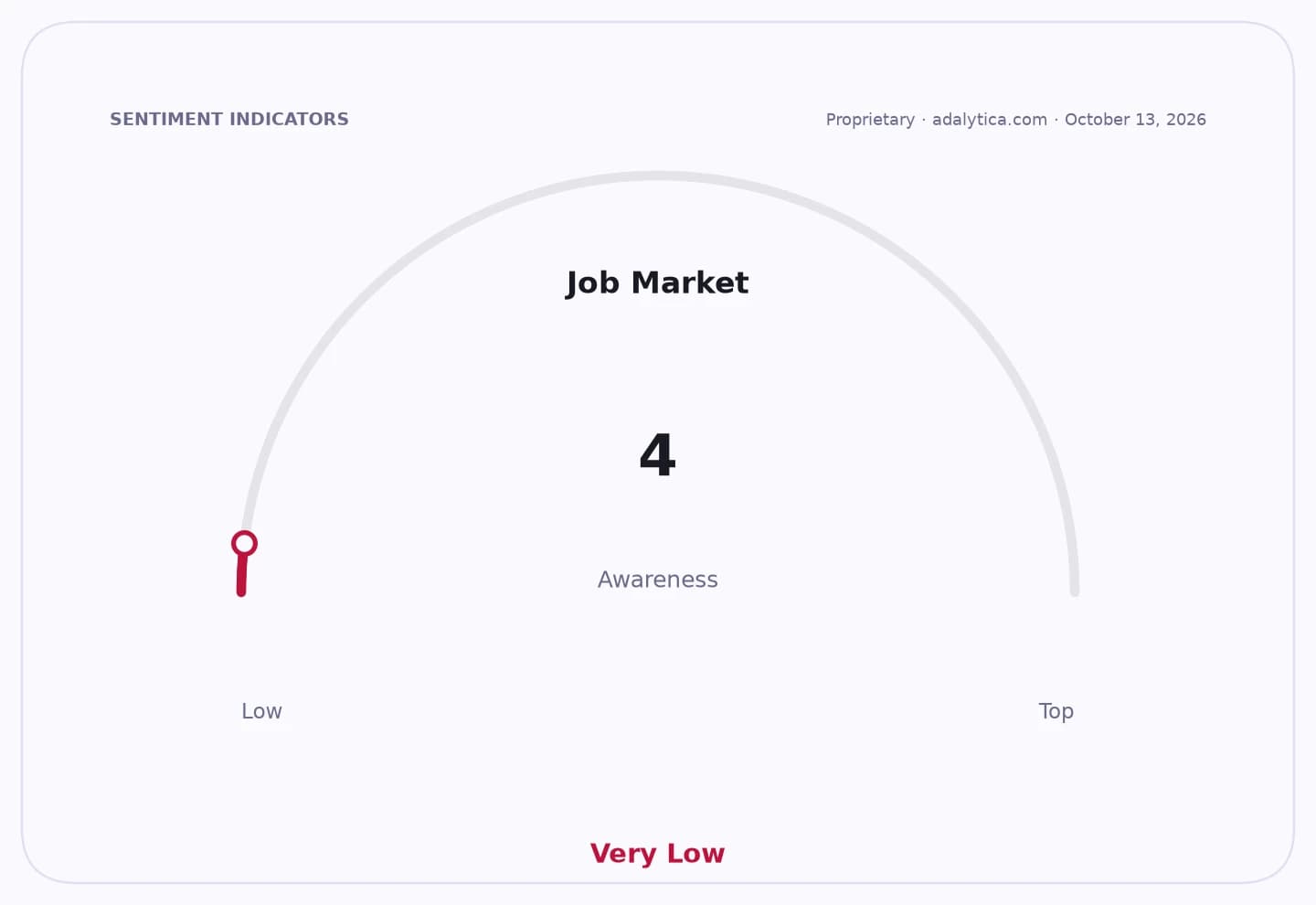
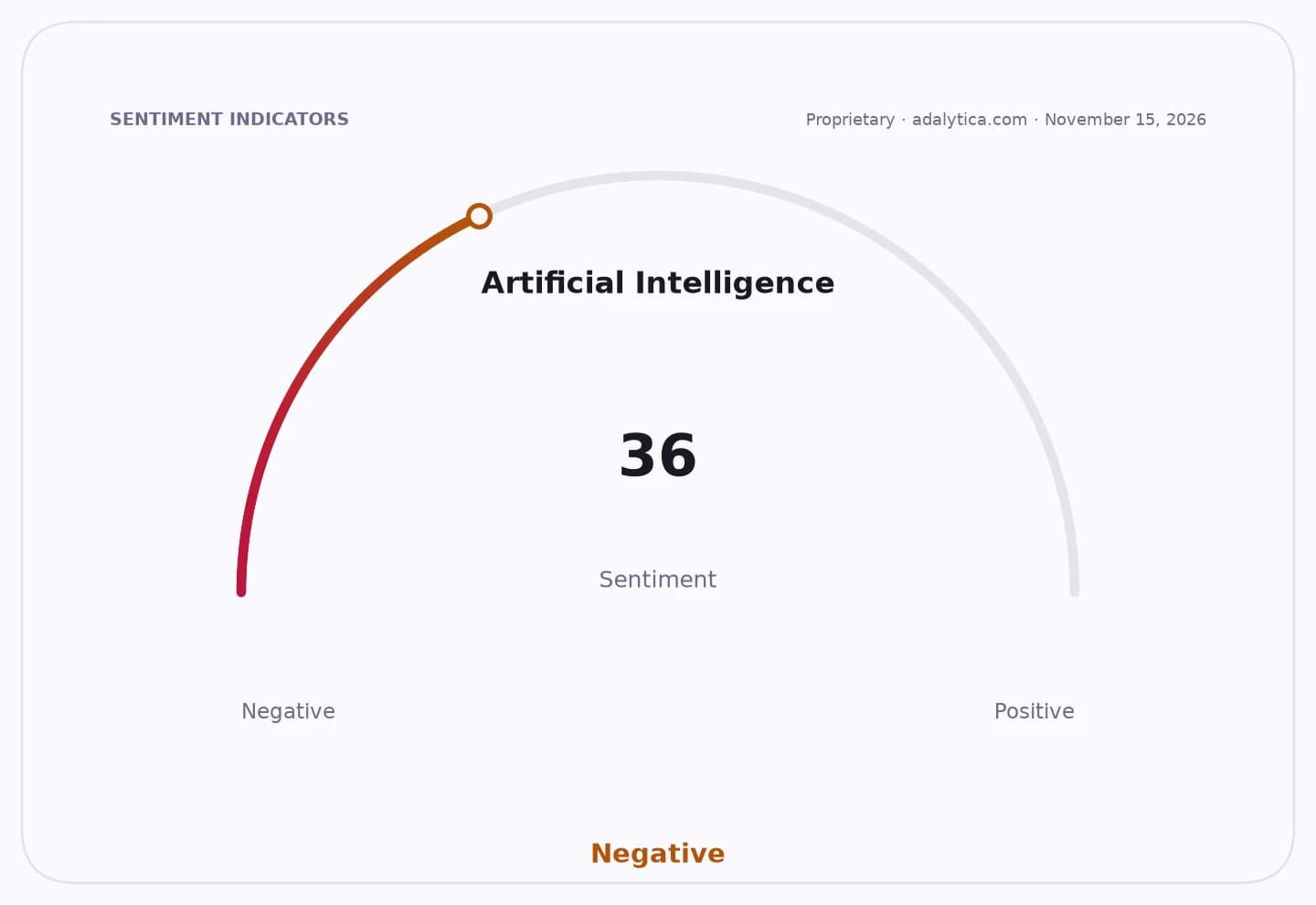
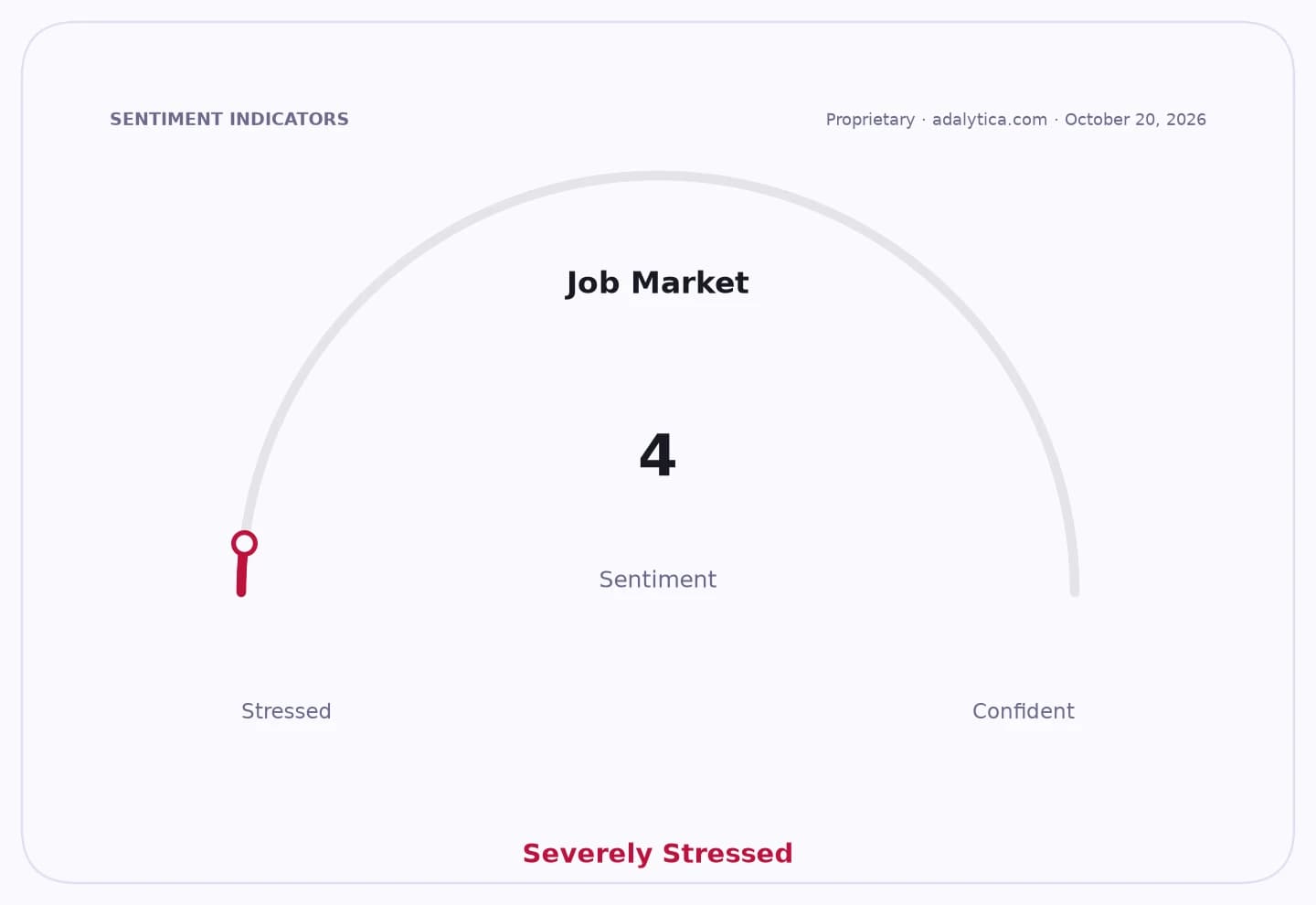
Sentiment Indicators
Job Market
RBA research found an exponential increase in job ads containing AI-related terminology over the four years since OpenAI launched ChatGPT and triggered a surge in adoption. The central bank said the pattern suggests employers are increasingly embedding AI into recruiting and workflow design, a shift that could raise productivity in some roles while reducing demand for routine tasks and junior white-collar work.
The warning lands at a sensitive point for policymakers. Central banks have been watching whether AI could lift potential growth by improving efficiency, but also whether it could intensify inequality and create friction in labour markets before the benefits are widely shared. The RBA’s assessment implies Australia is at the start of that transition rather than in the middle of it.
For investors, the significance is twofold. First, companies that can use AI to expand output without matching labour growth may sustain margins better than peers in labour-intensive businesses. Second, sectors most reliant on graduate intake, customer support, content production and administrative roles could face more pressure on staffing patterns, wage growth and training costs. That is especially relevant for technology, media, financial services and business process operators, where AI adoption can move quickly from pilot projects to operating model change.
The evidence does not yet point to a labour shock. The RBA said there is little sign of widespread disruption so far, suggesting the market is in an early adoption phase rather than a full displacement cycle. But the direction of travel is clear: employers are already reshaping job specifications around AI, and younger workers are likely to feel the first effects as firms automate more entry-level tasks and raise the bar for new hires.
That makes the next phase of the AI story as much about labour-market structure as technology spending. The key question for Australia, and for other advanced economies, is whether AI ends up broadening productivity gains across the workforce or concentrating them among firms and workers best positioned to adapt.
| Entity | Gains | Losses |
|---|---|---|
| Employers adopting AI | ▲Lower labour costs, higher productivity | ▼Higher training and transition costs |
| Skilled AI workers | ▲Better pay, stronger demand | ▼None materially in near term |
| Younger jobseekers | ▲More demand for AI skills | ▼Fewer entry-level roles |
| Labour-intensive sectors | ▲Potential efficiency gains | ▼Wage pressure, staffing disruption |