Europe could still make artificial intelligence a powerful source of growth, but only if policymakers stop treating the sector like a threat to be contained and start treating it like an industry to be built. That is the message from Nobel Prize-winning economist Philippe Aghion, who is urging the European Union to make it easier for new AI companies to enter the market, relax state-aid restrictions and protect workers displaced by the technology.
Europe AI Growth Depends on EU Policy Reform
The economic stakes are high. Aghion’s argument goes to the heart of Europe’s long-running productivity problem: the region has plenty of talent, but too little scale, too little risk-taking and too few homegrown technology champions. If AI is allowed to follow the same path as past waves of innovation, it could lift output, create higher-skilled jobs and deepen Europe’s industrial base. If not, the bloc risks importing most of the gains while absorbing much of the job disruption.
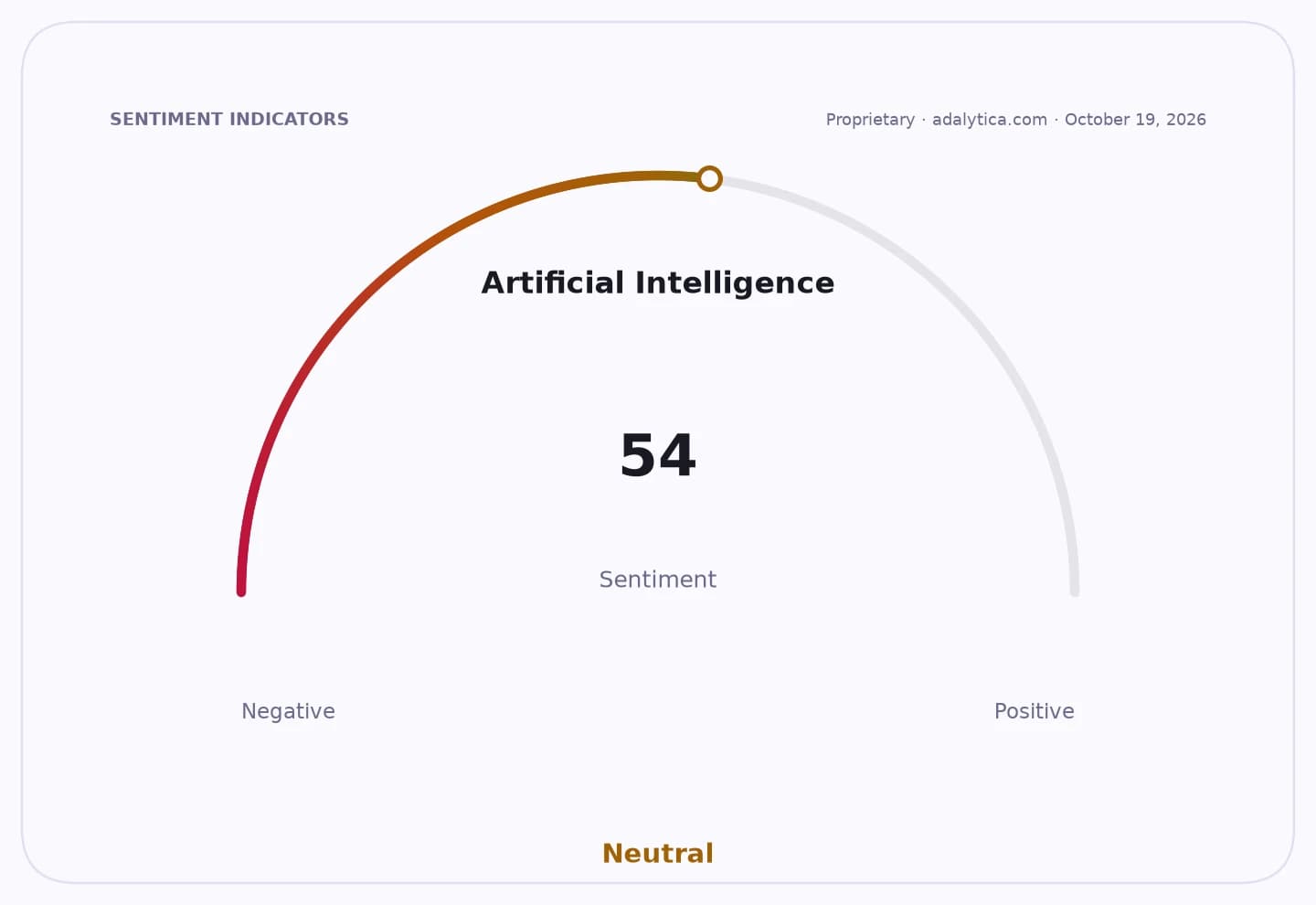
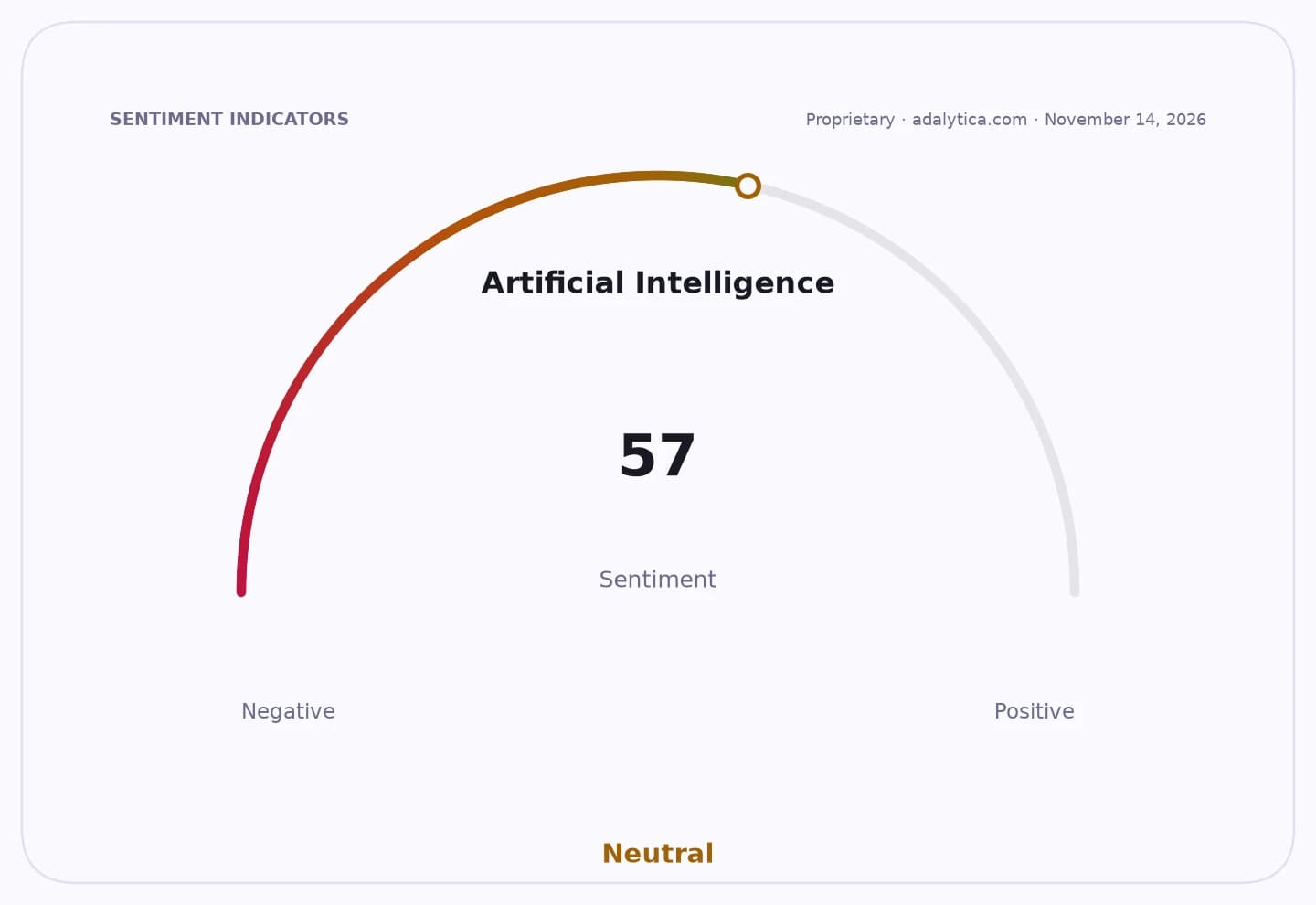
Sentiment Indicators
Artificial Intelligence
That is why Aghion’s call matters far beyond Brussels policy circles. In his view, Europe needs a more “creative destruction” approach — the idea that new technologies must be allowed to replace old ones if economies are to keep growing. He argued that the EU should encourage data sharing across the AI value chain, including cloud computing, and even consider a European counterpart to the U.S. Defense Advanced Research Projects Agency, or DARPA, to help develop AI computing power and nudge new firms into the market.
The contrast with the United States is especially important for investors. Aghion said Europe should learn from America’s mix of competition policy and industrial policy, rather than relying mainly on antitrust and subsidy limits. That is a direct challenge to the current European model, which he said has been too restrictive for an industry that requires heavy upfront investment and fast-moving infrastructure. For shareholders, the message is clear: Europe’s AI opportunity will depend less on rhetoric about innovation and more on whether policymakers create the conditions for scale.
Artificial Intelligence — 30-day sentimentadalytica.com
Explore this data interactively — full history, time series and cross-market comparisons.
The labor-market implications are just as significant. The European Commission has said highly skilled employment could rise 20% by 2040 thanks to AI, while low-skilled jobs could fall by anywhere from 20% to 60% across Europe. Aghion pointed to Denmark’s flexicurity model — flexible hiring and firing paired with strong support for unemployed workers — as a template for managing the transition. That matters because AI adoption will not be judged only by productivity gains; it will also be judged by whether workers can move from shrinking roles into better ones without a social backlash.
For investors, this is a story about winners and losers within the AI trade. Companies that build compute, software and infrastructure stand to benefit if Europe opens the door wider to competition and investment. That would support a broader ecosystem of chip suppliers, cloud providers, data-center operators and application developers, rather than leaving value concentrated in a handful of U.S. giants. On the other side, more rigid incumbents, especially those protected by regulation or slow procurement systems, could find it harder to keep pace.
The timing is not accidental. European regulators are already scrutinizing the dominance of U.S. technology firms in AI. The European Commission has opened a probe into Google over concerns it may be distorting competition through unfair terms for publishers and content creators, and it has also launched an antitrust investigation into Meta over rules affecting access to WhatsApp for AI service providers. Those moves show the EU is trying to police market power even as it decides how to foster its own AI ecosystem.
For long-term investors, the takeaway is simple: Europe’s AI story will not be decided by model quality alone, but by policy design. If Brussels makes room for new entrants, more capital spending and better worker retraining, AI could become a genuine growth engine for the region. If it does not, the bloc may remain a buyer of foreign innovation rather than a creator of it. Either way, this is a theme worth watching for years, not weeks.
| Entity | Gains | Losses |
|---|---|---|
| New European AI start-ups | ▲Easier market entry | ▼Regulatory barriers |
| EU workers with high skills | ▲More AI-driven jobs | ▼Slow adaptation if policy lags |
| U.S. tech giants | ▲Continued market presence | ▼Tougher EU competition scrutiny |
| Europe’s incumbents | ▲Access to new productivity tools | ▼Pressure from creative destruction |