Artificial intelligence is moving from a classroom aid to a genuine participant in mathematical work, challenging a centuries-old division between the human who frames the problem and the machine that simply computes the answer.
AI in Mathematics Boosts Nvidia and Microsoft Demand

That shift matters because mathematics sits at the root of everything from engineering and cryptography to AI model design itself. If machines can now help mathematicians infer patterns, parse dense notebooks and suggest lines of inquiry, the economics of research change: more problems can be attacked faster, by smaller teams, with less time spent on brute-force calculation and more on interpretation.
Sentiment Indicators
The change is also cultural. Mathematics has long been one of the last strongholds of human intellectual authority, where computers were useful but subordinate. The new wave of AI use in math education and research — from helping students in classrooms to aiding the reading of Kurt Gödel’s notebooks — suggests that the machine is no longer just a calculator. It is becoming a collaborator, and that alters how knowledge is produced and taught.
For investors, the immediate implication is not a direct revenue line from “AI mathematics” so much as a broader signal about where demand is accumulating. Nvidia, the dominant supplier of AI compute, remains at the center of that spending cycle even as its stock has swung violently. Its shares fell to $162.85 on Nov. 13 from $177.65 on Jan. 20, with the 50-day moving average now above the price and RSI readings near 19, a sign of a deeply oversold technical setup rather than a confirmed reversal. Microsoft, which bundles AI across software and cloud, has held up better at $523.88, still above its 200-day moving average around $440, though its recent pullback and easing momentum show the market is questioning how quickly AI enthusiasm converts into durable earnings power.
That tension — between intellectual breakthrough and commercial payoff — is the real market story underneath the headline. The adoption of AI in mathematics broadens the total addressable market for compute, cloud services and AI tooling, but it also raises a harder question for investors: whether demand will be driven by a few headline-grabbing research wins or by broad, recurring use in education, scientific computing and enterprise workflows. The answer will determine whether current AI capex proves sustainable or peaks ahead of monetization.
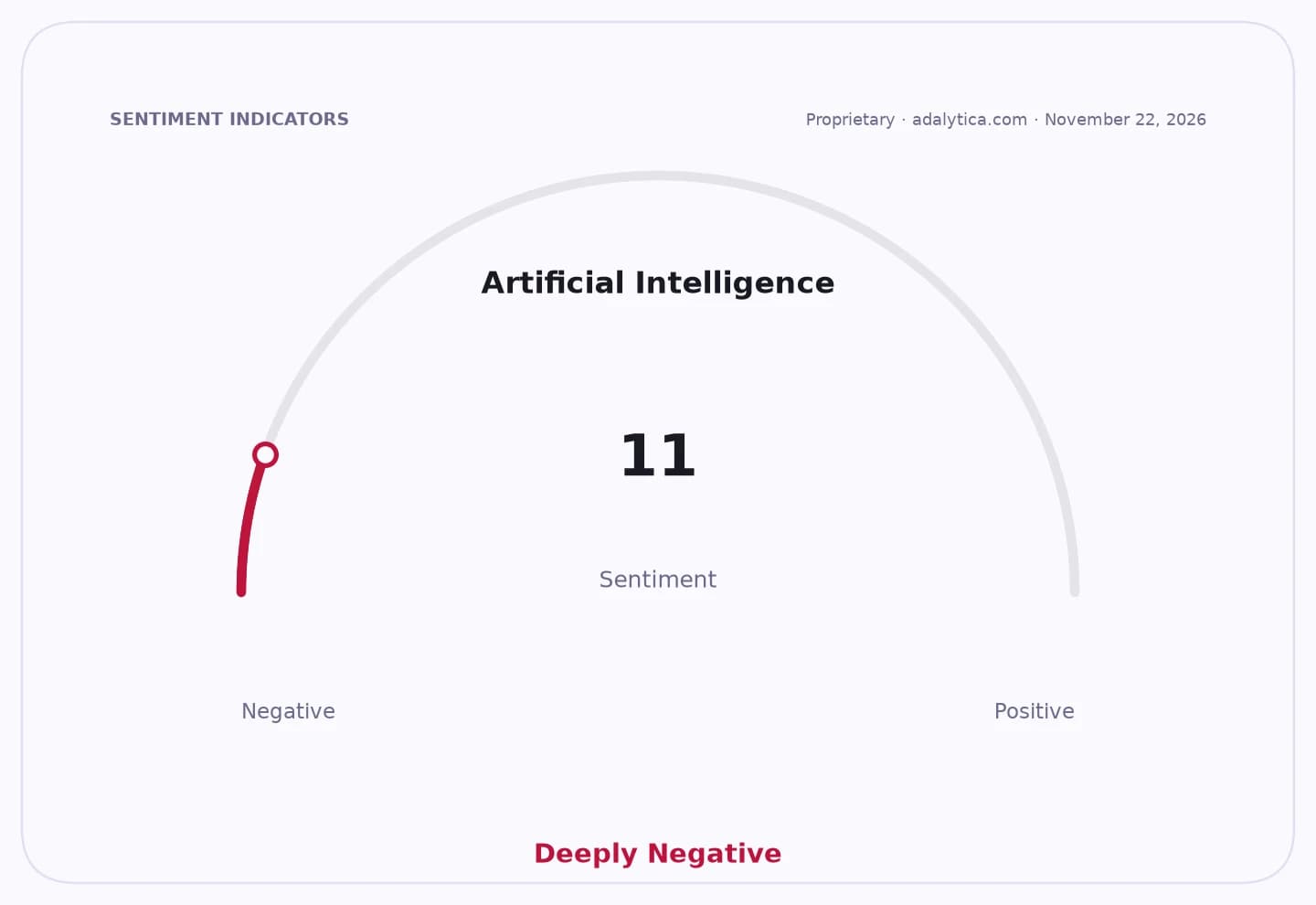
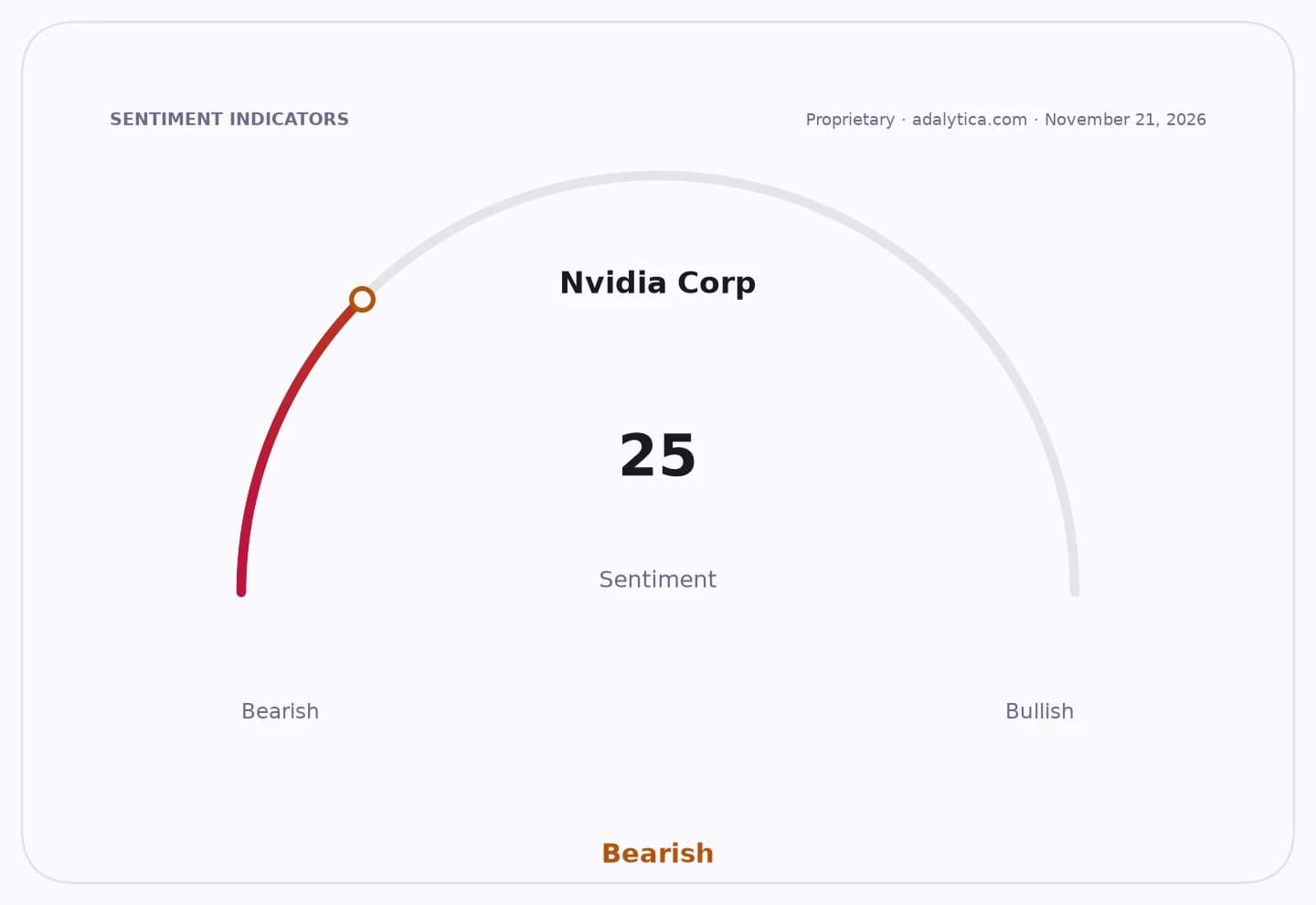
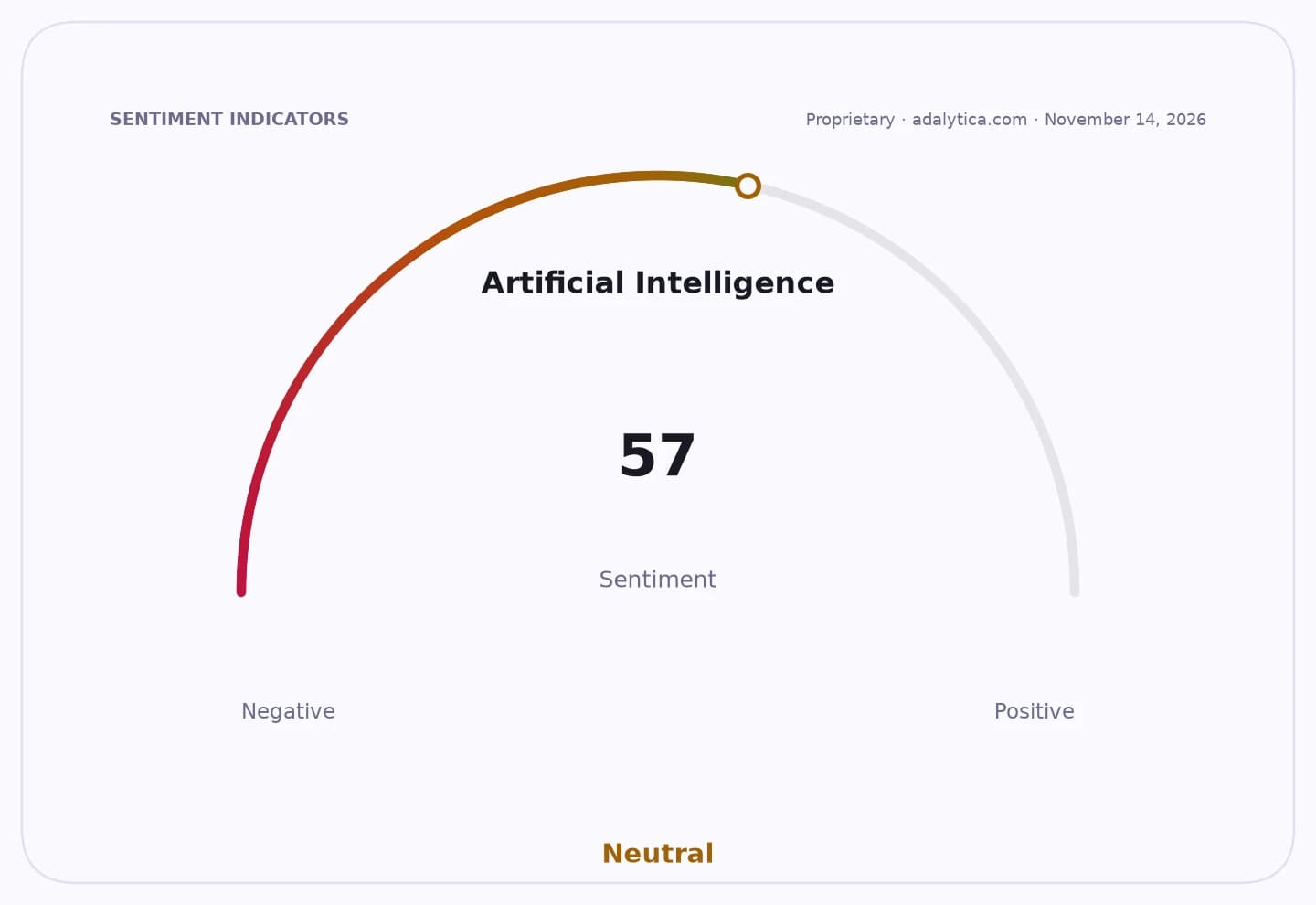
Adalytica’s AI sentiment gauge sits at 36, neutral, after a sharp one-day drop, while awareness remains extremely low at 4. That combination suggests the market is aware of the theme but not yet pricing a full second-order use case for AI in mathematics and education. By contrast, Nvidia earnings sentiment is in extreme fear even as awareness is maxed out, a classic sign of a story that is widely known but still being repriced around execution risk.
The bull case is straightforward: if AI becomes a reliable assistant for mathematical discovery and instruction, it deepens the structural case for AI infrastructure, software and specialized models. The bear case is that much of the excitement stays confined to niche demonstrations, while investors continue to pay for growth that arrives slower than expected. For now, the important point is that AI’s role in mathematics is no longer hypothetical. The machine has entered the ivory tower, and that could change both how math is done and how the AI economy is valued.
| Entity | Gains | Losses |
|---|---|---|
| AI developers | ▲Broader use cases | ▼Higher expectations |
| Nvidia | ▲More compute demand | ▼Valuation volatility |
| Microsoft | ▲Stronger AI platform use | ▼Margin scrutiny |
| Traditional methods | ▲Greater efficiency | ▼Human monopoly on problem-framing |