Federal Reserve Governor Kevin Warsh is confronting a central banking problem that AI is making harder, not easier: the same wave of investment that can lift productivity later is already pushing up demand, capital spending and potentially inflation now.
AI Spending Complicates Fed Inflation Outlook

The question matters because the timing of AI gains could determine whether the technology becomes disinflationary or adds to price pressure over the next several quarters. A Bank of Italy study cited in the debate boils the issue down to a race between demand and productivity. If AI lifts output quickly, supply can outpace demand and inflation falls. If the productivity payoff arrives only after a long lag, the immediate effect is more spending on data centers, chips, power, networks and labor — and that can keep inflation sticky while central banks are still trying to anchor expectations near target.
Warsh framed the issue at the IMF and World Bank meetings in Bangkok, where policymakers are increasingly treating AI as a macroeconomic variable rather than a pure technology story. That shift reflects a broader dilemma for the Fed: AI may be boosting long-run supply capacity, but it is also helping fuel one of the biggest capital booms in markets, with huge balance-sheet commitments from hyperscalers and chipmakers and knock-on demand for electricity, construction and skilled labor.
For investors, that split matters because it changes the read-through for rates, equities and Treasury yields. A slower productivity payoff would support a more restrictive policy stance for longer, which is unwelcome for duration-sensitive assets and for highly valued AI names whose future cash flows are discounted at higher rates. A faster payoff would be the opposite: it would ease inflation pressure, give the Fed more room to cut, and justify higher equity multiples by improving margins and growth at the same time.
CPIAUCSL vs FEDFUNDS — macro contextadalytica.com
Explore this data interactively — full history, time series and cross-market comparisons.Open AlphaPulse
That is why the discussion extends beyond the Fed’s usual inflation framework. The Bank of Italy paper argues AI may also shift the natural rate of interest, the theoretical level that neither stimulates nor restrains growth. If that benchmark rises, the Fed may need a higher neutral policy rate than in the pre-AI economy, complicating the path back to lower borrowing costs. If it falls, the central bank could eventually discover that its old rulebook is too tight for a more efficient economy.
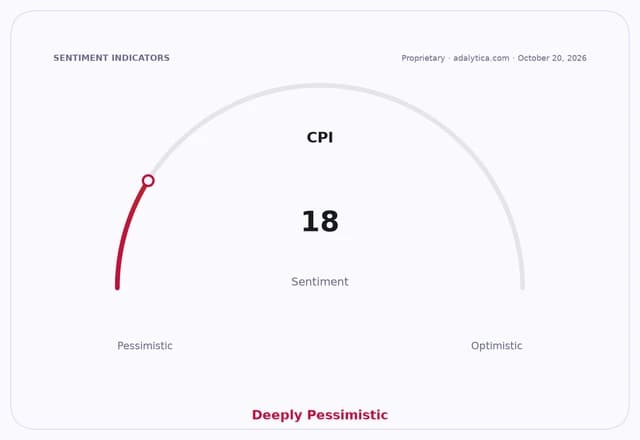
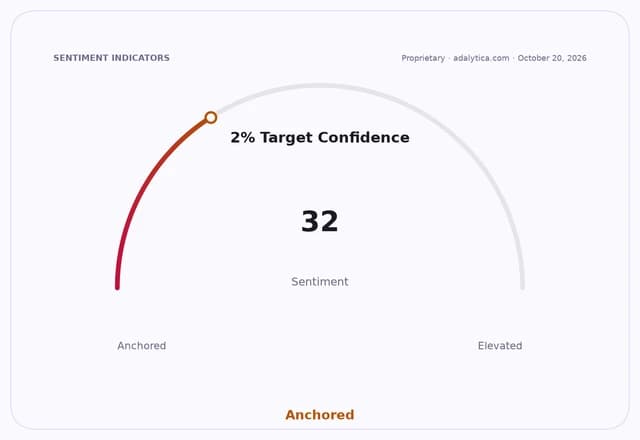
Market pricing still shows the tension. The 10-year Treasury yield is around 5.04%, up sharply from the ultra-low-rate era, while the fed funds rate is near 3.73%, leaving policy still meaningfully restrictive by historical standards. At the same time, the S&P 500 is near record highs even as Adalytica’s CPI trade signal sits in “Extreme Fear,” underscoring how inflation anxiety and AI optimism are colliding rather than canceling each other out.
The biggest corporate beneficiaries of an AI-led productivity boom remain clear: Nvidia, Microsoft, Oracle, Amazon and Alphabet all stand to gain from sustained infrastructure demand. But the near-term losers are just as obvious: consumers and borrowers if inflation stays elevated, bond investors if yields remain sticky, and the Fed if it must keep policy tight while trying to read an economy being reshaped in real time by a technology that can both raise prices and lower them.
For now, the narrative is not whether AI is inflationary or disinflationary. It is that the answer depends on speed. The faster AI diffuses through the real economy, the more it looks like a cure for inflation. The slower the productivity payoff, the more it looks like one more force keeping the Fed in a difficult holding pattern.
| Entity | Gains | Losses |
|---|---|---|
| AI infrastructure firms | ▲more spending, higher revenues | ▼margin pressure from capacity buildout |
| Fed / policymakers | ▲better data tools over time | ▼harder inflation forecasting |
| Consumers / borrowers | ▲eventual productivity gains | ▼sticky prices, tighter rates |
| Bond investors | ▲disinflation scenario | ▼higher yields, delayed cuts |