AI spending is pushing U.S. borrowing costs higher, with the 10-year Treasury yield at 5.27% and the 2-year at 4.79% as investors demand more compensation for a wave of corporate debt tied to data-center and infrastructure build-outs.
AI spending lifts Treasury yields and borrowing costs

That matters because the AI race is no longer just a capex story for Big Tech; it is feeding through into the broader cost of capital for households, companies and the federal government. Higher Treasury yields lift mortgage rates, auto loans and corporate financing costs, while also making it more expensive for Washington to roll over debt.
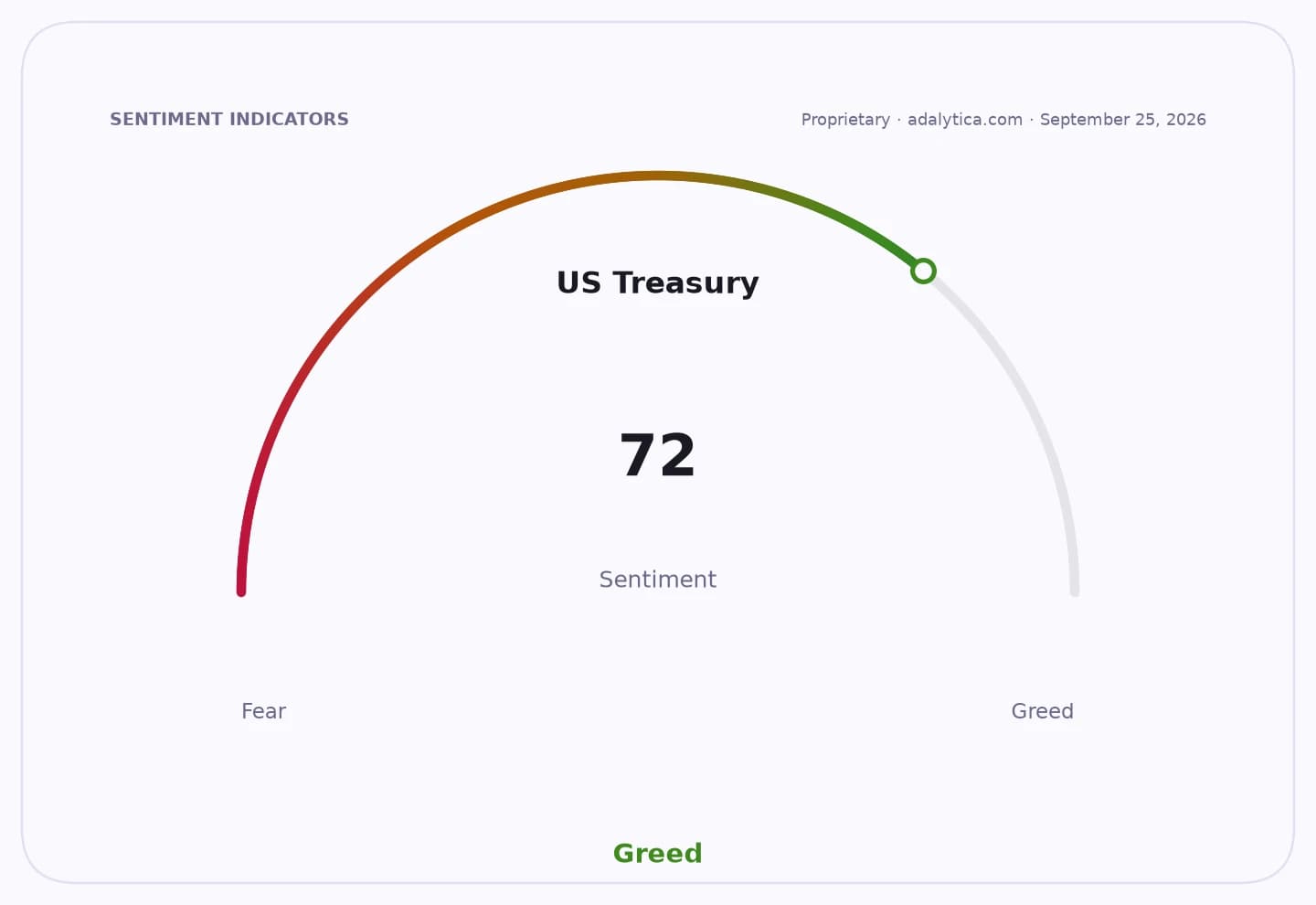
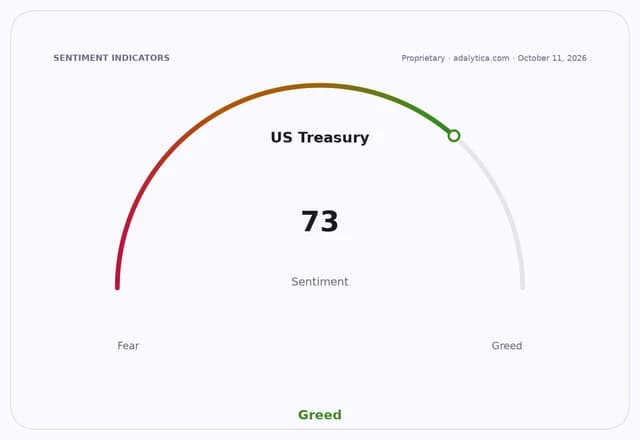
Sentiment IndicatorsⓘProprietary · adalytica.com · October 11, 2026
This is a snapshot — live sentiment, awareness and momentum for 130+ markets update continuously in the dashboard.Open AlphaPulse
The move in long-term rates comes as technology giants continue to spend heavily on AI capacity. Microsoft’s latest filing showed financing cash outflows of $52.5 billion in fiscal 2026, while peers including Amazon, Alphabet, Meta and Nvidia have flagged large, multi-year obligations for data centers, servers and network infrastructure. Even as some debt raising for AI projects has slowed on caution over leverage, the sheer scale of planned investment is keeping pressure on bond markets.
That has started to show up across asset classes. The iShares 20+ Year Treasury Bond ETF, TLT, fell to $77.98 on Oct. 9, well below its 50-day moving average of $80.65 and 200-day moving average of $83.55, with the RSI sinking to 20.8, a conventional technical reading that points to heavy selling. Financial stocks have held up better, with XLF at $54.73, while the tech-heavy QQQ is still near $751.27 after a sharp run, leaving rate-sensitive sectors more exposed if yields stay elevated.
The macro backdrop is getting tighter, not looser. Fed funds are running at 3.75%, with the policy rate forecast at 3.726% next month, and the bond market is pricing in a more persistent borrowing-cost environment than investors were betting on earlier in the year. That raises the hurdle rate for AI projects and makes the winners the firms with the strongest cash flow and balance sheets, while borrowers, rate-sensitive consumers and the U.S. Treasury face the squeeze.
Investors will be watching whether the latest surge in yields forces a bigger rethink of AI financing plans, especially if companies turn to debt markets just as the government also needs to refinance at higher rates. If Treasury yields keep climbing, the AI boom could start to bite back through valuation pressure on growth stocks and a more expensive capital structure for nearly everyone else.
| Entity | Gains | Losses |
|---|---|---|
| Cash-rich Big Tech | ▲Keeps funding advantage | ▼Higher hurdle rates |
| Treasury market | ▲More yield for buyers | ▼Price pressure on bonds |
| U.S. government | ▲N/A | ▼Higher debt-service costs |
| Rate-sensitive borrowers | ▲N/A | ▼Higher mortgage and auto-loan costs |