Asian equities fell sharply as investors dumped AI and semiconductor names and rotated into safer assets, while escalating US-Iran tensions added a geopolitical risk premium that is pressuring energy prices, bond yields and growth-sensitive stocks.
AI Stocks Fall as Geopolitical Risk Rises
The market move matters because it is not just a single-session de-risking in technology. It reflects a broader reassessment of how much valuation the market is willing to pay for AI infrastructure, just as geopolitics threatens to tighten financial conditions through higher oil prices and more volatile Treasury yields. The 10-year US Treasury yield was around 4.61% and the two-year near 4.22%, a reminder that investors are still facing a relatively restrictive rates backdrop even before any fresh shock from the Middle East.
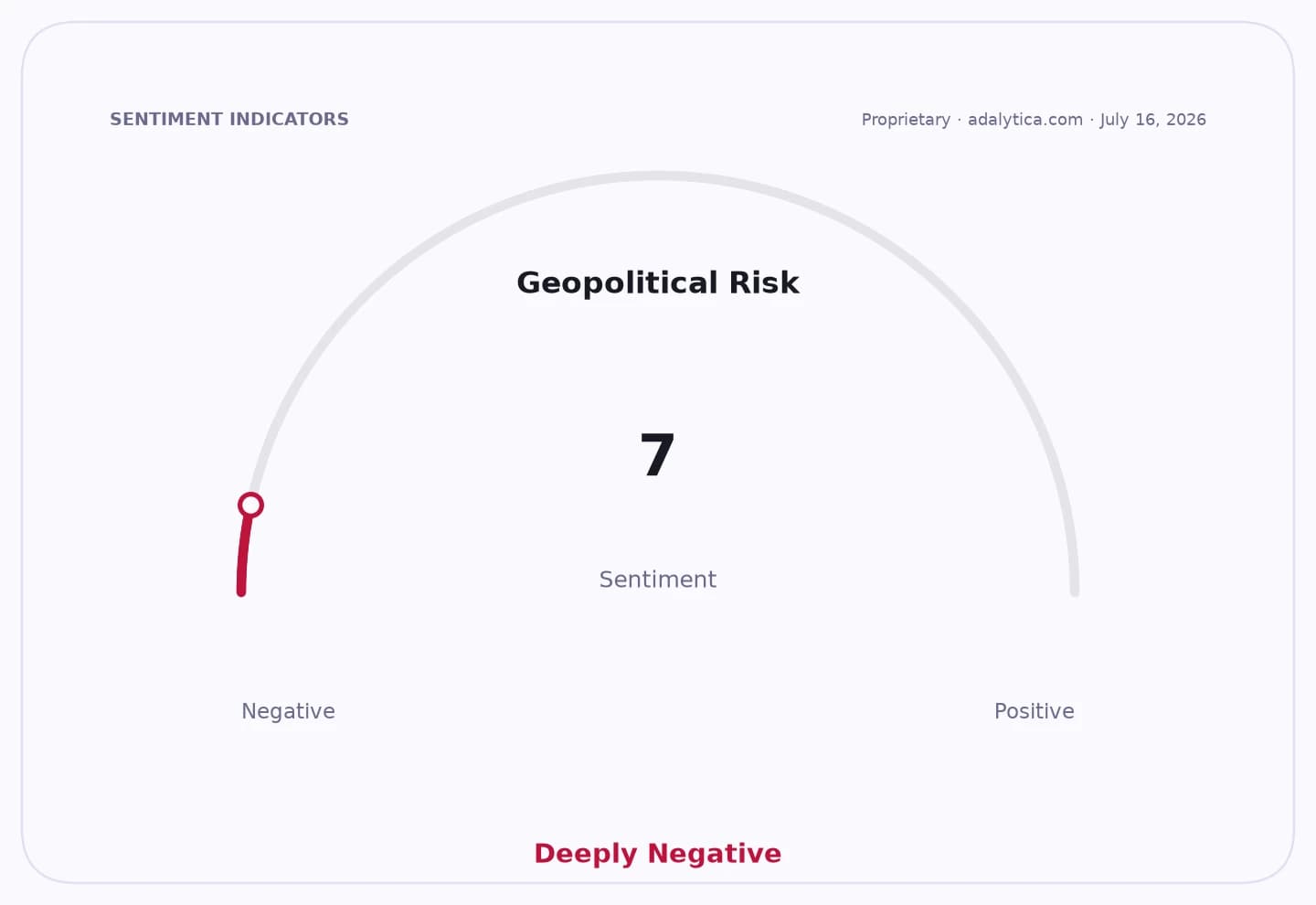
Sentiment IndicatorsⓘProprietary · adalytica.com · July 16, 2026
This is a snapshot — live sentiment, awareness and momentum for 130+ markets update continuously in the dashboard.Open AlphaPulse
That combination is particularly uncomfortable for global equities. High-duration growth stocks, especially semiconductors, are typically the first to be hit when discount-rate pressure rises and risk appetite fades. The pullback has spilled into Asia, with DAX sentiment also giving way and South Korean stocks seeing heavy foreign selling, underscoring how quickly global money can reverse when the market questions both earnings durability and valuation discipline in the same session.
The semiconductor complex is at the center of the repricing. TSMC shares have slipped from a recent peak near $477.57 to about $419.48, while the stock’s 50-day moving average sits well below the longer trend, suggesting momentum has weakened even after a strong run. That matters for the whole AI trade because TSMC is a critical barometer for foundry demand and advanced-node spending. A weaker tape there tends to reverberate across suppliers from Samsung and SK hynix to names tied to AI buildouts.
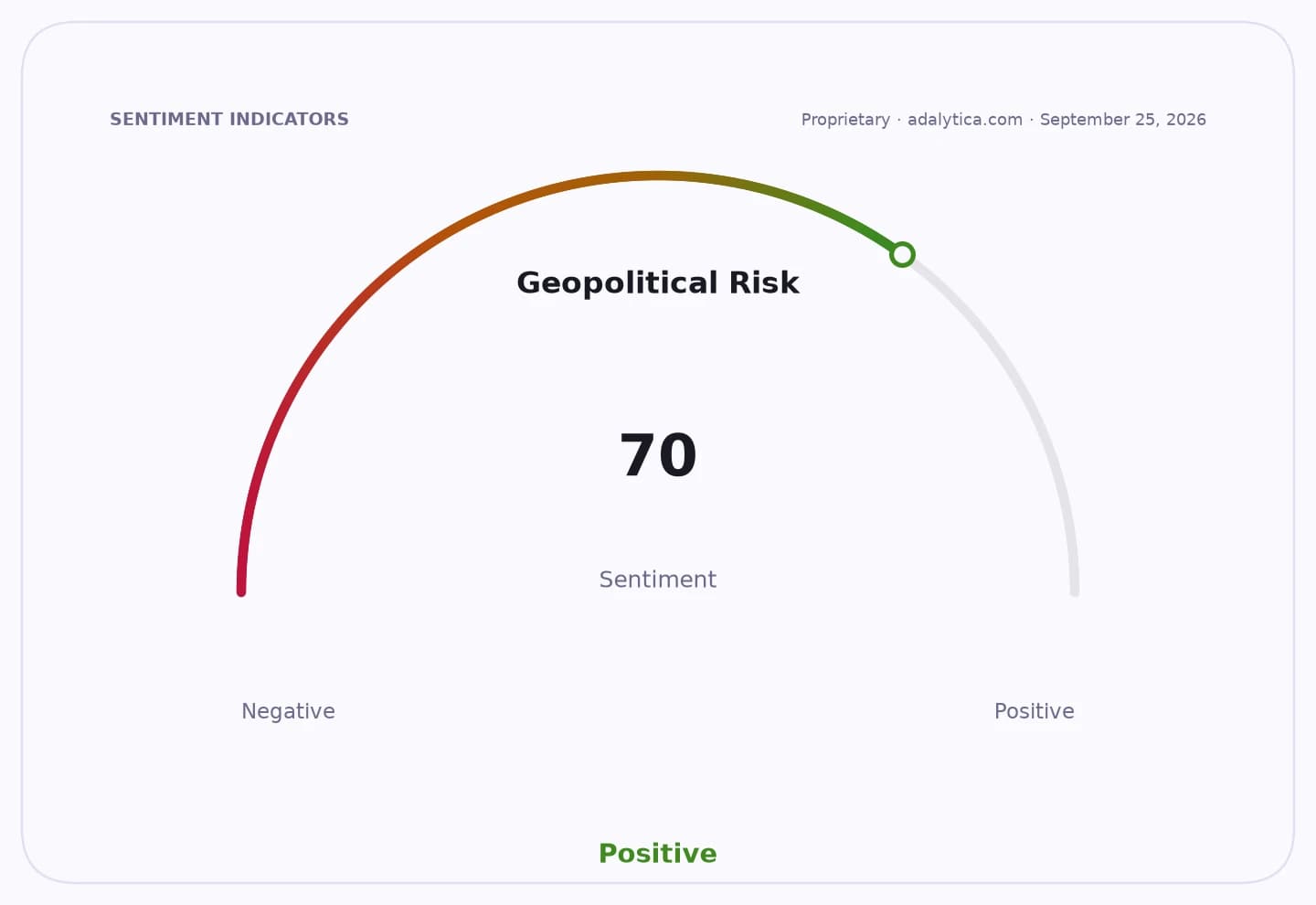
Geopolitical Risk — 30-day sentimentadalytica.com
Explore this data interactively — full history, time series and cross-market comparisons.Open AlphaPulse
In Europe, Delivery Hero jumped after Uber moved to take over the company, highlighting a different kind of market story: strategic consolidation in a sector where scale, logistics density and pricing power still matter more than public-market sentiment. Uber’s shares, however, were softer around $72.67, reflecting investor caution about deal execution, integration risk and whether management can add another large asset without diluting returns. Uber’s own technical picture has improved from earlier lows, but it remains below its 200-day moving average, a sign the market is not yet granting full benefit of the doubt.
For Delivery Hero, the bid premium and the prospect of being absorbed into a larger platform are supportive in the near term. But the deal also speaks to a tougher reality for standalone delivery groups: in an environment of higher rates, geopolitical stress and jittery consumer-risk sentiment, capital markets reward profitability and scale, not pure growth. That dynamic is likely to keep pressure on smaller, capital-intensive operators that still need external financing or strategic backing.
The macro backdrop reinforces the defensive shift. Adalytica’s global stability gauge is flashing extreme fear, while the dollar trade signal is also in fear territory, suggesting investors are not just nervous about one catalyst but about the interaction between geopolitics, oil and crowded equity positioning. If crude extends higher on US-Iran friction, it could sharpen the rotation away from semiconductors and other cyclicals into cash-flow-rich defensives, even if the broad US recession gauge still shows no immediate downturn.
The next catalyst is whether the selloff in AI and chip names stabilizes enough to tempt dip buyers, or whether bond yields and oil keep rising and force another round of de-risking. For investors, the immediate question is not whether AI remains a secular theme, but whether the market has moved too far ahead of near-term fundamentals. In this tape, earnings quality, balance-sheet strength and strategic control matter more than narrative.
| Entity | Gains | Losses |
|---|---|---|
| Uber | ▲Strategic scale | ▼Deal-execution risk |
| Delivery Hero | ▲Takeover premium | ▼Standalone upside |
| TSMC and chipmakers | ▲Long-term AI demand | ▼Valuation compression |
| Risk assets | ▲Potential rebound buyers | ▼Geopolitical shock and higher yields |