Entry-level employees are no longer learning the old way, and a new field study suggests the winners in AI-enabled workplaces are not necessarily the most technically prepared. The research, based on 523 early-career professionals at KPMG and the University of Texas, found workers fall into three groups — AI apprentices, AI delegators and AI amplifiers — as companies push more analytical and information-heavy tasks into AI workflows.
AI study on early-career workers at KPMG, UT
The finding matters because junior roles have traditionally been the training ground for future managers, analysts and specialists. If AI absorbs those starter tasks, firms will need to redesign how people build judgment, domain expertise and decision-ready output before they can advance.
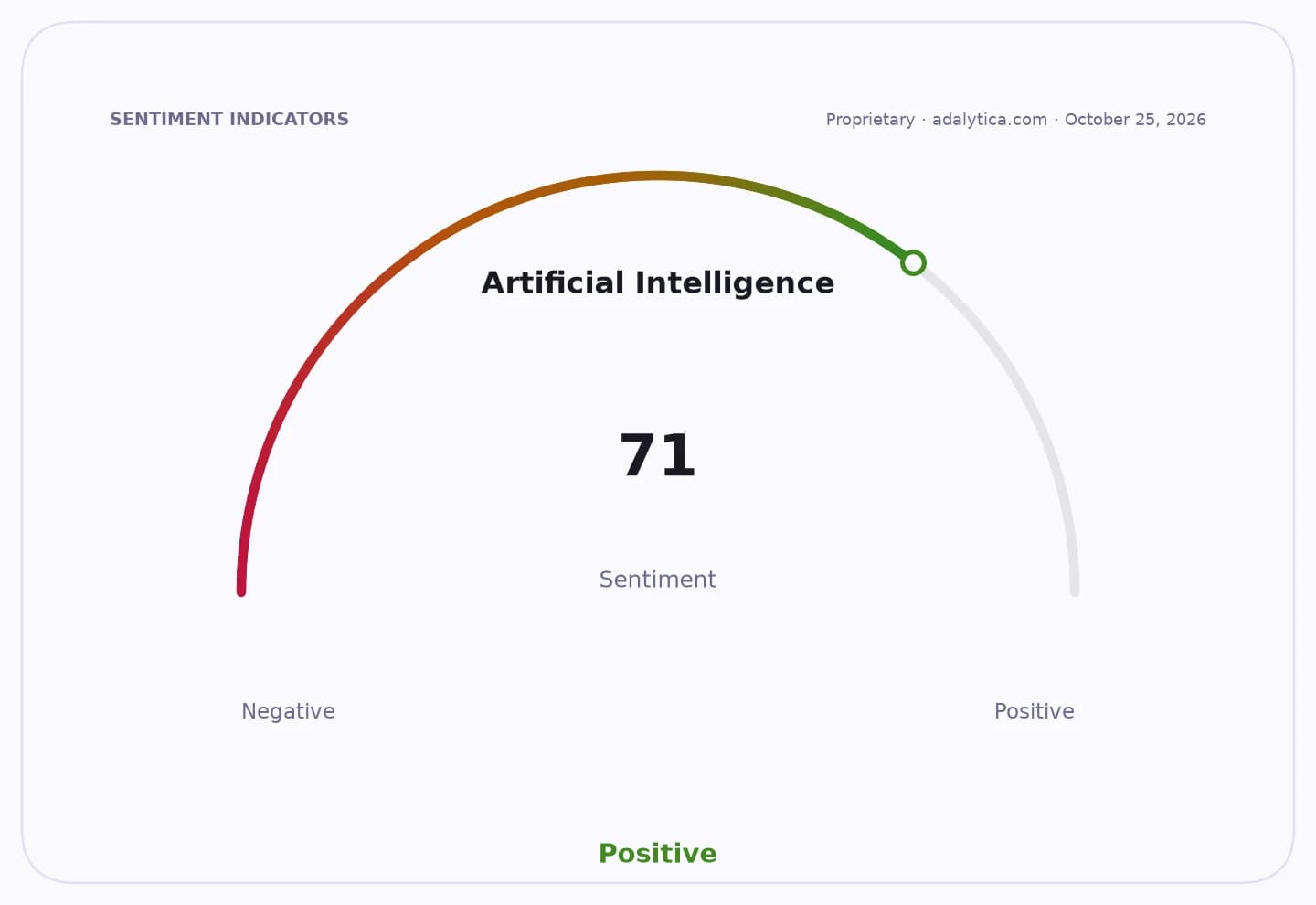
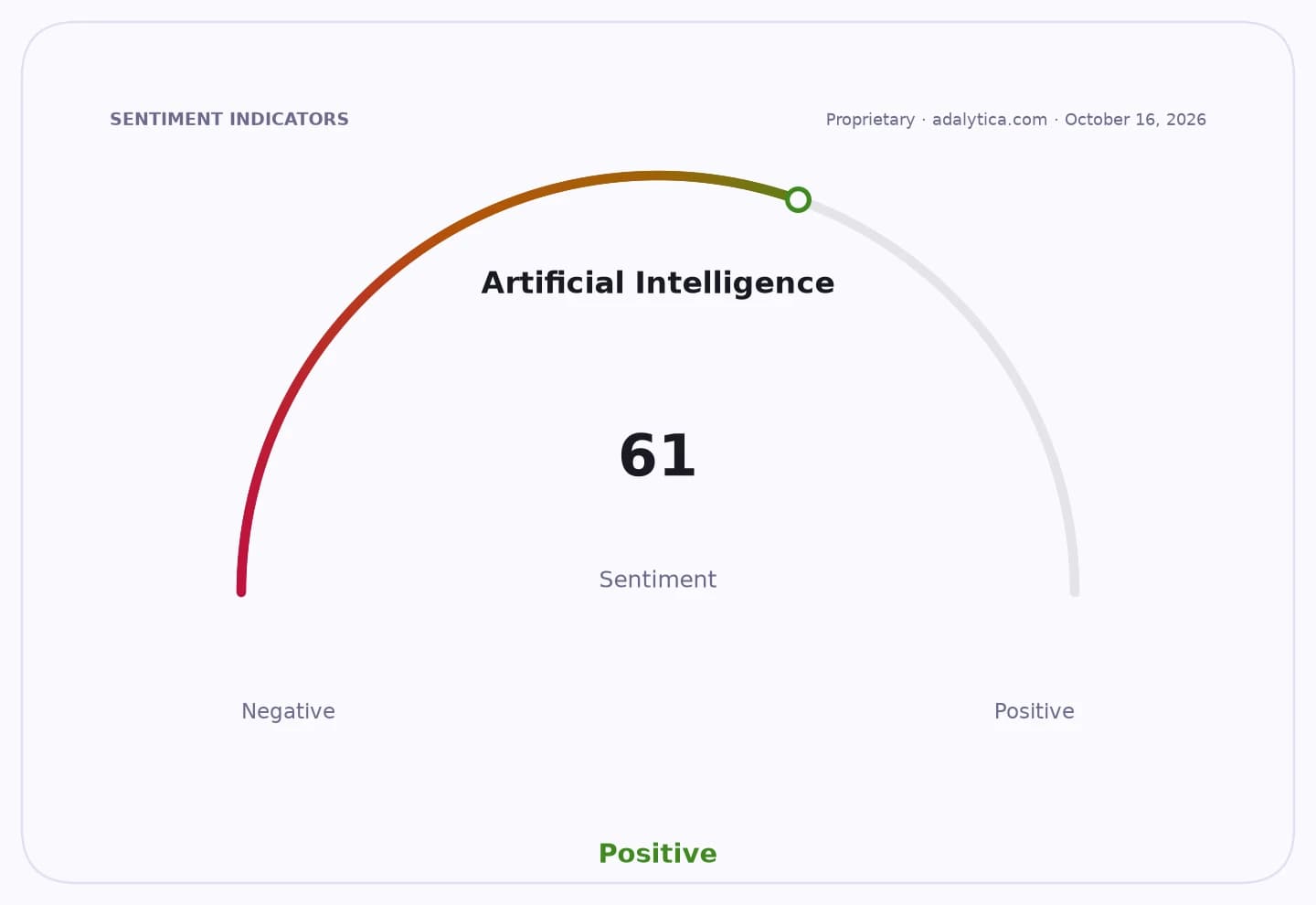
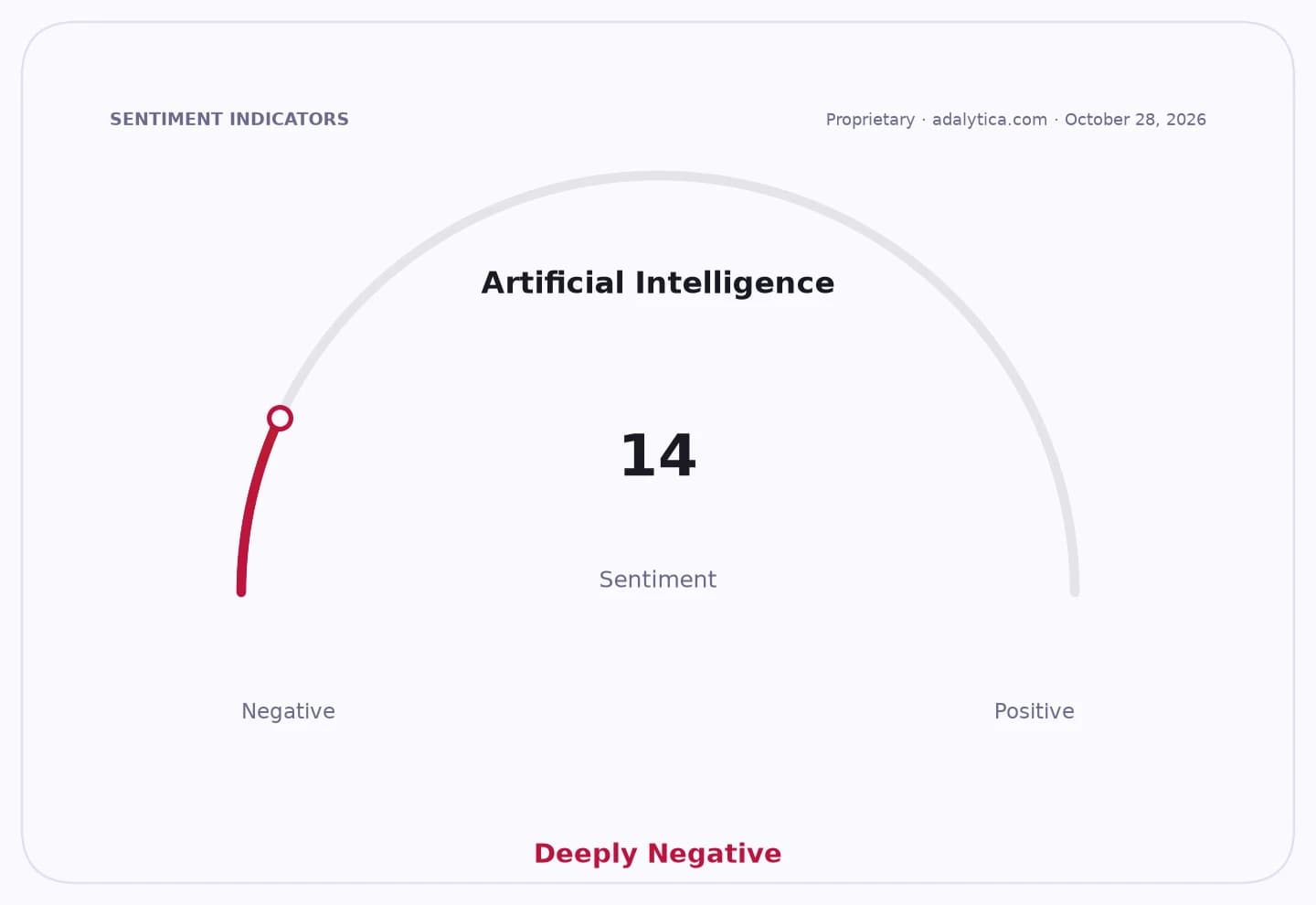
Sentiment IndicatorsⓘProprietary · adalytica.com · October 28, 2026
This is a snapshot — live sentiment, awareness and momentum for 130+ markets update continuously in the dashboard.Open AlphaPulse
The surprise is that familiar hiring filters did not clearly separate the three groups. The study says foundational skills such as critical thinking, AI literacy and domain knowledge were not strong signals for whether someone became an apprentice, delegator or amplifier, complicating conventional assumptions about who will thrive as AI becomes embedded in everyday work.
That has direct implications for employers trying to protect productivity without hollowing out the talent pipeline. The research argues that leaders should rethink entry-level work and hiring criteria, shifting focus from who can simply use AI to who can create value beyond the AI baseline in real professional settings.
The broader economic stakes are significant as governments and companies race to build AI-capable workforces. Initiatives such as Indonesia’s AI Talent Factory point to a larger policy push to close the skills gap, while corporations face mounting pressure to keep junior staff useful in a labor market where automation is increasingly capable of handling routine analysis.
For investors, the story is about margins, labor efficiency and the durability of white-collar productivity gains. Firms that train workers to amplify AI output could get more leverage from staffing, while those that over-rely on delegation may end up with weaker judgment, slower promotion pipelines and higher long-term hiring costs.
In markets, the theme reinforces the investment case around AI software, cloud platforms and enterprise workflow tools, but it also underscores a risk: productivity gains may depend less on model quality than on whether companies can organize people around it. The next test is whether employers can turn these early-career AI users into a scalable talent engine before automation strips too much of the apprenticeship layer away.
| Entity | Gains | Losses |
|---|---|---|
| AI amplifiers | ▲Higher leverage, stronger career path | ▼Less room for weak performers |
| AI delegators | ▲Faster output on routine tasks | ▼Weaker skill development |
| Employers | ▲Lower task costs, better productivity | ▼Need new training models |
| Entry-level workers | ▲New upside for adaptable talent | ▼Fewer traditional onramps |