Employers are being pushed to rethink hiring around workers’ skills rather than formal qualifications, a shift that could widen the talent pool, ease labour shortages in some roles and force companies to modernise how they assess, train and promote staff.
Skills-First Hiring Could Affect Staffing Firms
The proposed Skills-First Framework, aimed at encouraging regular skills reviews and job redesign, reflects a broader move in the labour market toward capability-based hiring at a time when employers are struggling to match openings with available talent. For investors, the change matters because it could alter demand for staffing, recruiting and workforce-management services, while also influencing productivity, wages and labour mobility across the economy.
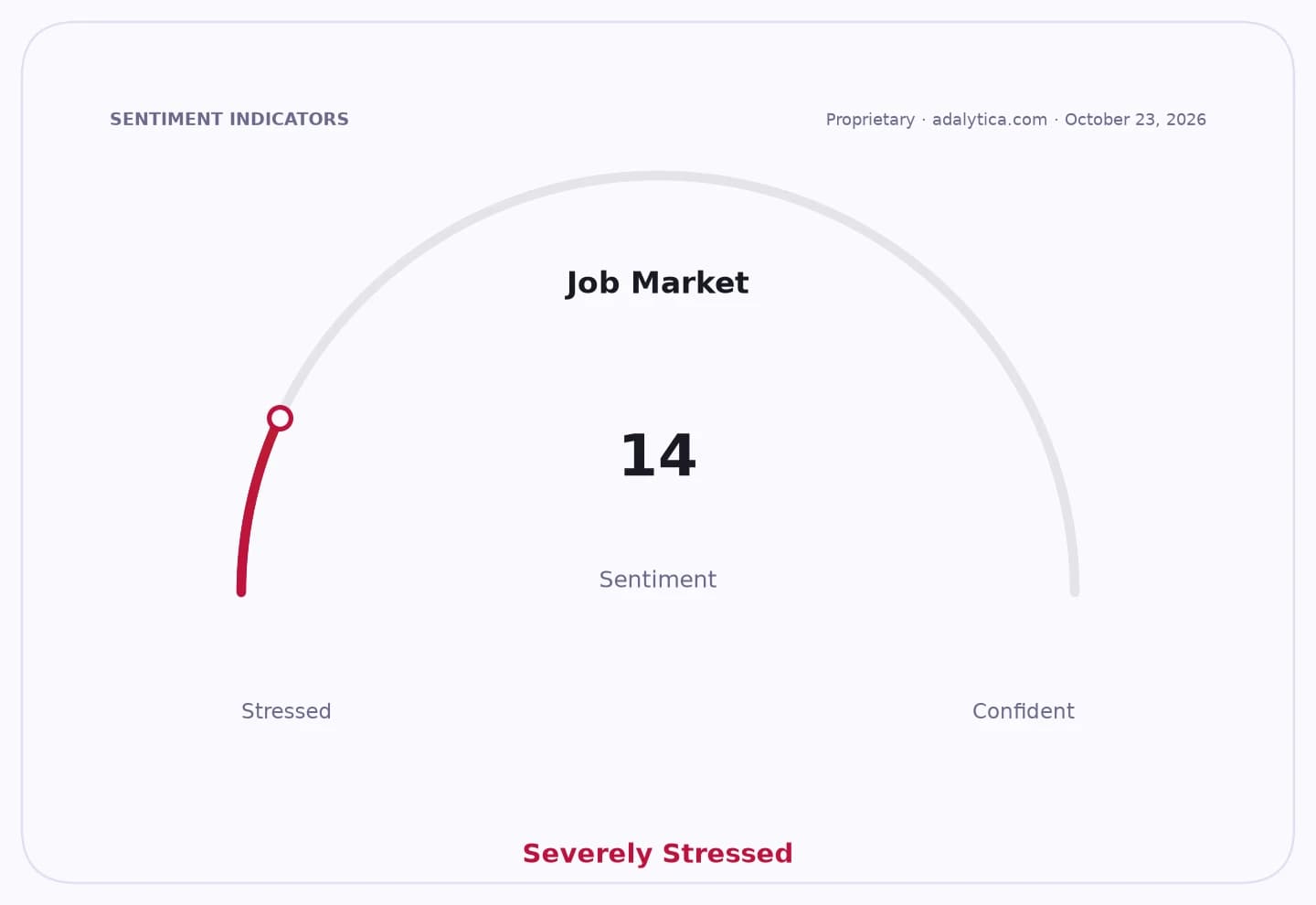
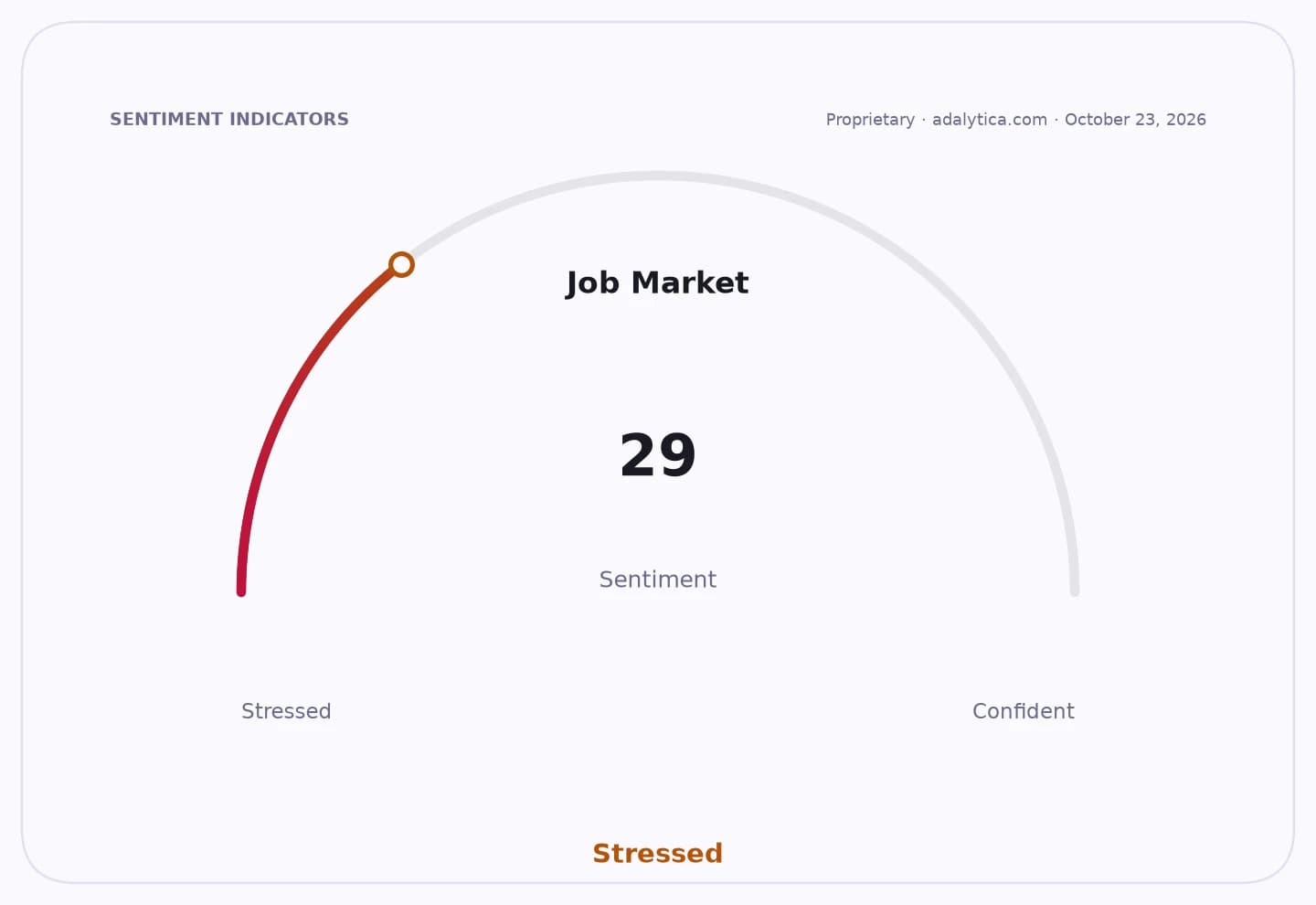
Sentiment IndicatorsⓘProprietary · adalytica.com · October 23, 2026
This is a snapshot — live sentiment, awareness and momentum for 130+ markets update continuously in the dashboard.Open AlphaPulse
The economic case for a skills-first approach is straightforward: businesses that can identify transferable skills faster are better able to fill roles, reduce vacancy duration and improve internal promotion rates. That can matter most in sectors where technology, artificial intelligence and changing workflows are making traditional credentials less useful as a proxy for performance.
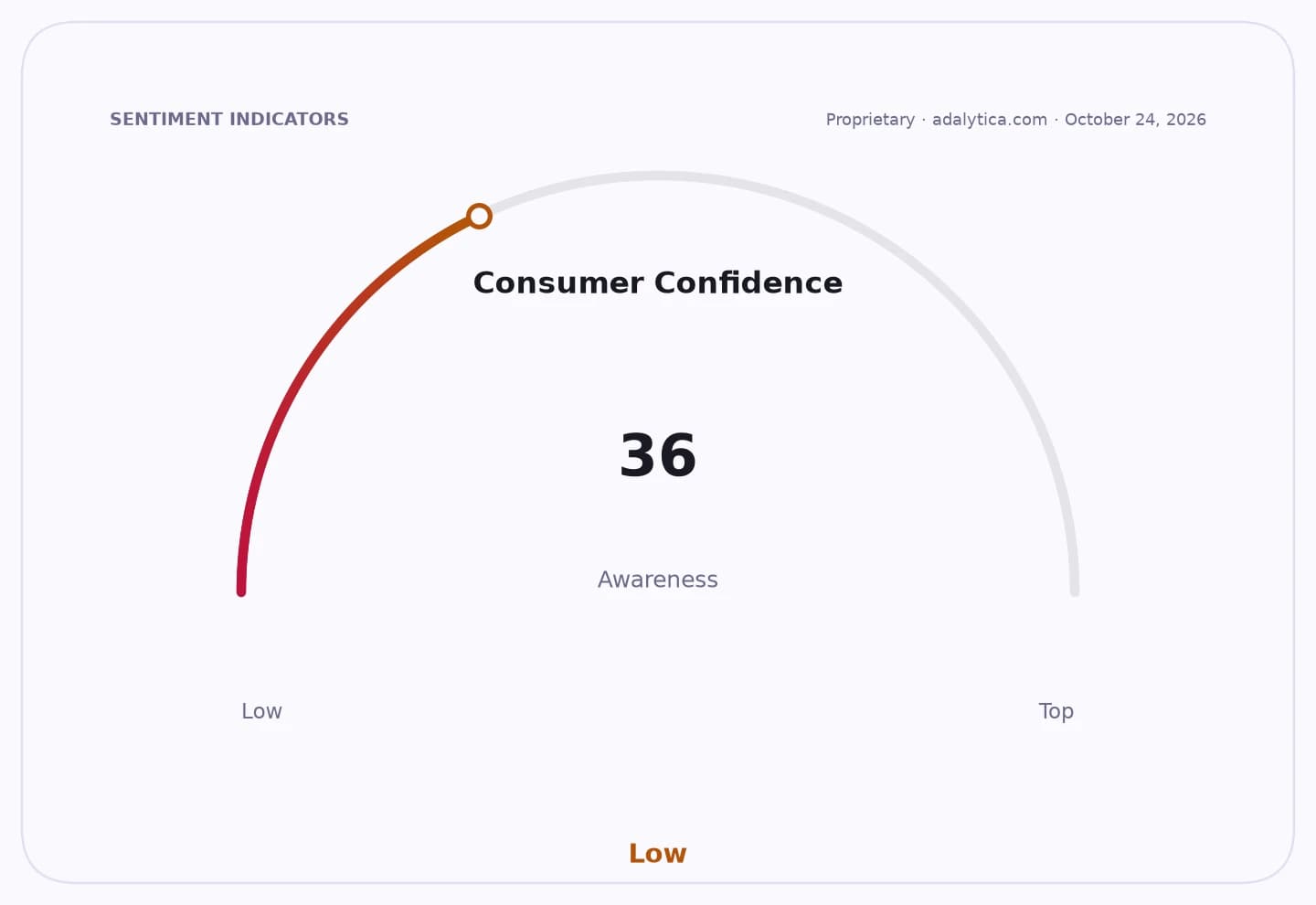
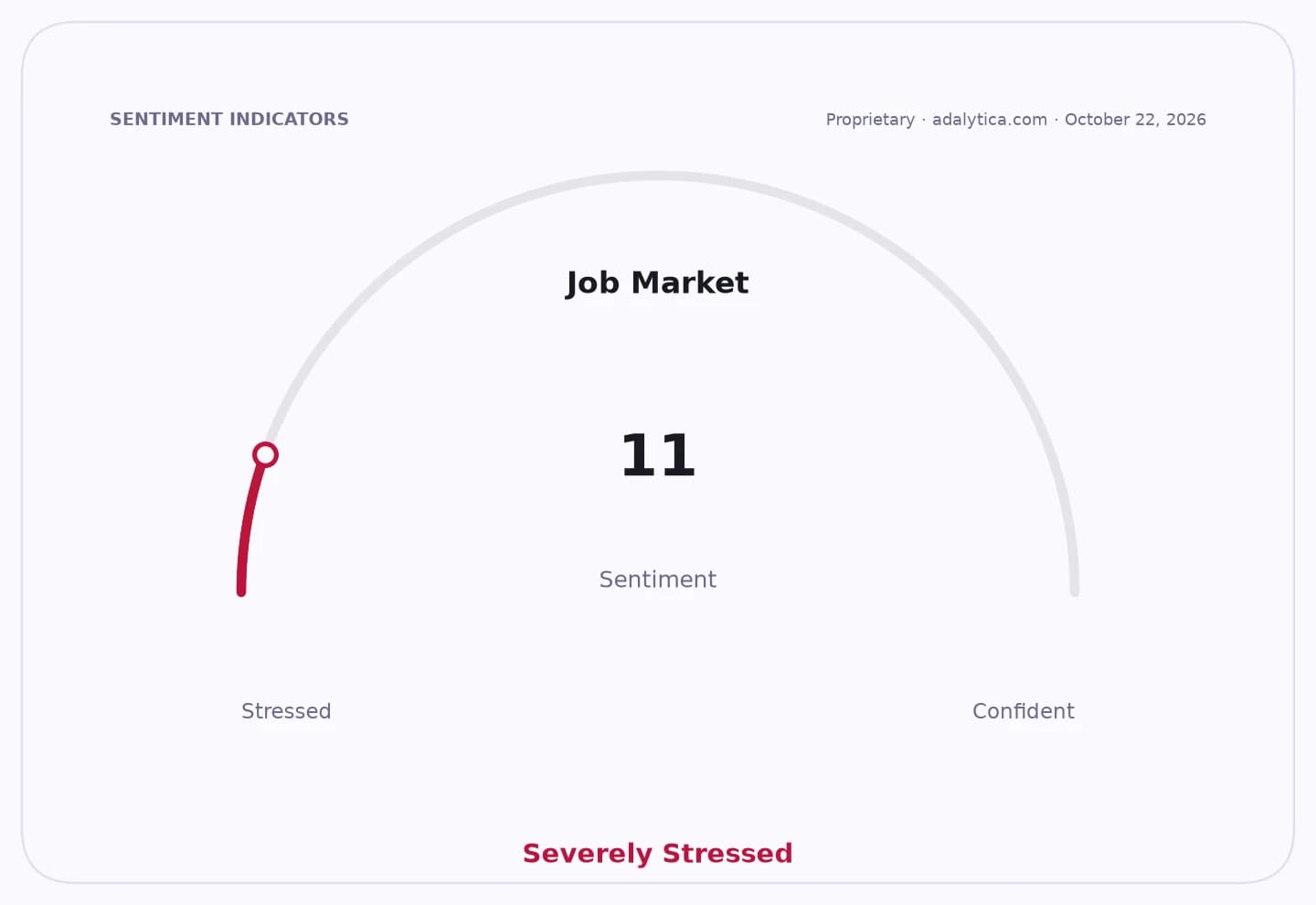
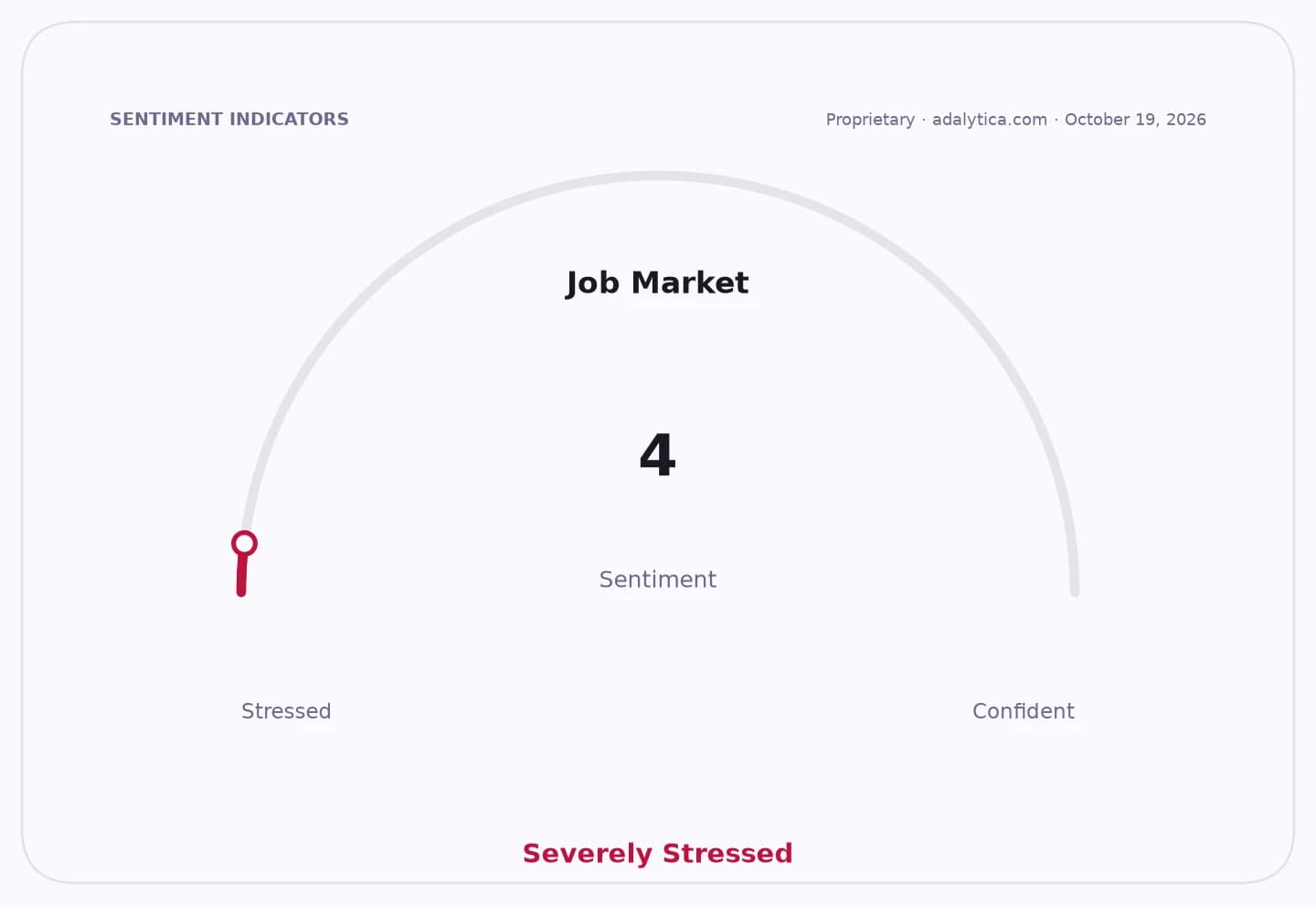
It also arrives as labour-market sentiment remains subdued. Adalytica’s Job Market Sentiment snapshot shows “Fear” at 29, with awareness at just 4 and the 30-day change sharply negative, suggesting employers and workers are still navigating a cautious hiring backdrop even as consumer confidence indicators point to a more resilient spending environment. In that setting, a framework that helps companies tap existing employees before recruiting externally may prove more attractive than credential-led hiring.
The implications are mixed for staffing firms. On one hand, a shift toward skills-based assessment could support more placements by expanding the pool of eligible candidates and creating demand for screening, training and redeployment services. On the other, it may reduce the premium once attached to scarce formal qualifications and intensify competition among recruiters as employers rely more on internal mobility and digital assessment tools.
That tension is already visible in the share performance of listed staffing companies. Korn Ferry has rebounded to $78.30, near its 50-day moving average, after a recent recovery from a pullback, while Robert Half has jumped to $45.87 after a volatile year, with its relative strength readings and trading volume pointing to renewed investor interest. ManpowerGroup, by contrast, remains well below its 50-day average despite a sharp one-day rebound, underscoring how uneven the market sees the sector’s prospects.
The fundamental backdrop is also changing. Recent company filings from Robert Half and ManpowerGroup point to a recruiting environment increasingly shaped by generative AI, higher application volumes and more complex candidate evaluation. That raises the value of firms that can sort skills from noise, but it also means the winners will be the companies that can convert the new framework into better data, better matching and better pricing.
For employers, the upside is a larger and more adaptable workforce. For workers, it could mean more routes into better jobs without a linear credentials ladder. For staffing and consulting firms, the challenge is to prove they can translate skills-based hiring from a policy idea into a durable commercial edge.
| Entity | Gains | Losses |
|---|---|---|
| Employers | ▲Larger talent pool | ▼More complex screening |
| Workers without degrees | ▲Better access to jobs | ▼Less credential advantage |
| Staffing firms | ▲More matching demand | ▼Margin pressure from competition |