A new workforce survey suggests employers face a bigger retention problem than higher salaries alone can fix, with 47% of workers saying poor management or a toxic office environment is the main reason they would quit.
Workforce survey flags retention risk beyond pay
That matters because it shifts the cost of turnover from payroll to productivity, training and lost institutional knowledge. In a labor market where companies are still competing for skilled workers, the findings imply that pay raises may not be enough to keep talent if day-to-day management is failing.
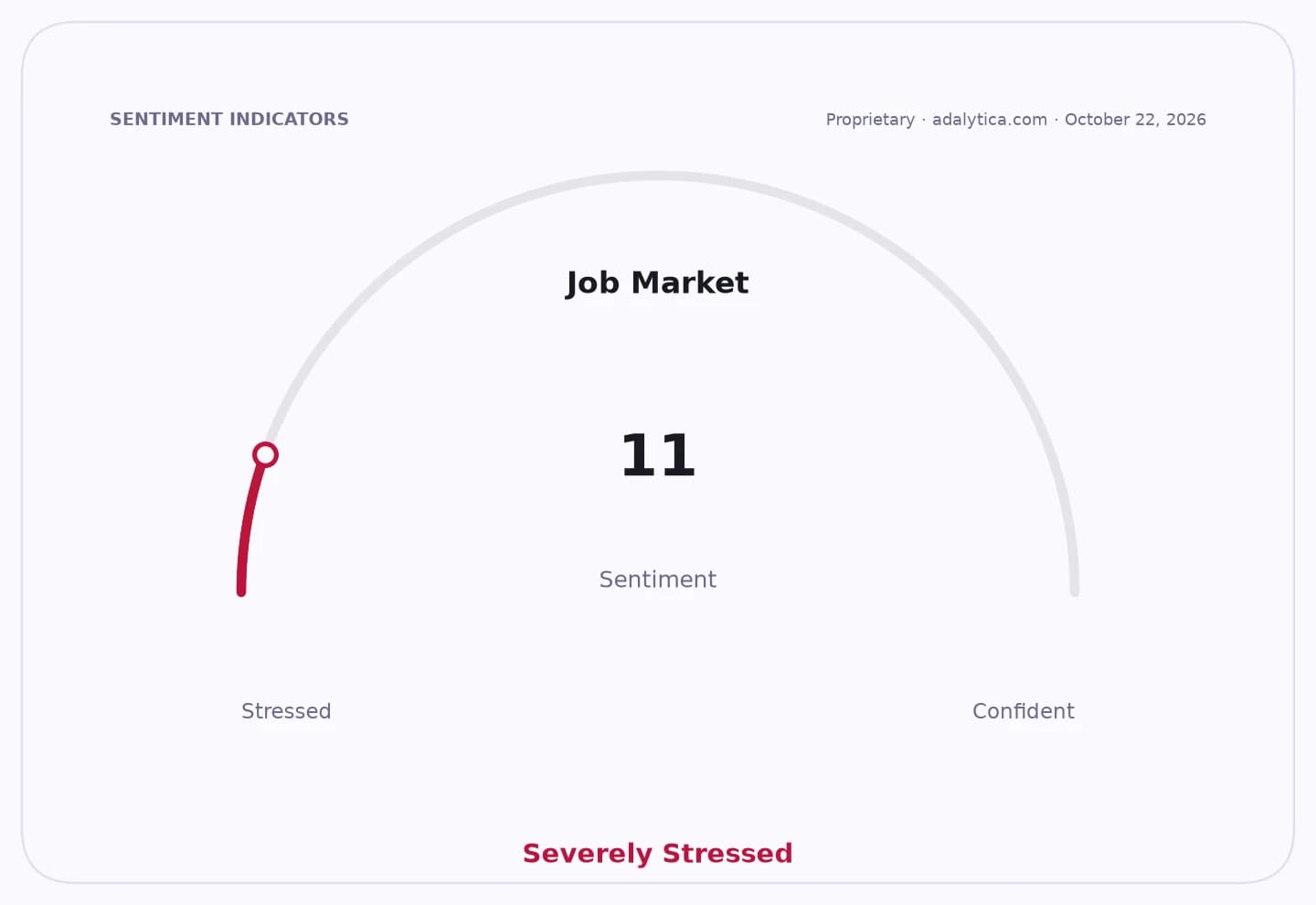
Sentiment IndicatorsⓘProprietary · adalytica.com · October 22, 2026
This is a snapshot — live sentiment, awareness and momentum for 130+ markets update continuously in the dashboard.Open AlphaPulse
The report from Genius HRTech, based on responses from 1,255 employees across seven sectors including IT, manufacturing, telecom, retail, finance and BFSI, shows 30% of respondents blame below-market pay for looking elsewhere. But 39% said they would stay with their current employer if they had better management, a healthier workplace and more flexibility.
For investors, that is a reminder that labor retention is now a margin issue as much as a compensation issue. Companies that rely on repeated hiring cycles face higher recruiting costs, weaker execution and more disruption to customer service, while employers that improve leadership quality and work-life balance may reduce churn without raising base pay across the board.
The pattern is especially relevant for service-heavy and consumer-facing businesses, where staffing problems can hit output quickly. Peer filings from companies such as McDonald’s have flagged difficulty staffing restaurants, underscoring how workplace conditions can filter through to operations even when headline wage pressure is not the only issue.
The survey also lands in a broader environment of rising attention to employee experience, with firms under pressure to preserve morale as costs remain elevated and workers become less willing to tolerate stress-heavy cultures. The next test is whether companies respond with better management practices and flexibility, or whether they keep leaning on pay increases that the data suggests may not solve the problem.
| Entity | Gains | Losses |
|---|---|---|
| Employees | ▲Better pay, flexibility, healthier workplaces | ▼Toxic management, burnout |
| Employers with strong cultures | ▲Lower turnover, higher productivity | ▼— |
| Employers relying on pay hikes alone | ▲— | ▼Higher churn, higher hiring costs |
| Recruiters and HR firms | ▲More demand for retention solutions | ▼Employers with weak leadership |