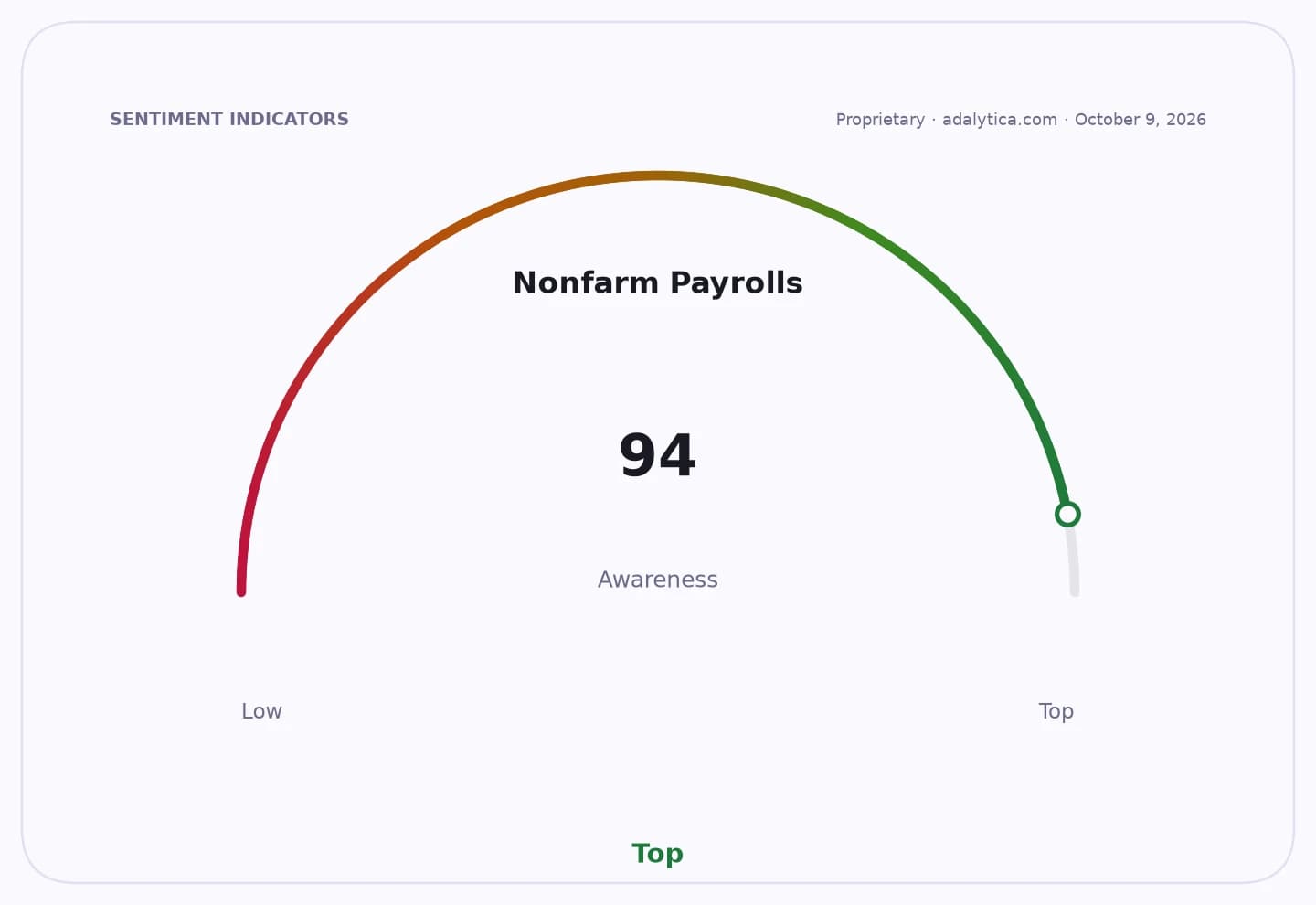
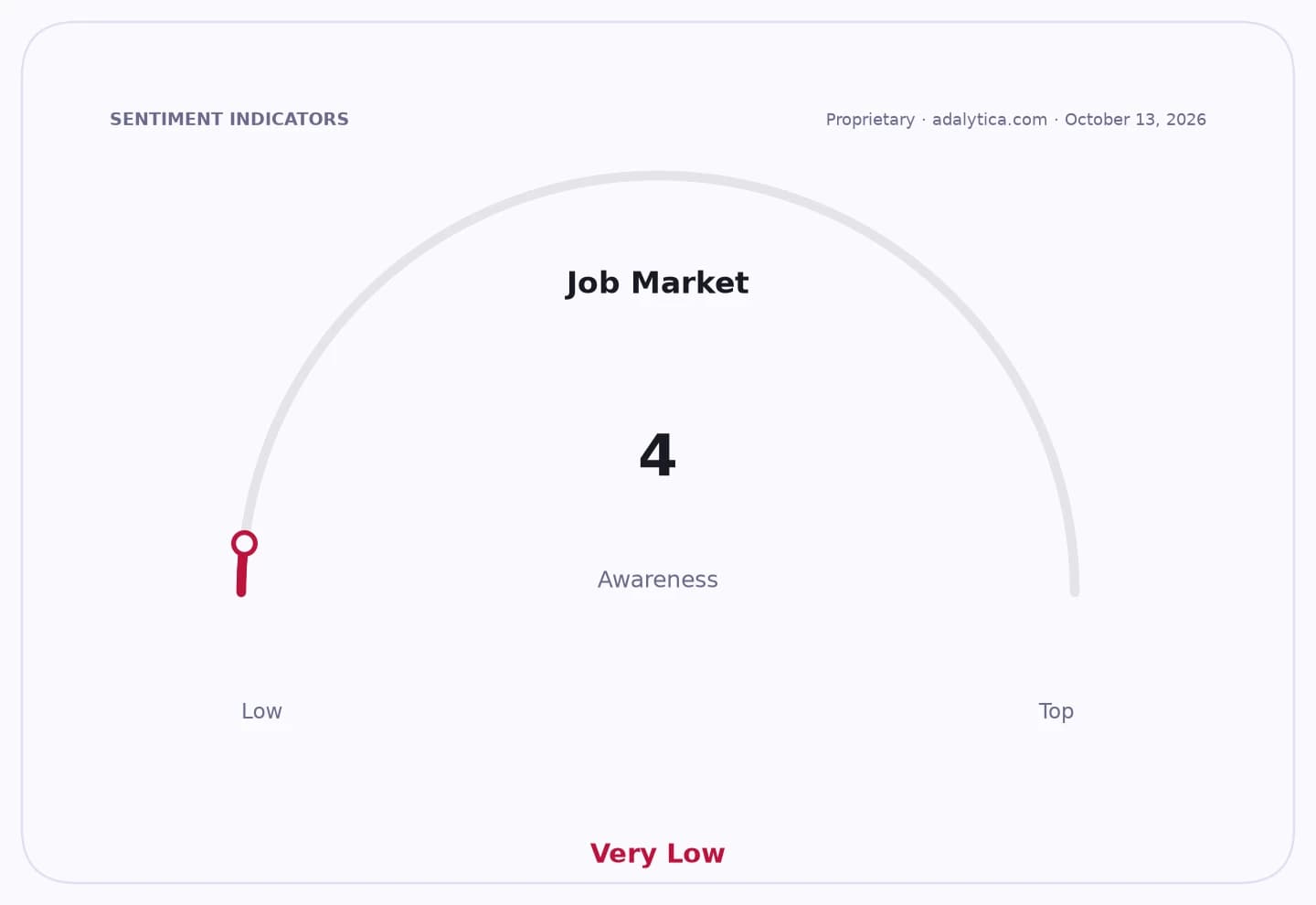
Wage growth is still running, but the balance of power in the Czech labour market is moving away from broad-based pay inflation and toward a tighter contest for specific talent.
Czech Labour Market Shifts to Skills-Based Wage Pressure
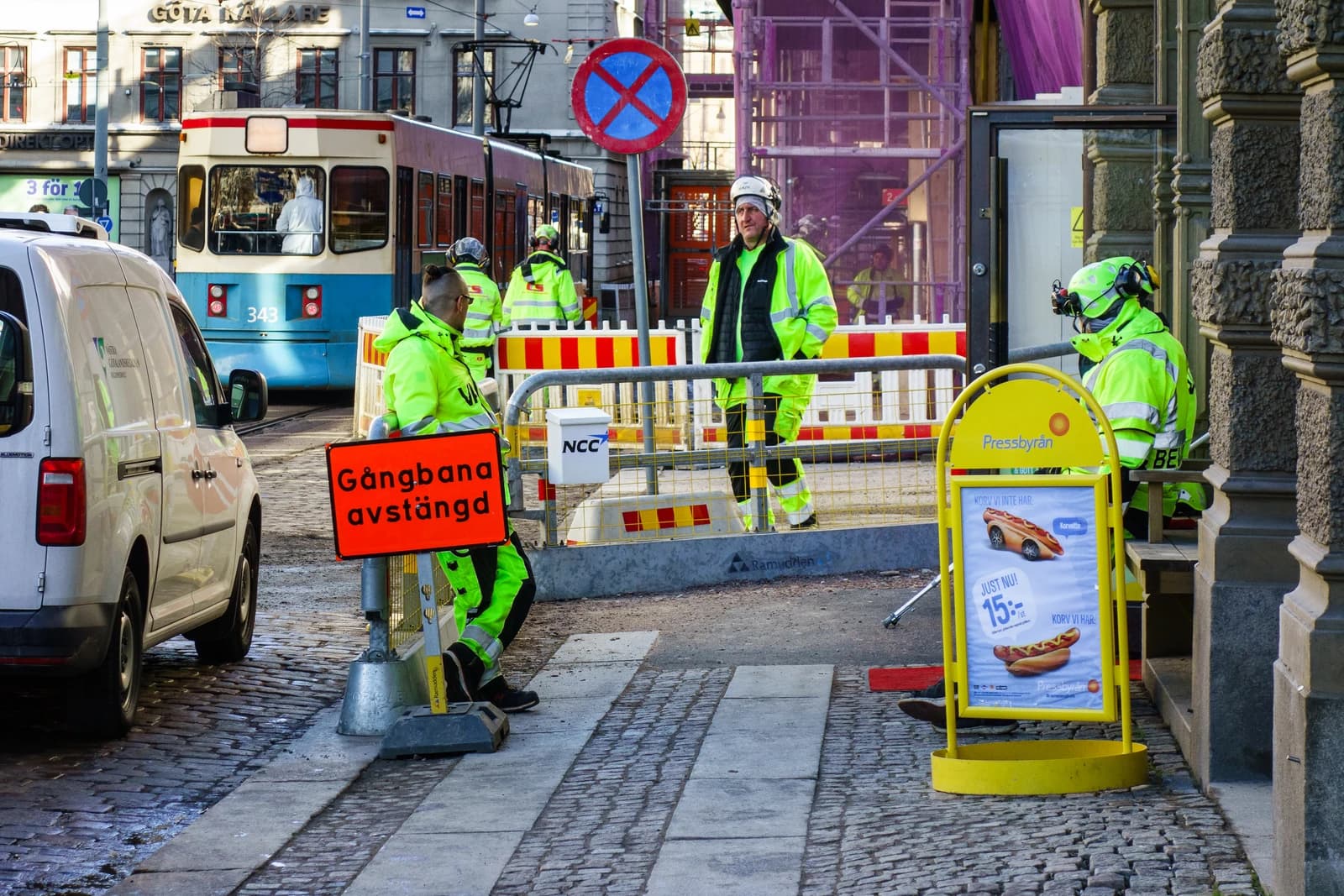
That matters because employers are no longer just bidding up salaries to fill vacancies; they are sorting more sharply by productivity, sector and region. The latest Grafton Recruitment and Gi Group survey suggests the hottest demand is concentrated in experienced specialists who can combine technical expertise with data and digital tools, while opportunities for graduates without practice are shrinking. At the same time, workers are demanding more than money — flexibility, shorter commutes, working hours and development prospects are becoming decisive in hiring.
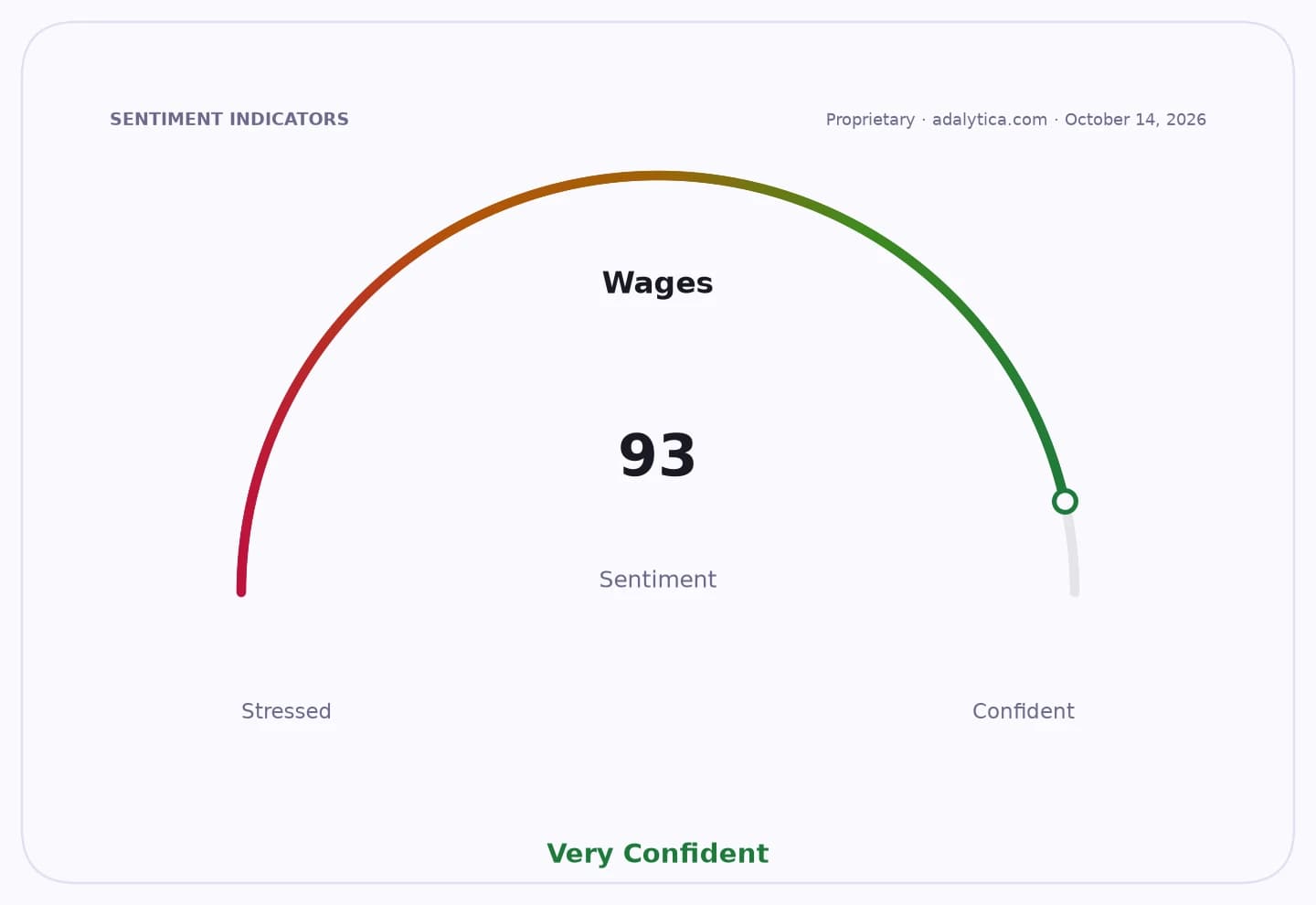
Sentiment IndicatorsⓘProprietary · adalytica.com · October 14, 2026
This is a snapshot — live sentiment, awareness and momentum for 130+ markets update continuously in the dashboard.Open AlphaPulse
The shift points to a labour market that is easing in aggregate but fragmenting underneath. Traditional pay pressure is receding in many fields, yet wage gains are still visible where shortages remain acute, especially in technical disciplines such as engineering and electrical work. By contrast, oversupplied areas including administration, customer service, marketing and HR face more competition, meaning young jobseekers may have to accept lower starting pay or move outside their chosen field.
That divergence matters for the wider economy. If wage growth is becoming more selective, overall inflation pressure from labour costs should ease, even as companies in shortage occupations continue to raise offers to secure staff. For policymakers, it also underlines that headline wage figures can mask very different conditions by region and occupation. Prague and central Bohemia remain the best-paid areas, while Karlovy Vary lags the national average by 14%. In Ústí nad Labem, where wages have risen at one of the slowest rates in the country, employers also face a drain of skilled workers to Germany, while local competition for each vacancy remains among the highest in the country.
The shortage of part-time work is another sign of structural inflexibility. Just over 514,000 people were working part-time at the end of 2025, or about 10% of employment, well below the European average above 17%. That gap limits participation by students, parents, caregivers and older workers, which in turn constrains labour supply at a time when employers say flexibility has become a necessity rather than a perk.
For investors, the message is that labour costs will not move uniformly across sectors. Companies with heavy exposure to manufacturing, logistics, healthcare and other labour-intensive fields may still face margin pressure where they cannot automate, retrain or redesign shifts. Employers that can use AI, data and automation to reduce routine work should have more room to absorb wage gains. The clearest winners are firms able to sell flexibility and career progression as part of the compensation package; the losers are businesses relying on entry-level labour, rigid schedules and thin regional labour pools.
The broader narrative is one of a labour market being reshaped by ageing, digitalisation and changing worker expectations. Wages are still rising, but the era of broad general increases is giving way to narrower, skills-led competition. The next phase will be determined less by across-the-board pay hikes than by which employers can adapt quickest to the new bargaining power of workers with scarce expertise.
| Entity | Gains | Losses |
|---|---|---|
| Skilled technicians | ▲Higher bargaining power | ▼Broader labour cooling |
| Employers with flexibility | ▲Better hiring success | ▼Rigid competitors |
| Entry-level graduates | ▲Some wage gains | ▼Fewer openings |
| Labour-heavy sectors | ▲— | ▼Margin pressure |