Alaska LNG’s backers are betting that distance, not just gas, will decide whether the $54.5 billion project gets financed.
Alaska LNG seeks finance on Asia shipping edge
The developer says sending liquefied natural gas from Alaska’s North Slope to Asia could be at least 65% cheaper than shipping from the U.S. Gulf Coast, a cost edge it argues can offset the massive price tag of the pipeline, treatment plant and export terminal. That is the core investment case for one of the most ambitious U.S. energy projects in years, and the reason it matters for investors is simple: if delivered LNG is cheap enough, the project can still compete even if upfront capital spending looks punitive.
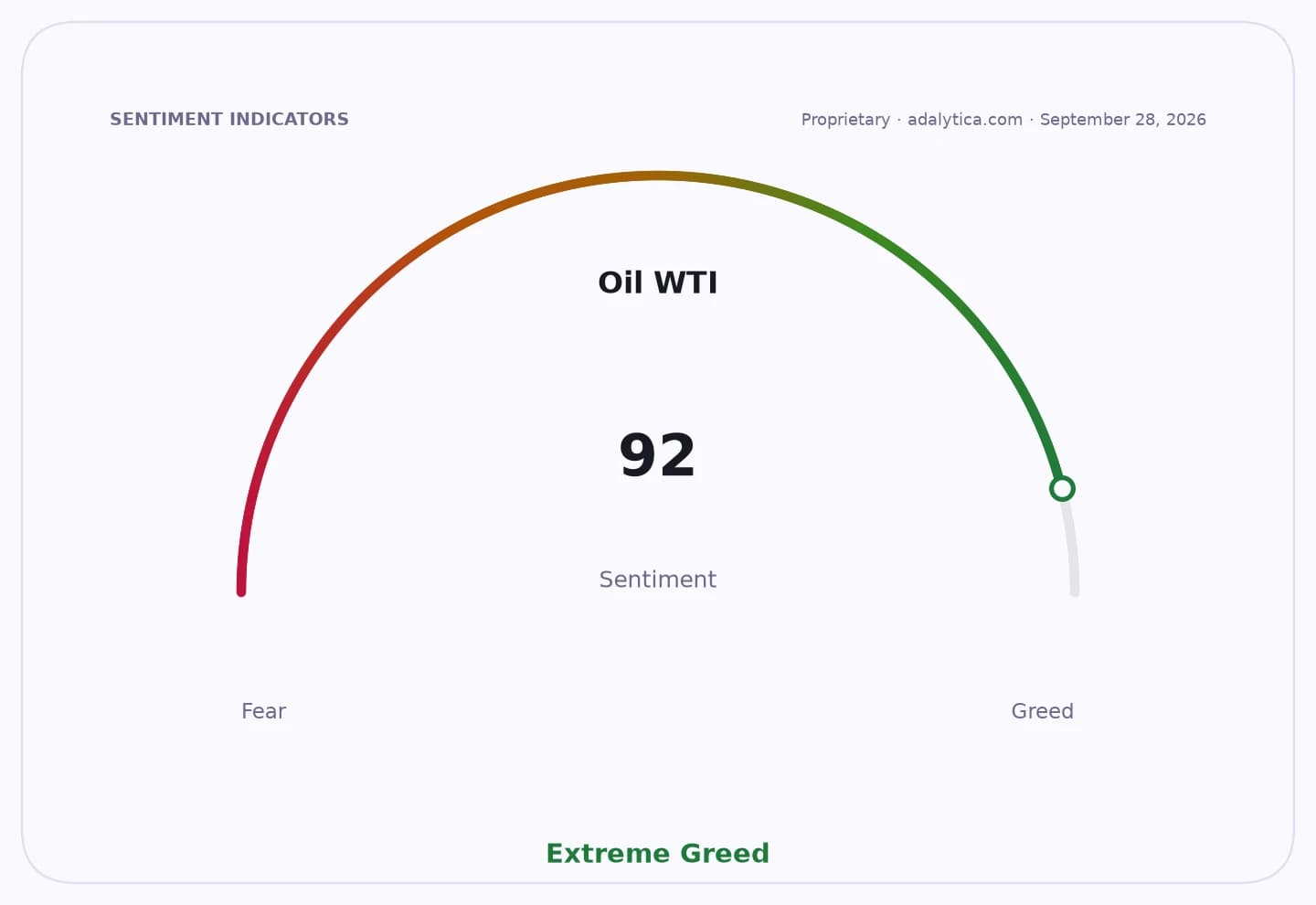
Sentiment IndicatorsⓘProprietary · adalytica.com · October 5, 2026
This is a snapshot — live sentiment, awareness and momentum for 130+ markets update continuously in the dashboard.Open AlphaPulse
Glenfarne’s communications director Tim Fitzpatrick said the project’s shipping advantage reflects the shorter route to Asia and access to stranded gas that cannot otherwise reach market. The proposed development would move gas through an 800-mile pipeline to a liquefaction plant in southern Alaska, unlocking reserves that have long sat isolated on the North Slope. Glenfarne says the project’s delivery costs work out to about $1.4 billion per MTPA, which it argues is a better measure of competitiveness than the headline build cost of about $44.5 billion to $54.5 billion.
That distinction matters because the market has been comparing Alaska LNG with Gulf Coast projects that generally came in at about $1 billion per MTPA or less after Russia’s invasion of Ukraine triggered a wave of U.S. LNG approvals. On a pure capex basis, Alaska looks expensive. On a delivered-cost basis, the developer is pitching a strategic asset with shorter sailing times into Asian demand centers and a moat that lower-cost Gulf Coast plants cannot easily replicate.
The project’s financing still faces a high bar. Glenfarne says it has identified customers for 13 million tons a year of LNG and needs 16 million tons annually to support project financing. That gap is the immediate watchpoint for investors: the story only becomes real if commercial offtake closes and lenders believe the shipping savings are durable enough to support multi-decade returns. President Donald Trump’s support adds political momentum, but politics alone will not underwrite a project of this scale.
There is also a broader market angle. A large-scale Alaska LNG build would pull capital toward midstream infrastructure, engineering contractors and LNG equipment suppliers, while reinforcing the view that energy security and Asian supply access are driving the next wave of export investment. For U.S. gas producers, it would widen the export optionality beyond the Gulf Coast. For LNG incumbents, it would add another competitor in a market where buyers still value reliability, route flexibility and delivered cost above all else.
The stock market has already shown how powerful LNG narratives can be when they are tied to long-duration export cash flows and infrastructure scarcity. Cheniere Energy and other LNG-linked names tend to benefit when new capacity looks financeable, while pipeline builders and project contractors often catch the early trade when a project moves from concept to commercial execution. The risk, of course, is that Alaska remains a headline project rather than a funded one.
The bigger takeaway is that Alaska LNG is no longer being sold as just another expensive U.S. gas export idea. It is being framed as a toll road to Asia with a structural shipping advantage, and if Glenfarne can close the customer gap, the market may have underestimated how much that logistics edge is worth. Investors should watch the offtake count, the financing structure and any South Korea role closely, because those are the catalysts that will decide whether the project becomes a multibillion-dollar buildout or another stranded Arctic ambition.
| Entity | Gains | Losses |
|---|---|---|
| Alaska LNG / Glenfarne | ▲Financing momentum | ▼Skeptics on project economics |
| Asian LNG buyers | ▲Lower delivered costs | ▼Gulf Coast suppliers |
| U.S. LNG export rivals | ▲Policy tailwind, market expansion | ▼Share of Asian demand |
| Engineering, pipeline and LNG contractors | ▲Large capex pipeline | ▼Delay if financing slips |