Albania is moving closer to pricing its economy in euros, a shift that could lower currency risk for businesses and lenders but also tighten the country’s dependence on European Central Bank policy and investor confidence in the region.
Albania's Euro Shift Could Boost Stability
The change matters because Albania’s national currency has long insulated the economy from the euro zone’s monetary cycle. A broader move toward the euro would likely cut hedging costs, make cross-border trade and tourism accounting simpler and support foreign investment, but it would also reduce policy flexibility for a small, open economy still outside the single currency bloc.
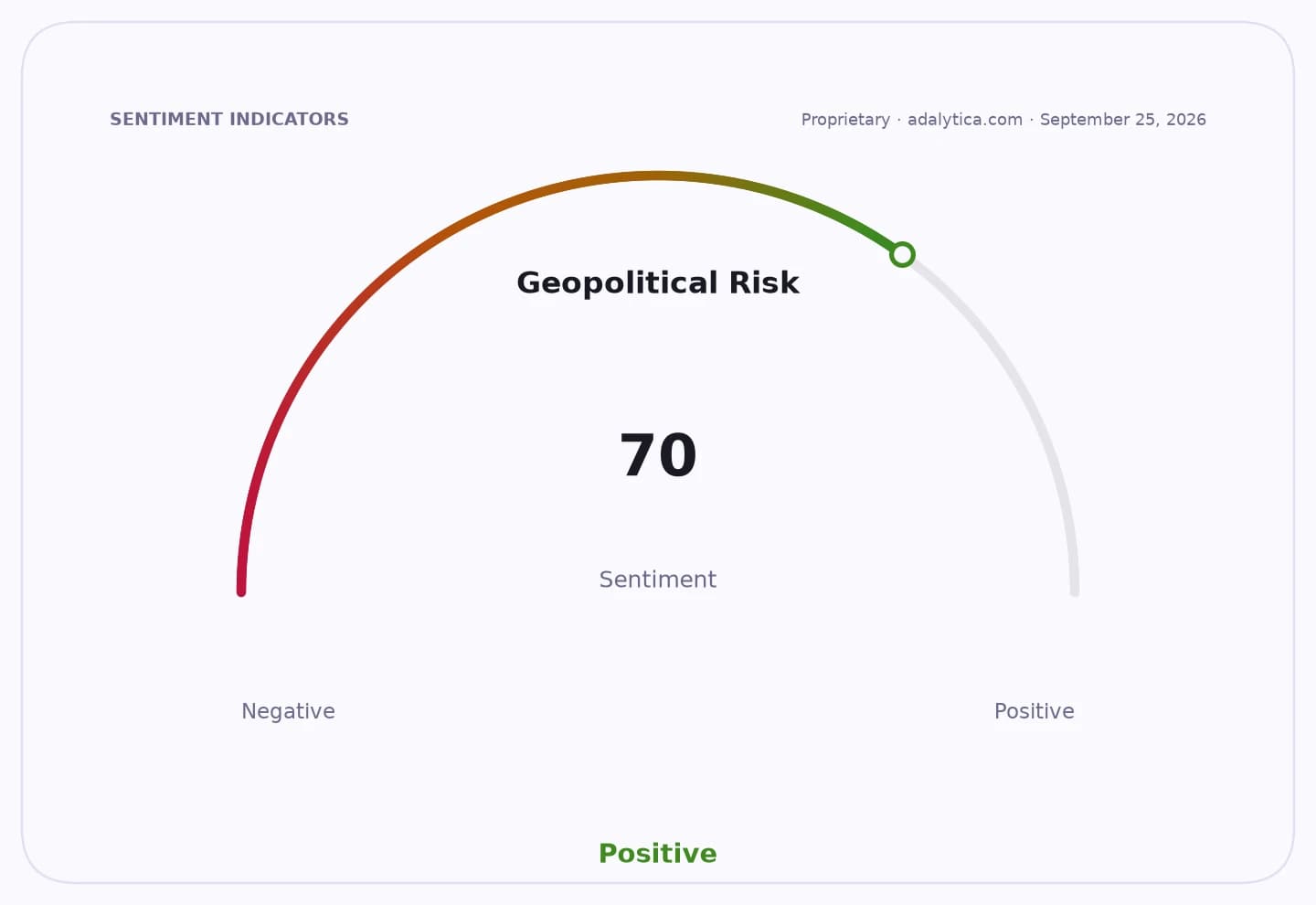
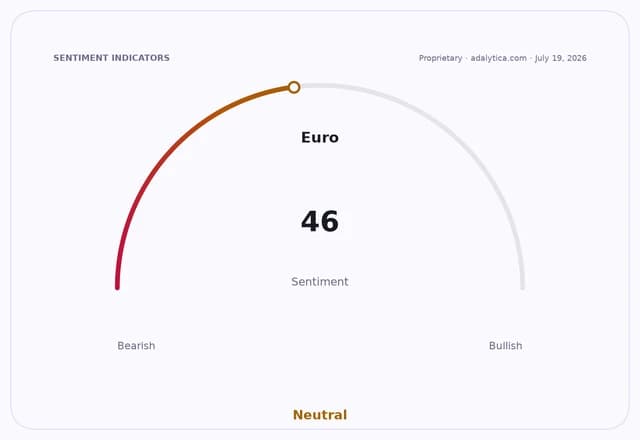
Sentiment IndicatorsⓘProprietary · adalytica.com · July 19, 2026
This is a snapshot — live sentiment, awareness and momentum for 130+ markets update continuously in the dashboard.Open AlphaPulse

Markets are already leaning toward a stronger euro backdrop. The FXE euro trust has held near $105.61, with its 50-day moving average at $106.45 and the 200-day at $107.12, while the inverse EUO fund sits around $30.63, suggesting traders are not pricing a broad euro collapse even as momentum remains choppy. Conventional technical indicators point to a market that is stabilizing rather than breaking out, with FXE’s RSI at 58.9 and EUO’s at 45.2.
Adalytica’s euro trade signals also show neutral sentiment at 46, though awareness remains at an “extreme fear” reading of 4, underscoring how investors can still be underexposed to the currency story even when broad positioning is steady. For Albania, that kind of backdrop could help if a euro transition is seen as a credibility anchor rather than a political gamble.
The macro significance is larger than a domestic currency label. If Albania increasingly settles wages, savings, lending and contracts in euros, its banking system and exporters could benefit from less exchange-rate volatility, while consumers and importers would face a cleaner pricing environment for goods tied to the euro zone supply chain. That could also make Albanian assets more legible to foreign investors, especially if the government pairs the shift with tighter fiscal discipline and clearer regulation.
The risk is that euroization, formal or informal, can lock in imported policy rather than domestic control. The country would become more exposed to ECB rate decisions, and any mismatch between Albania’s growth cycle and euro zone monetary conditions could pinch credit and demand.
For investors, the story is about convergence. A more euro-aligned Albania could be supportive for banks, payment processors, tourism and real-estate flows, but it would also raise the bar on sovereign credibility and reserve management. The next catalyst is whether policymakers outline a concrete timetable and legal framework for the transition, which would determine whether this is a symbolic step or the start of a structural currency overhaul.
| Entity | Gains | Losses |
|---|---|---|
| Albanian exporters | ▲Lower FX volatility | ▼Less policy flexibility |
| Banks and lenders | ▲Cleaner euro funding | ▼ECB policy dependence |
| Foreign investors | ▲Easier capital entry | ▼Reform execution risk |
| Domestic currency holders | ▲Price stability | ▼Potential loss of monetary control |