Algeria’s rise to become Africa’s second-largest LNG exporter in the first half of 2026 matters because it comes at a moment when the global gas market is being reshaped by disruption in the Strait of Hormuz, forcing buyers to hunt for alternative supply and lifting spot prices across Asia.
Algeria Gains as LNG Buyers Seek Non-Gulf Supply
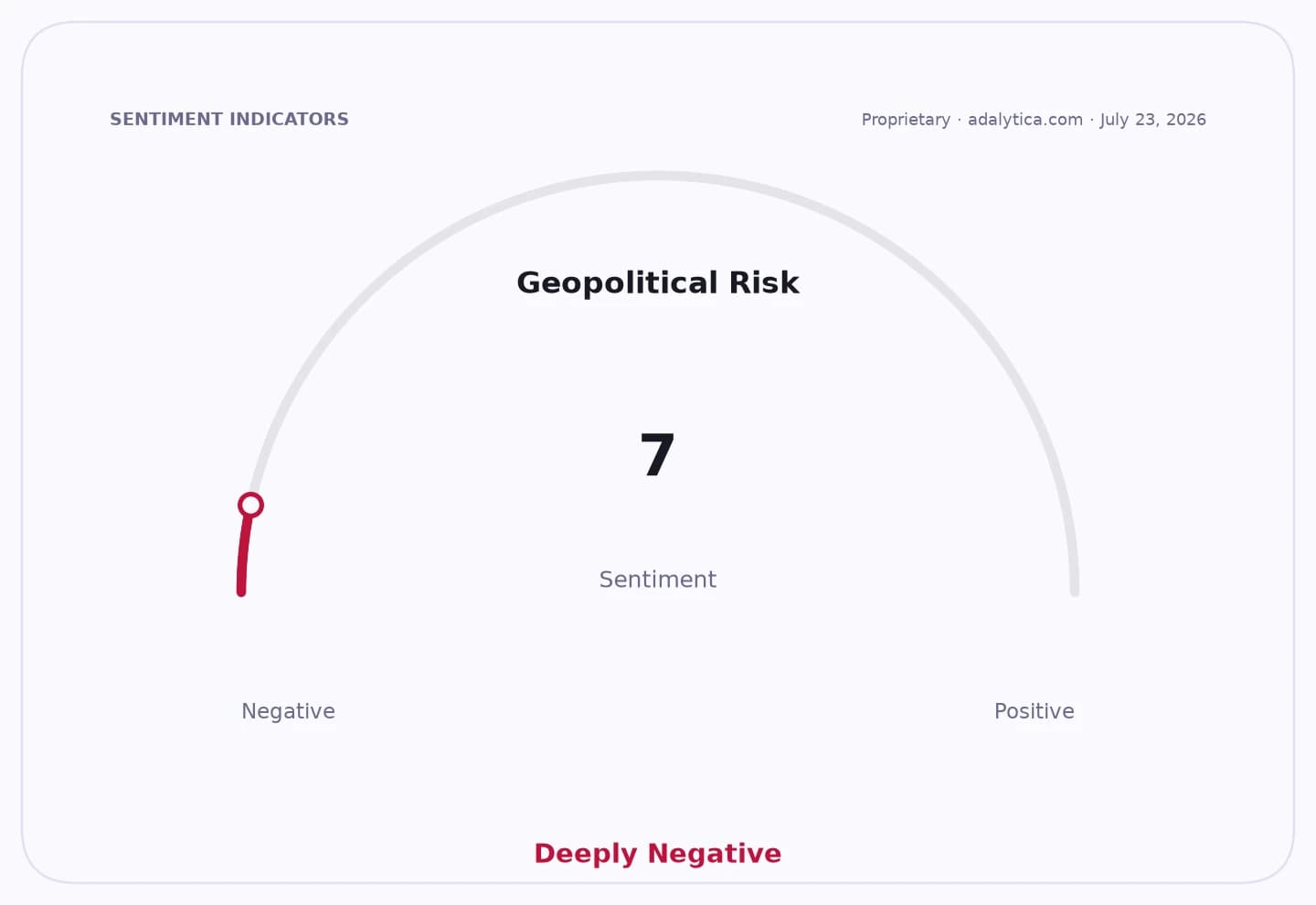
For Europe and parts of Asia, the significance is immediate: every incremental cargo from North Africa helps offset tighter flows from the Gulf, where the security risk has exposed how concentrated the LNG trade remains. The crisis has already pushed Asian spot prices higher and prompted buyers in Pakistan, Bangladesh, India and China to look at cheaper fuels or secure substitute cargoes. In that environment, Algeria’s output is not just a regional data point but part of a broader rebalancing in global gas flows.
Sentiment IndicatorsⓘProprietary · adalytica.com · July 23, 2026
This is a snapshot — live sentiment, awareness and momentum for 130+ markets update continuously in the dashboard.Open AlphaPulse
The market backdrop helps explain why LNG exporters and producers have been in focus. Shell’s shares have firmed alongside a rebound in gas-linked earnings expectations, while LNG stock has rallied sharply this year, reflecting the view that tighter supply and stronger pricing can support profits across the sector. U.S. gas futures have also been volatile, underscoring how quickly geopolitics can transmit into pricing even far from the Gulf.
Algeria’s position is especially relevant because North African supply does not face the same chokepoint risk as cargoes moving through Hormuz. That gives it strategic value to utilities and traders seeking diversification, even if the country remains smaller than the dominant suppliers. The upside case for Algeria is that sustained demand and higher prices encourage continued investment in liquefaction and upstream gas. The bear case is that Algeria’s gains may be limited by infrastructure constraints, maintenance risk and competition from larger producers that can quickly capture market share once the immediate crisis eases.
The broader implication for investors is that LNG remains a geopolitical asset class as much as a commodity market. Producers with reliable export routes, flexible marketing and spare capacity are likely to command a premium, while buyers exposed to narrow supply corridors face more margin pressure and hedging costs. That dynamic also supports tanker owners, infrastructure developers and integrated majors with global portfolios.
If Hormuz tensions persist, Algeria could continue to benefit from the search for non-Gulf supply. If they ease, the test will be whether this export strength reflects a lasting structural gain or only a temporary windfall from one of the most disruption-prone periods the LNG market has seen in years.
| Entity | Gains | Losses |
|---|---|---|
| Algeria | ▲Higher export share | ▼Supply bottlenecks |
| European buyers | ▲More supply options | ▼Less pricing leverage |
| Asian importers | ▲Diversified cargo sources | ▼Higher LNG costs |
| Gulf exporters | ▲— | ▼Market share pressure |




