Chinese tech giants are under pressure again as U.S. restrictions on access to American technology intensify, adding geopolitical risk to a sector already struggling with slower growth, tighter regulation and a more difficult competitive landscape.
Alibaba, JD.com, PDD Fall on U.S. Tech Restrictions
That matters because Alibaba, JD.com and PDD are not just big internet names — they are bellwethers for China’s consumer economy and for investor appetite toward the country’s equities. When these stocks slide together, as they have, it suggests markets are pricing in more than a temporary setback. They are discounting a tougher earnings path, weaker sentiment toward China assets and a prolonged fight over who controls the infrastructure behind artificial intelligence and e-commerce.
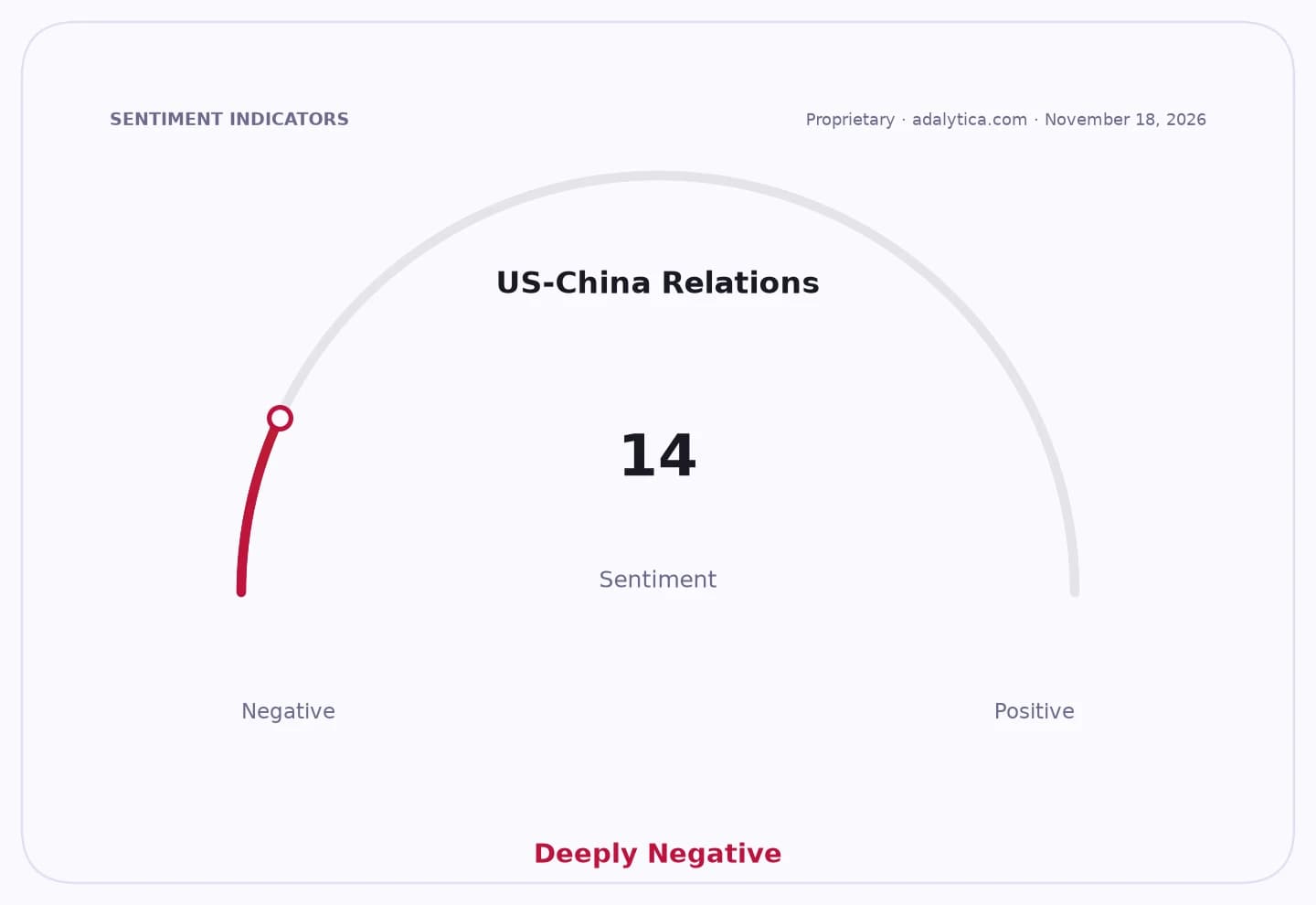
Sentiment Indicators

Alibaba has been the clearest example of the strain. The stock has dropped to $87 from $175.57 in late January, more than halving in less than a year. Its 50-day moving average now sits well above the share price, while the 200-day moving average is also far higher, a sign of persistent downward momentum in conventional technical terms. PDD has also retreated sharply, trading around $78 after spending much of the year above $100 and briefly above $120. JD.com, meanwhile, has slipped back to about $25.88 from highs near $33.77 earlier this year.
The move is important economically because these companies sit at the intersection of consumption, cloud spending, logistics and advertising — all areas that reflect the health of China’s growth engine. If investors demand a bigger risk discount on Chinese tech, it becomes harder for these firms to fund expansion, buy back stock aggressively or command premium valuations. That can feed back into the broader economy by tightening financial conditions for a sector that remains central to jobs, supply chains and digital commerce.
The latest pressure also comes as Washington hardens its stance on Chinese access to U.S. technology, including remote access to American AI systems. That adds another layer of uncertainty for Chinese groups already navigating export controls, uneven domestic demand and regulatory scrutiny at home. For global investors, the issue is not just whether earnings miss expectations in one quarter. It is whether Chinese tech can participate fully in the next wave of AI-led growth if access to the underlying tools, chips and software keeps narrowing.
The market signals are not encouraging. Alibaba’s relative strength index has fallen into oversold territory, while PDD and JD.com have both weakened from earlier highs, suggesting sellers remain in control even after recent rebounds. In other words, this is not a one-day panic. It looks more like a sustained rotation away from China’s biggest internet franchises.
For long-term investors, the lesson is simple: Chinese tech can still offer value, but value alone is not enough when policy risk and geopolitical friction keep rising. The next leg will depend on whether Beijing can revive confidence in private enterprise and whether Washington’s tech restrictions remain targeted or broaden further. Until then, these stocks look more like watchlist candidates than fresh conviction buys, even for patient investors who usually welcome volatility.
| Entity | Gains | Losses |
|---|---|---|
| U.S. tech rivals | ▲More protection from Chinese competition | ▼Less access to China-linked demand |
| Chinese tech giants | ▲Potentially cheaper valuations | ▼Market confidence and capital access |
| Global investors | ▲Better entry points if risks are priced in | ▼Higher geopolitical and earnings risk |
| Chinese consumers/economy | ▲Possible policy support from Beijing | ▼Weaker investment and sentiment |