China’s latest warning around Nvidia underscores a far bigger shift than one company’s stock slump: the world’s most important AI chip supplier is now trapped between U.S. export controls, Chinese regulatory pressure and rising scrutiny over whether high-end semiconductors are being diverted through Asian supply chains.
Nvidia Faces China Pressure and AI Supply Chain Risk
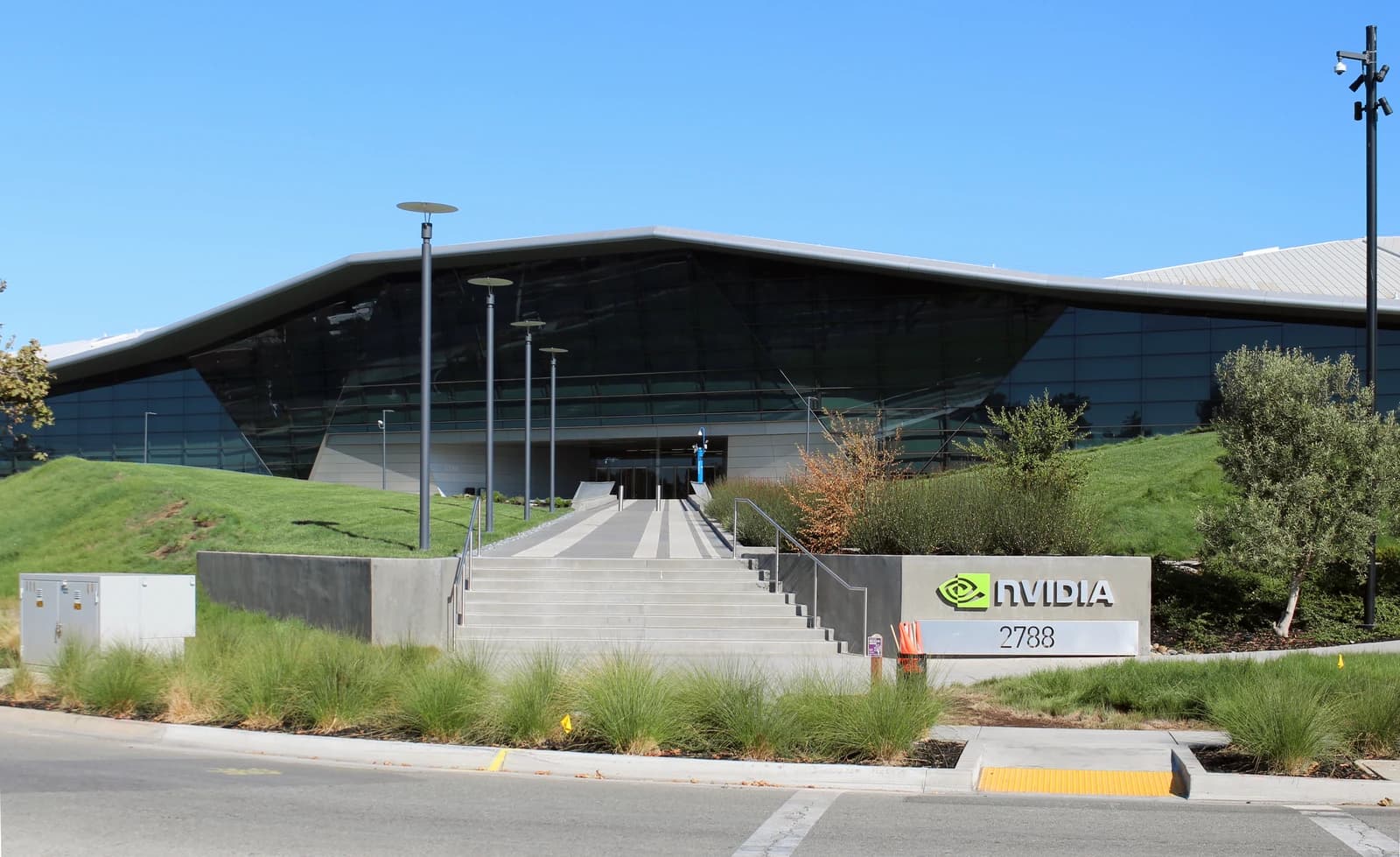
That matters because Nvidia is not just a mega-cap stock, it is the choke point for the AI buildout. When Washington tightens controls and Beijing pushes back, the result is not simply lower sales into China — it is a potential reordering of where AI infrastructure gets built, who gets paid along the supply chain and which companies can keep growing without geopolitical friction.
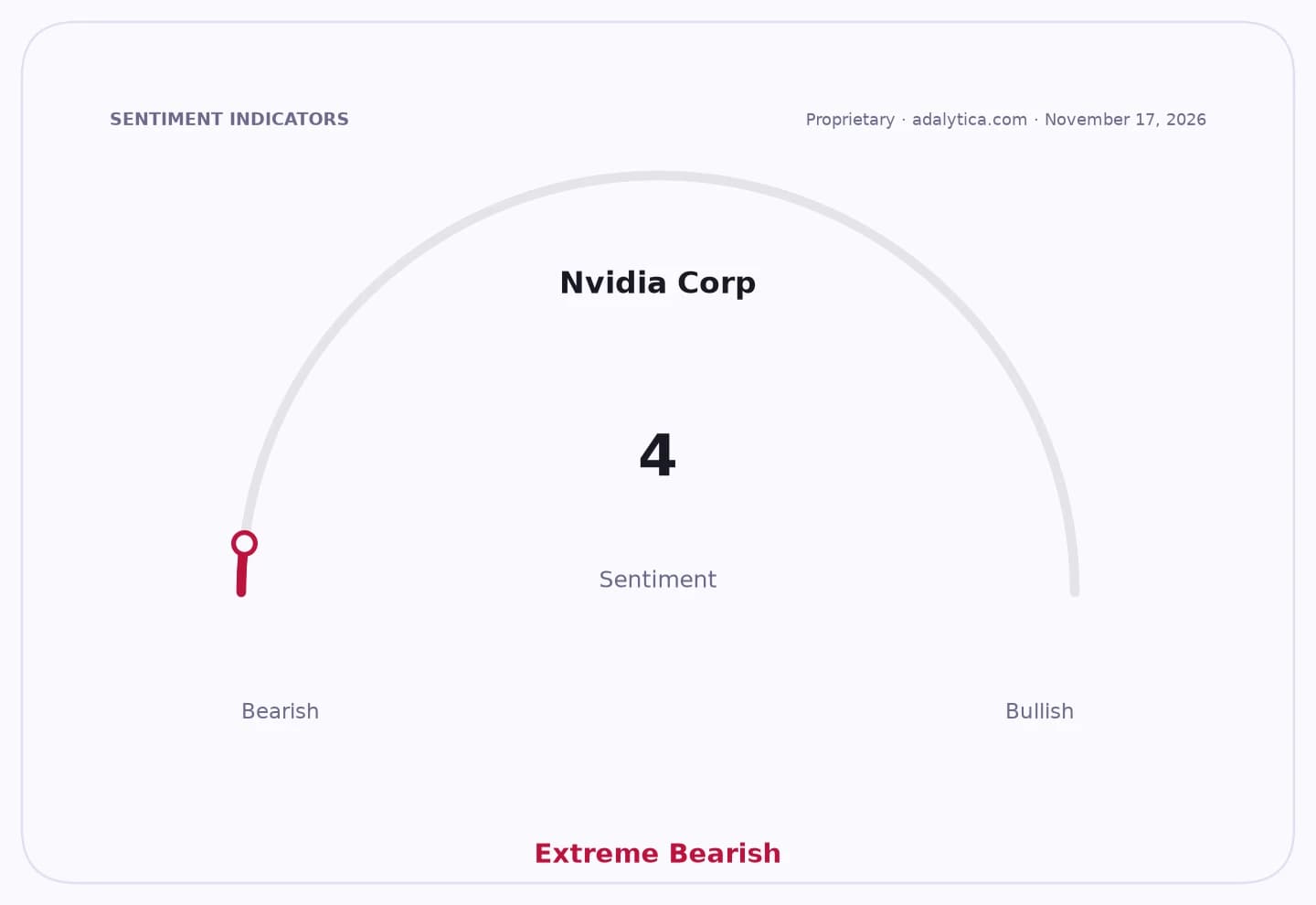
Sentiment Indicators
Nvidia Corp
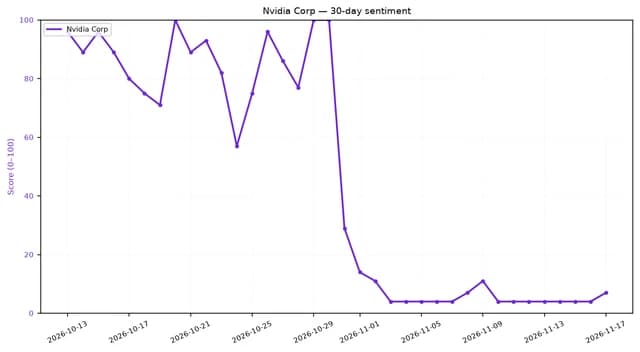
Nvidia shares have already been punished hard. The stock closed at $154.29 on Nov. 17, down sharply from $221.97 on Oct. 21 and far below its 50-day moving average of $211.73. Its RSI reading of 16.1 points to deeply oversold conditions, while the conventional MACD remains sharply negative. The VanEck Semiconductor ETF, SOXX, has also weakened, closing at $140.19, well below its 50-day average of $170.53. The message from the tape is clear: investors are not pricing a routine pause, they are repricing a risk premium on the entire AI hardware stack.
The economic stakes extend beyond Nvidia’s own revenue. Export controls restricting data center GPUs can hit not only chip sales but also networking gear, systems integration and the broader ecosystem of suppliers that depend on AI server demand. Nvidia’s latest filings already warn that tougher U.S. restrictions could curb demand for its products and hurt networking revenue tied to servers containing its GPUs. That is why the issue is now larger than one vendor’s China exposure: it threatens the efficiency of global capital spending on AI infrastructure.
The pressure is also moving through the supply chain. Taiwan Semiconductor Manufacturing Co. has held up better than Nvidia in the recent selloff, closing at $360.04 on Nov. 17, but its shares have fallen from $476.29 in late June and now sit near a 50-day average of $427.31. That tells you investors are increasingly questioning whether the AI capex boom can stay as smooth as it looked earlier this year. Even with a 200-day average still below the spot price, the broader trend has turned choppy, and that is exactly where geopolitical shocks can do the most damage: not by killing demand outright, but by making customers and manufacturers more cautious.
This is where the market may be missing the second-order opportunity. If Nvidia’s China channel becomes structurally less reliable, the beneficiaries are not necessarily the obvious high-fliers of the past year, but the companies that can substitute, localize or diversify AI infrastructure. That could mean semiconductor names with less direct China sensitivity, foundry and packaging players with diversified capacity, and defense- or sovereign-AI-linked infrastructure suppliers that benefit from nations trying to reduce reliance on a single dominant chip provider.
The wider macro backdrop makes this more important, not less. U.S. 10-year Treasury yields have climbed to 5.15%, a level that tightens financial conditions just as AI spending becomes more capital intensive. In that environment, investors are less forgiving of geopolitical uncertainty, supply-chain friction or delayed payback periods. When rates are high and policy risk is rising, the market stops rewarding growth at any price and starts favoring companies with pricing power, scarce capacity and secure end demand.
China’s warning, in other words, is not just a headline risk for Nvidia. It is a signal that the AI trade is entering a more fragmented, more political and potentially more investable phase. I believe the best returns from here may come from owning the picks-and-shovels that can survive the split, not the names most exposed to a single cross-border choke point. For investors, this is the moment to look past the panic and position for the next winners in AI infrastructure, not the last ones.
| Entity | Gains | Losses |
|---|---|---|
| Nvidia | ▲domestic diversification push | ▼China-linked sales visibility |
| TSMC | ▲foundry demand from AI | ▼export-control uncertainty |
| SOXX holdings | ▲selective rerating opportunities | ▼sector-wide multiple compression |
| AMD and rivals | ▲share gains if buyers diversify | ▼less immediate pricing power |