Amazon just crossed a market value of $3 trillion, and the move matters because it says investors are no longer valuing the company as just an e-commerce giant — they are paying for a faster-growing cloud and AI platform with enormous cash-generation power.
Amazon Tops $3 Trillion After 36.7% AWS Growth

That’s the real story behind the latest rally. Amazon’s shares jumped after record quarterly results showed AWS revenue growth of 36.7%, a pace that puts the cloud business back in the elite growth category and reinforces the idea that Amazon’s most profitable engine is still getting stronger. For long-term investors, that combination of scale and acceleration is exactly what can justify a premium valuation.
Sentiment IndicatorsⓘProprietary · adalytica.com · August 8, 2026
This is a snapshot — live sentiment, awareness and momentum for 130+ markets update continuously in the dashboard.Open AlphaPulse

The stock’s climb has been powerful. Amazon closed at $274.48 on Aug. 7, after touching an all-time high above that level earlier in the week, and it now sits well above both its 50-day moving average and 200-day moving average. The 50-day moving average was around $247.51, while the 200-day was about $236.54, a sign that the uptrend has real momentum. The RSI near 63 suggests the shares are strong without yet looking wildly stretched, while the positive MACD reading points to a trend that is still building.
For investors, the key question isn’t whether the stock can swing lower in the next few weeks — it can, and likely will. The bigger question is whether Amazon’s business can compound earnings and free cash flow over the next three to five years. On that score, the answer still looks favorable. AWS remains a highly profitable business, and Amazon’s scale in logistics, advertising, and cloud gives it multiple ways to turn revenue growth into lasting shareholder value.
Jeff Bezos’s sale of 15 million shares worth more than $4 billion grabbed headlines, but it does not change the core investment case. Founders sell for many reasons, and one large sale does not alter Amazon’s underlying economics. What matters more is that the company continues to report robust operating cash flow and remains one of the few firms with the balance-sheet flexibility to keep investing aggressively in AI infrastructure while still serving customers at global scale.
There are risks, of course. Amazon’s filings still point to foreign exchange, energy costs, trade policy, and supply volatility as sources of pressure. Heavy AI spending can also weigh on margins in the near term. But for investors willing to think in years rather than days, those are the kinds of disruptions that often create opportunity in a dominant franchise rather than destroy it.
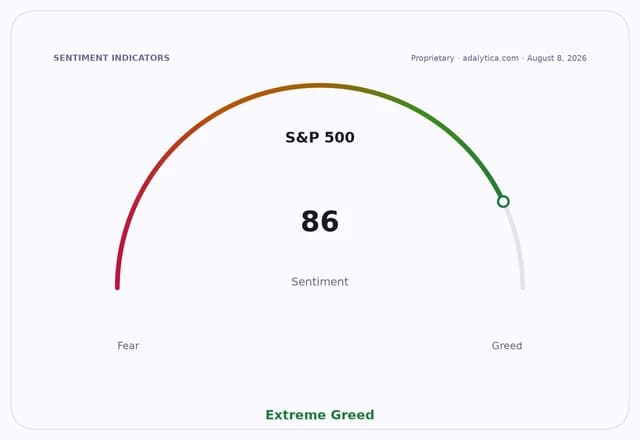
The broader market backdrop also helps explain the enthusiasm. The S&P 500 is flashing extreme greed in Adalytica.com’s sentiment snapshot, while consumer spending sentiment is at the strongest reading in the dataset. That kind of risk appetite tends to favor companies like Amazon that can combine growth, scale, and a credible AI story. Still, investors should remember that great businesses can still be volatile, and discipline matters more than excitement.
My take: Amazon still looks like a buy for patient investors who want exposure to cloud computing, AI, e-commerce, and digital advertising in one of the market’s best compounders. If you already own it, this is a stock to hold for the long term. If you don’t, the best approach is to think in terms of building a diversified portfolio over time, not chasing a breakout on any single day.
| Entity | Gains | Losses |
|---|---|---|
| Amazon shareholders | ▲AI-led upside | ▼Short-term volatility |
| AWS | ▲Higher growth valuation | ▼Margin pressure from investment |
| Jeff Bezos | ▲Liquidity from share sale | ▼None on fundamentals |
| Short sellers | ▲Lower conviction case | ▼Breakout momentum |




