American Hotel Income Properties REIT LP is moving to sell 45 hotels for $215.5 million, a transaction that underscores how deeply capital discipline is reshaping the lodging sector and why smaller, highly leveraged hotel owners are under pressure to simplify fast.
American Hotel Income Sells Hotels to Cut Debt
That matters because hotels are one of the most cyclical real estate categories, and in a world of higher rates, tighter refinancing conditions and uneven demand, the market is rewarding owners that can unlock capital, cut debt and narrow their portfolios. For American Hotel Income, the deal is not just an asset sale — it is a survival-and-reset move that can improve liquidity, reduce financial strain and give management room to reposition the balance sheet before the next downturn hits.
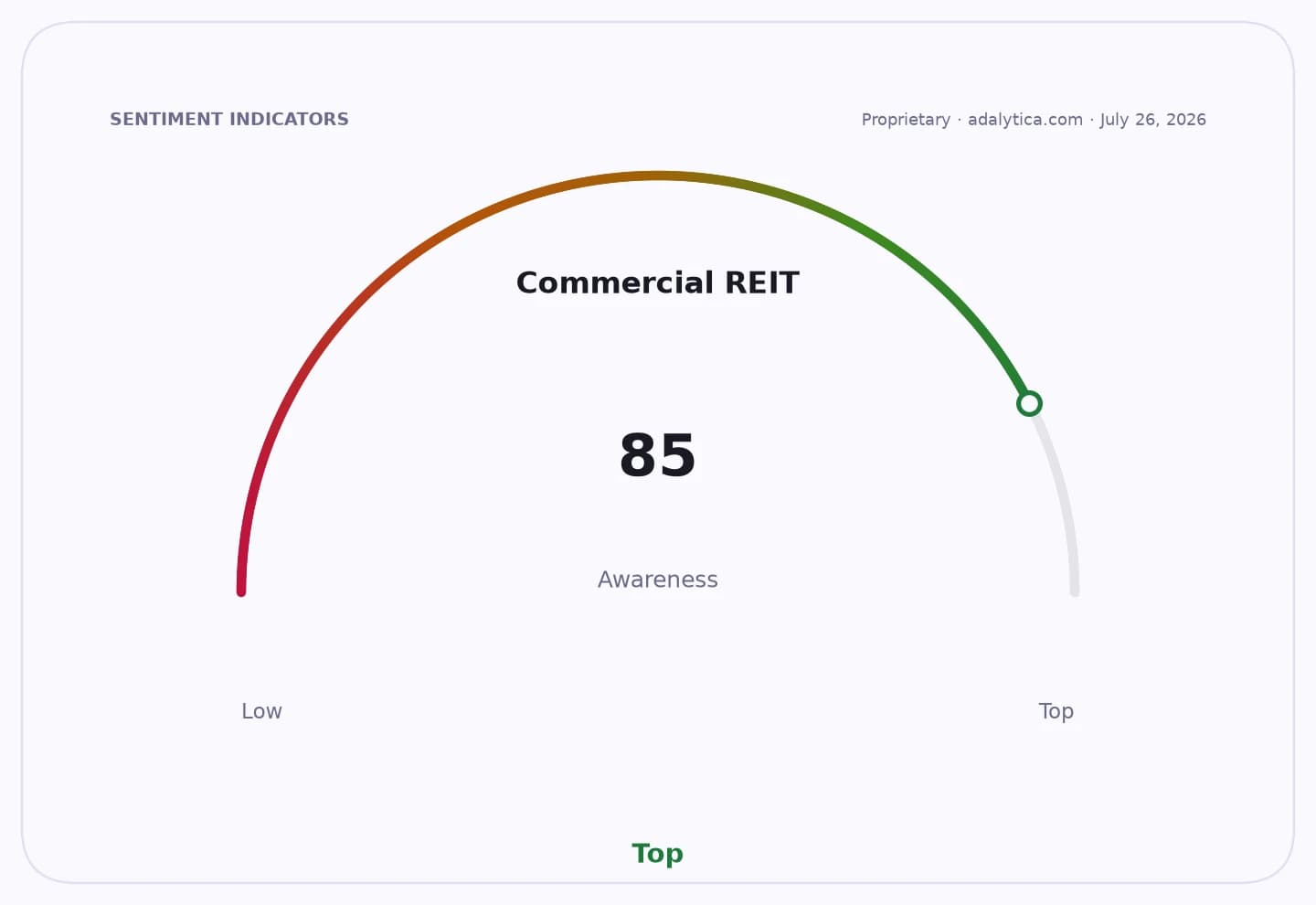
Sentiment IndicatorsⓘProprietary · adalytica.com · July 26, 2026
This is a snapshot — live sentiment, awareness and momentum for 130+ markets update continuously in the dashboard.Open AlphaPulse
The broader message is that investors are still paying up for hotel assets with operating history and cash flow, but they are doing so selectively. The sector has remained active, with marquee transactions and new development plans globally, and North American hotel room rates have continued to rise even as occupancy has softened in some markets such as Canada. That combination is creating a split screen: well-located, better-capitalized hotel owners can still trade assets at attractive valuations, while weaker balance sheets are being forced to sell into a market that is demanding discipline.
For REIT investors, that makes portfolio quality and leverage more important than simple exposure to travel demand. The relative winners are the hotel landlords with urban, convention and premium-branded assets, the kinds of properties that can support pricing and refinancing access; the losers are the small-cap owners that need asset sales to bridge funding gaps. Host Hotels & Resorts, which has been steadily outperforming on the back of a stronger lodging recovery, illustrates where capital is flowing: toward scale, liquidity and institutional-grade assets. Its stock has climbed well above both its 50-day and 200-day moving averages, a sign of how the market is rewarding quality within the group.
American Hotel Income’s sale therefore looks like part of a larger REIT repricing, not an isolated transaction. If proceeds are used to pay down debt or strengthen the company’s liquidity runway, the stock could stabilize even if the portfolio shrinks. But the bigger opportunity may be in the second-order trade: investors who believe the lodging recovery continues should favor the better-capitalized peers likely to absorb assets, not the forced sellers unloading them.
| Entity | Gains | Losses |
|---|---|---|
| American Hotel Income | ▲Liquidity, debt reduction | ▼Portfolio scale |
| Stronger hotel REITs | ▲Acquisitions at reset pricing | ▼Less distressed competition |
| Lenders | ▲Improved collateral coverage | ▼Less upside from leverage |
| Investors in weak REITs | ▲Potential balance-sheet cleanup | ▼Forced-sale dilution risk |