Angola’s decision to issue fresh public debt through a $400 million loan from JPMorgan underscores how expensive and difficult sovereign financing remains for frontier markets, even as global benchmark rates ease only gradually from post-pandemic highs.
Angola Loan Highlights Frontier Funding Strain

For Luanda, the move is less about optionality than necessity: it is another sign that governments dependent on oil receipts and external funding still need the biggest Wall Street lenders to bridge fiscal gaps and refinance obligations. With the U.S. 10-year Treasury yield still around 4.56% and the Federal Reserve funds rate near 3.63%, the global rate backdrop remains tight enough to keep dollar borrowing costly for weaker credits. That leaves countries like Angola paying a premium for market access, especially when investors are still demanding compensation for commodity volatility, debt rollover risk and policy uncertainty.
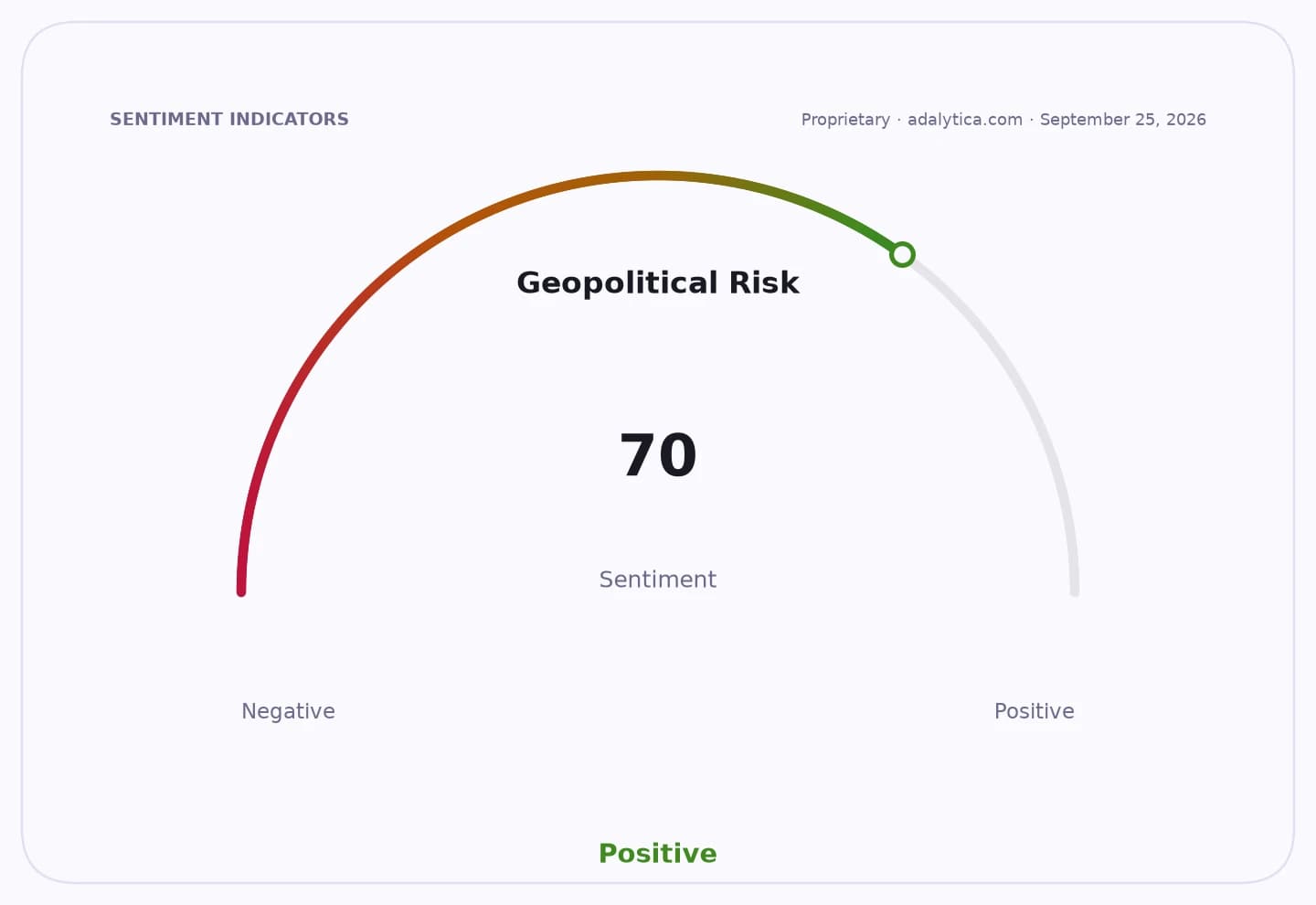
Sentiment IndicatorsⓘProprietary · adalytica.com · July 20, 2026
This is a snapshot — live sentiment, awareness and momentum for 130+ markets update continuously in the dashboard.Open AlphaPulse
The strategic importance is broader than one transaction. JPMorgan’s willingness to provide the loan shows that large banks continue to play a critical role in sovereign funding, particularly where capital markets are not deep enough to absorb issuance cheaply or quickly. For investors, that is a signal to watch the spread between stronger sovereign borrowers and distressed or quasi-distressed names in sub-Saharan Africa. In a world of elevated real rates and selective risk appetite, the balance sheet of the lender matters almost as much as the balance sheet of the borrower.
The market backdrop also argues for caution on frontier sovereign debt more generally. Adalytica’s Global Stability Sentiment gauge shows “Extreme Fear,” a reminder that geopolitical and credit stress can quickly shut or reopen financing channels. In that environment, the winners are usually the institutions that intermediate risk — global banks, advisors, and asset managers with sovereign-debt expertise — while the losers are high-beta borrowers forced to refinance under pressure.
Geopolitical Risk vs ANGPYadalytica.com
Explore this data interactively — full history, time series and cross-market comparisons.Open AlphaPulse
That is why Angola’s new borrowing is not just a funding event. It is a case study in the next phase of global capital allocation: money is still available, but only for borrowers that can pay up for it. For investors, the edge lies in owning the toll collectors, not the toll road.
| Entity | Gains | Losses |
|---|---|---|
| JPMorgan | ▲Fee income | ▼Loan concentration risk |
| Angola | ▲Near-term funding | ▼Higher debt burden |
| Frontier sovereign bonds | ▲Relative attention | ▼Pricing power |
| Private creditors | ▲New issuance opportunities | ▼Distressed borrowers |