ANZ’s August Truckometer pointed to a pullback in household demand, adding to evidence that higher fuel costs and caution over the outlook are weighing on consumer spending.
ANZ Truckometer points to weaker household demand

The bank’s light-traffic measure, which tracks cars, vans and motorbikes, fell 1.2% in August and was down 0.7% from a year earlier. ANZ said the series is often an early guide to consumer activity, meaning the latest reading could foreshadow softer retail turnover and slower broader demand before official data catch up.
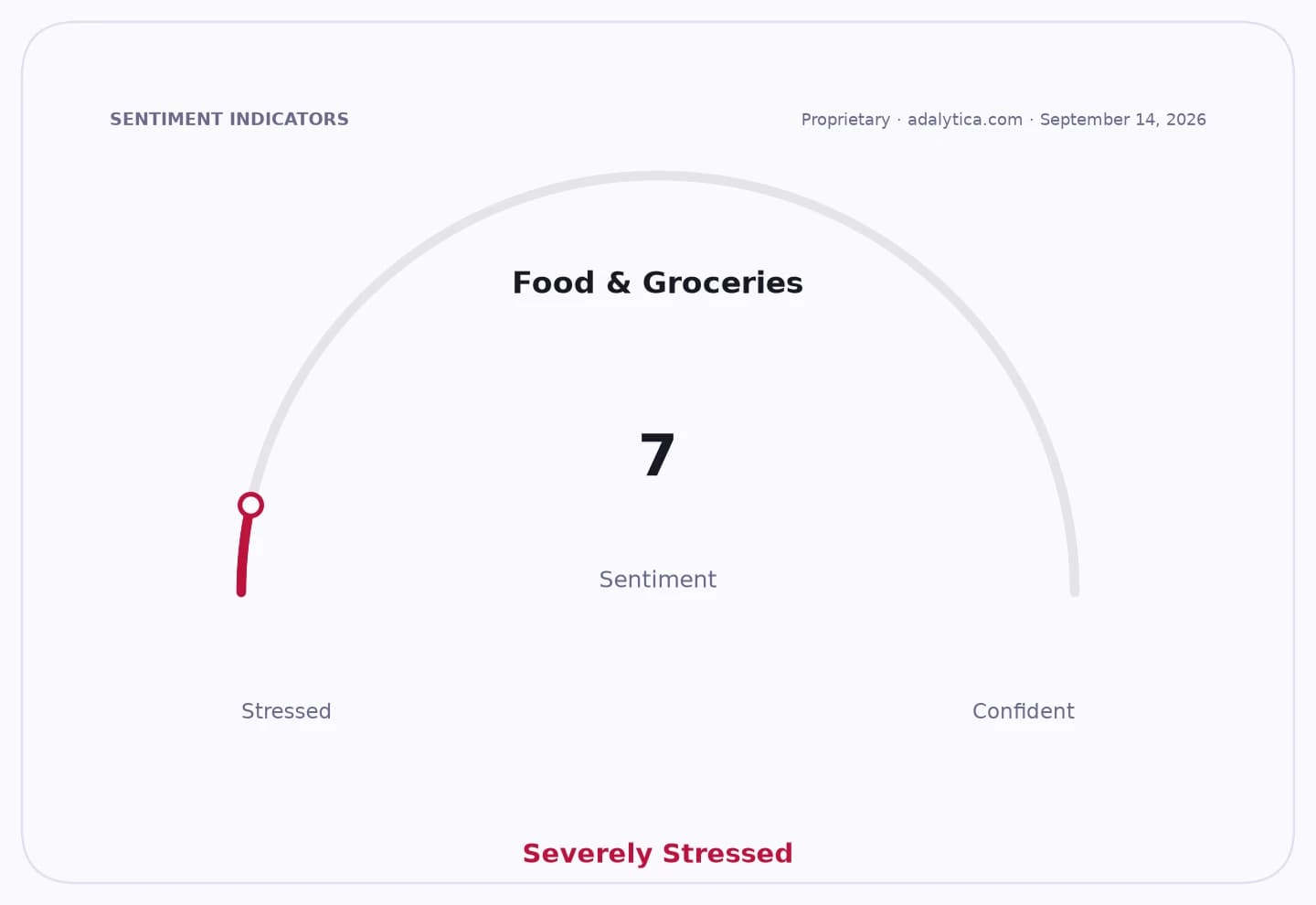
Sentiment IndicatorsⓘProprietary · adalytica.com · September 11, 2026
This is a snapshot — live sentiment, awareness and momentum for 130+ markets update continuously in the dashboard.Open AlphaPulse

Chief economist Sharon Zollner said light traffic had been “noticeably lower in recent months,” likely because people are driving less as fuel prices rise. She said the weakness matched softer card transaction data from ANZ, reinforcing the view that households are becoming more selective with spending rather than simply shifting it around.
The signal matters beyond discretionary purchases. Slower household activity tends to feed through to weaker retail sales, more pressure on service providers and, eventually, a softer contribution to GDP. In an economy where consumer spending is still a key growth driver, even a modest pullback can cool business revenues and curb hiring plans if it persists.
Credit Card Usage — 30-day sentimentadalytica.com
Explore this data interactively — full history, time series and cross-market comparisons.Open AlphaPulse

The heavy-traffic index, which ANZ uses as a proxy for freight and wider economic activity, also fell 2.2% in August, though it remained 1.3% higher than a year earlier. That makes the reading less conclusive than the consumer-facing measure: freight volumes can be noisy month to month, and ANZ noted winter storms may have disrupted both road use and transport flows.
For investors, the key question is whether August was a weather-related interruption or the start of a more durable slowdown in spending. A sustained weakening would be negative for retailers, consumer lenders and transport-linked businesses, while potentially easing pressure on inflation if demand cools enough to temper pricing power.
The truckometer’s message also fits a broader pattern of hesitant households across developed markets, where higher living costs and tighter budgets are forcing more restraint. ANZ said it will watch September closely for confirmation, making the next release important for judging whether the latest weakness is temporary or a more meaningful turn in consumer momentum.
| Entity | Gains | Losses |
|---|---|---|
| ANZ | ▲Data credibility | ▼Short-term noise risk |
| Households | ▲Lower driving costs from reduced use | ▼Spending power under pressure |
| Retailers | ▲None | ▼Softer sales volumes |
| Freight and logistics firms | ▲Potentially steadier rates if demand holds | ▼Lower shipment demand |