A new AP-NORC poll shows a broad backlash against Donald Trump just weeks before the November midterms, and that matters because it points to a potentially hostile environment for Republicans trying to hold Congress.
AP-NORC Poll Shows Voter Backlash Before Midterms

The most important number is not just that roughly two-thirds of registered voters have an unfavorable view of Trump. It is that about half of voters want Democrats to control the House or Senate, while only four in 10 prefer Republican control. In a closely divided electorate, that kind of sentiment can shape turnout, fund-raising and the margins that decide House seats and Senate races.
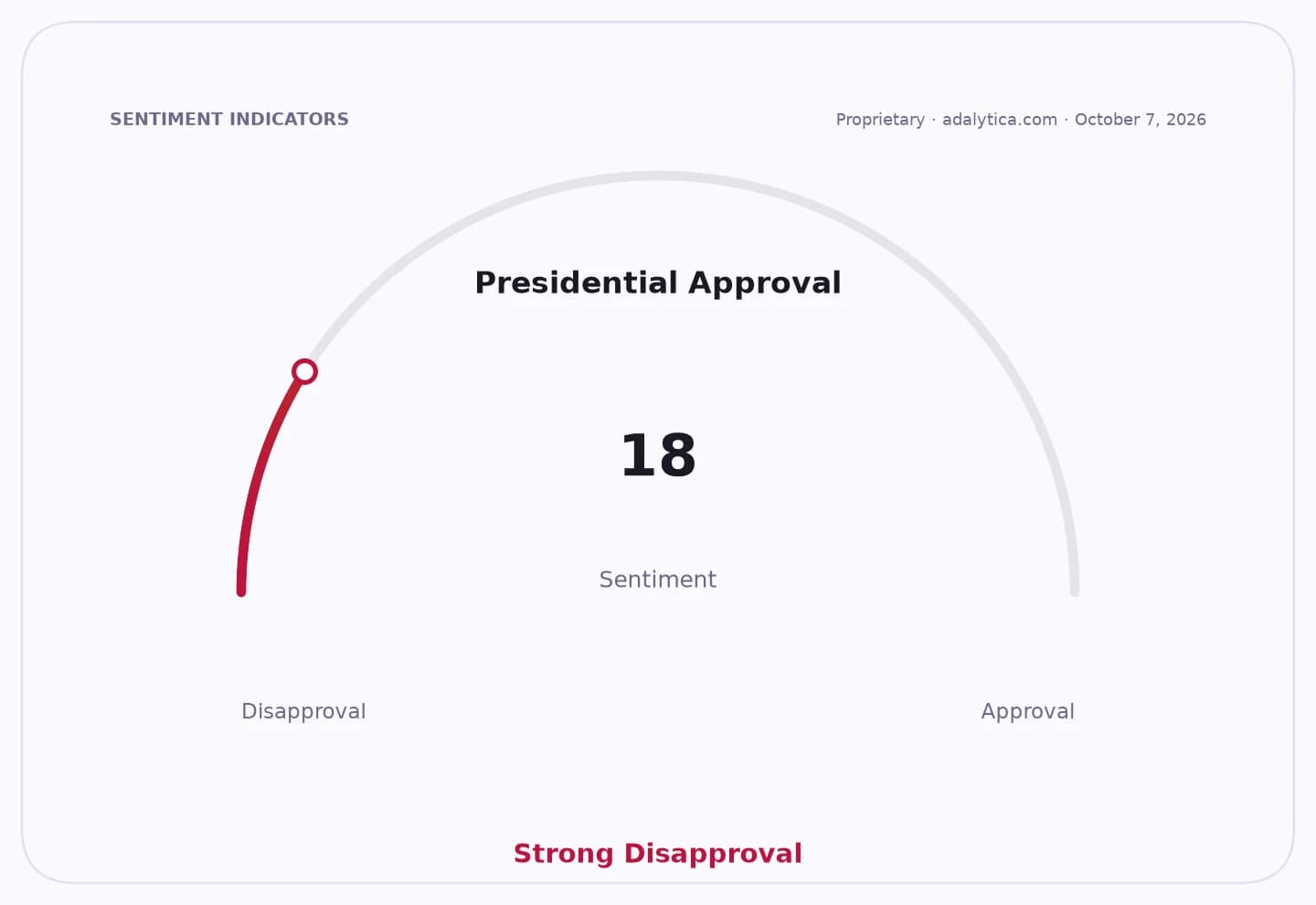
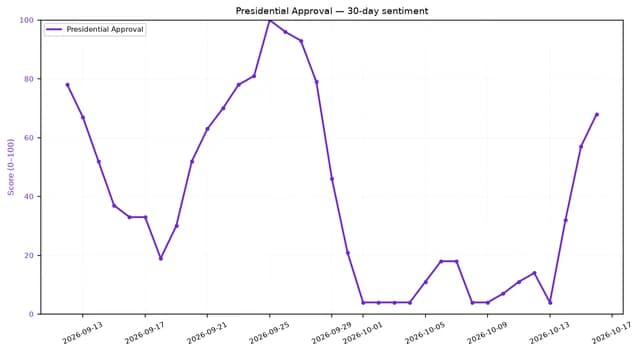
Sentiment IndicatorsⓘProprietary · adalytica.com · October 17, 2026
This is a snapshot — live sentiment, awareness and momentum for 130+ markets update continuously in the dashboard.Open AlphaPulse
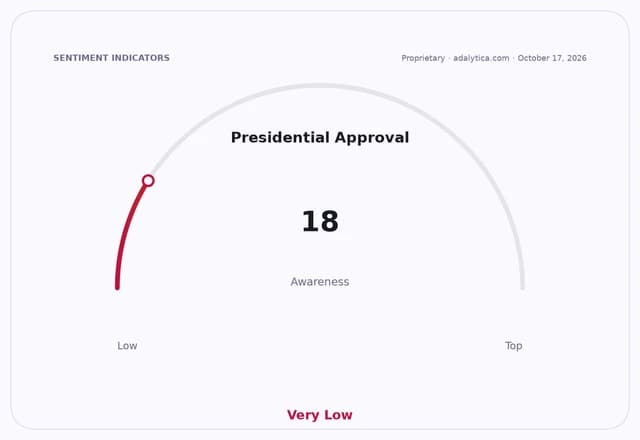
Economically, the poll suggests voters are still judging Washington through the lens that often decides elections: the cost of living. About eight in 10 respondents cited the economy and living costs as top concerns, and eight in 10 disapproved of Trump’s handling of the cost of living. Roughly three-quarters also disapproved of his handling of the economy. For investors, that is a reminder that inflation, household budgets and consumer confidence remain the political pressure points most likely to influence policy after the vote.
There is a second story inside the numbers: Republicans are facing the harder task even though Democrats are not exactly popular. About 60% of voters view the Republican Party unfavorably, versus about half for Democrats. Among independents, two-thirds hold a negative view of Republicans, compared with four in 10 for Democrats. That is the kind of gap that can determine whether the party in power loses ground in a midterm cycle.
The poll also hints at a country in search of a reset. About half of voters want a “substantial change” in how the U.S. is governed, and roughly three in 10 want a full overhaul. Even among Republicans, nearly half want major changes. That suggests the mood is not simply anti-Democrat or anti-Republican — it is anti-status quo.
For investors, the immediate takeaway is not to trade every poll headline. It is to watch how the political mood interacts with spending, taxes, regulation and geopolitical risk if control of Congress shifts. The survey’s picture of dissatisfaction, especially on prices and economic management, raises the odds of more volatility in Washington and a more difficult path for policy continuity. In that sense, the poll is worth watching as a signal of how the next two years of governing may unfold.
| Entity | Gains | Losses |
|---|---|---|
| Democrats | ▲Better odds in House/Senate races | ▼Need to turn discontent into votes |
| Republicans | ▲Stronger turnout among loyalists | ▼Softer approval, weaker independent support |
| Voters seeking change | ▲More leverage in midterms | ▼Uncertainty over policy direction |
| Investors | ▲Potential clarity after elections | ▼Higher Washington volatility in the near term |