Aphrodite’s developers have signed a memorandum of understanding to export gas from Cyprus to Egypt, a crucial step that could finally move the Eastern Mediterranean field closer to commercial production and give Chevron, Shell and NewMed Energy a clearer route to market.
Aphrodite gas export MoU improves monetization path

The agreement matters because Aphrodite has spent years stuck in the gap between discovery and development, with economics tied to whether the partners can lock in infrastructure, buyers and pricing. An export link to Egypt would allow the gas to reach an established regional hub rather than relying on a standalone Cypriot market that is too small to absorb the volumes on its own.
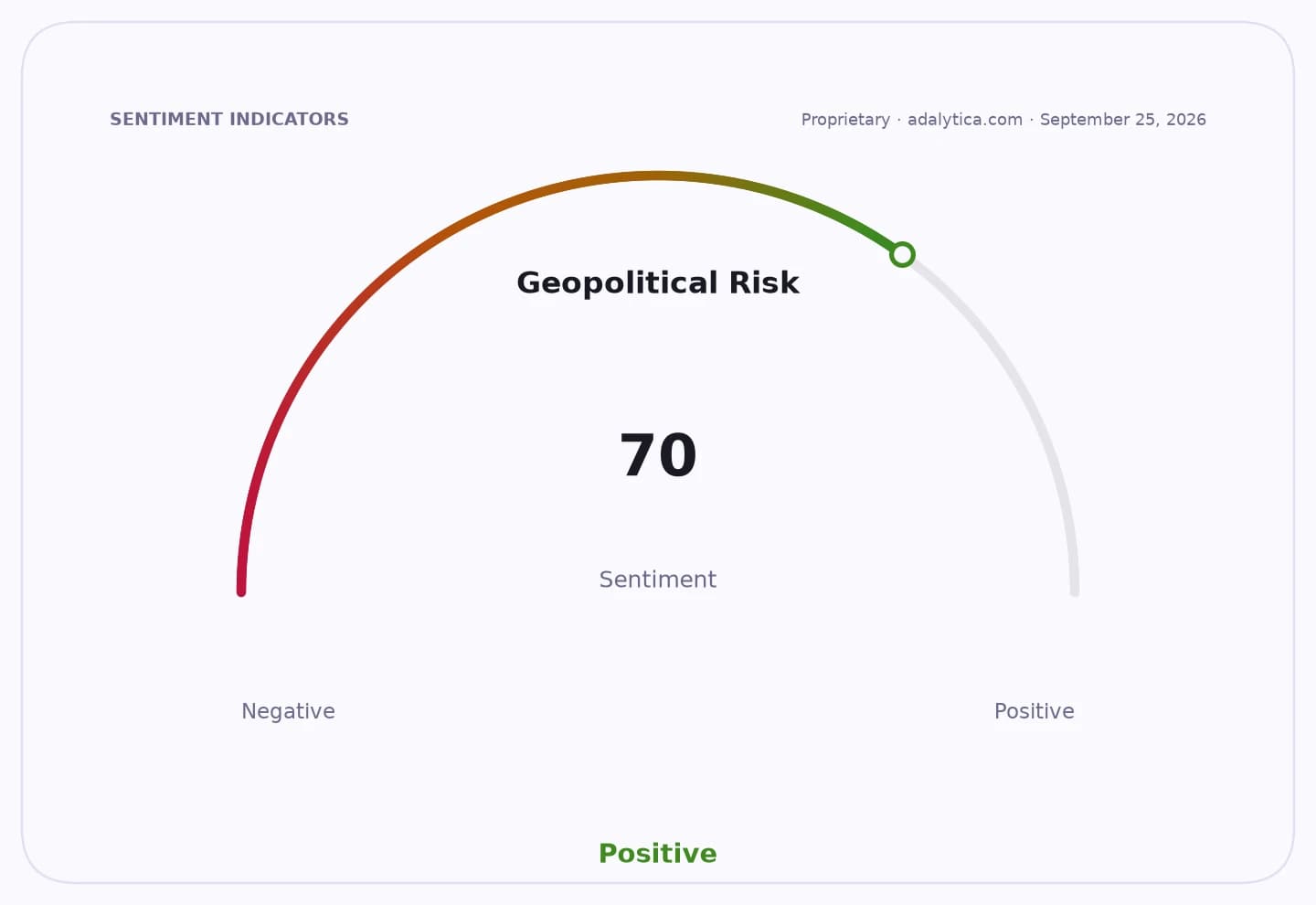
Sentiment IndicatorsⓘProprietary · adalytica.com · July 22, 2026
This is a snapshot — live sentiment, awareness and momentum for 130+ markets update continuously in the dashboard.Open AlphaPulse
For investors, the MoU reduces one of the biggest risks hanging over the project: monetisation. It does not eliminate project, regulatory or geopolitical hurdles, but it improves visibility on a field that could add long-dated gas supply for the partners and incremental cash flow if final commercial terms follow. Shell and Chevron were both little changed in recent trade, with Shell closing at $87.20 and Chevron at $191.07 on July 21, while technical indicators for both stocks show the shares have been trending above their 50-day and 200-day moving averages.
The deal also lands in a tighter gas backdrop. European gas markets remain sensitive to supply disruptions and regional security risks, while the Eastern Med continues to be pushed as a diversification route away from more volatile sources. Cyprus, Egypt and the international majors are all looking at gas not just as a commodity play, but as strategic energy infrastructure with export, transit and security value.
For NewMed Energy, the move strengthens the case for Aphrodite after a volatile run in the stock, which has collapsed to $1.32 from as high as $5.07 in October. Natural gas market signals are still neutral, according to Adalytica’s trade-signal snapshot, but the broader regional backdrop remains supportive of new supply projects that can reach market without major delays.
The next test is whether the MoU turns into binding commercial arrangements and whether the partners can advance the engineering, regulatory and financing work needed to sanction the project. Any update on export routes, pricing or timing will matter for the shares of Chevron, Shell and NewMed, as well as for Cyprus’ ambitions to become a more relevant Eastern Mediterranean gas player.
| Entity | Gains | Losses |
|---|---|---|
| Chevron | ▲Better monetisation path | ▼Project execution risk |
| Shell | ▲Optionality on gas exports | ▼Delayed final investment decision |
| NewMed Energy | ▲Higher development visibility | ▼Funding and timing uncertainty |
| Cyprus/Egypt gas market | ▲New supply route | ▼Standalone bargaining power |