Apple’s approval to roll out Apple Intelligence in China, with Alibaba as a local partner, gives the iPhone maker a way to bring its AI software into the world’s biggest smartphone market without running headlong into Beijing’s restrictions on foreign models.
Apple China Apple Intelligence approval with Alibaba

That matters because China is still one of Apple’s most important revenue pools and because AI features are increasingly central to handset upgrades. Apple has been trying to use Apple Intelligence to sharpen the case for premium iPhones, but its software ambitions have been limited in China by regulation, data rules and the government’s preference for domestic AI providers. A local alliance with Alibaba is the clearest sign yet that Apple is willing to adapt its AI rollout to the Chinese market rather than delay indefinitely.
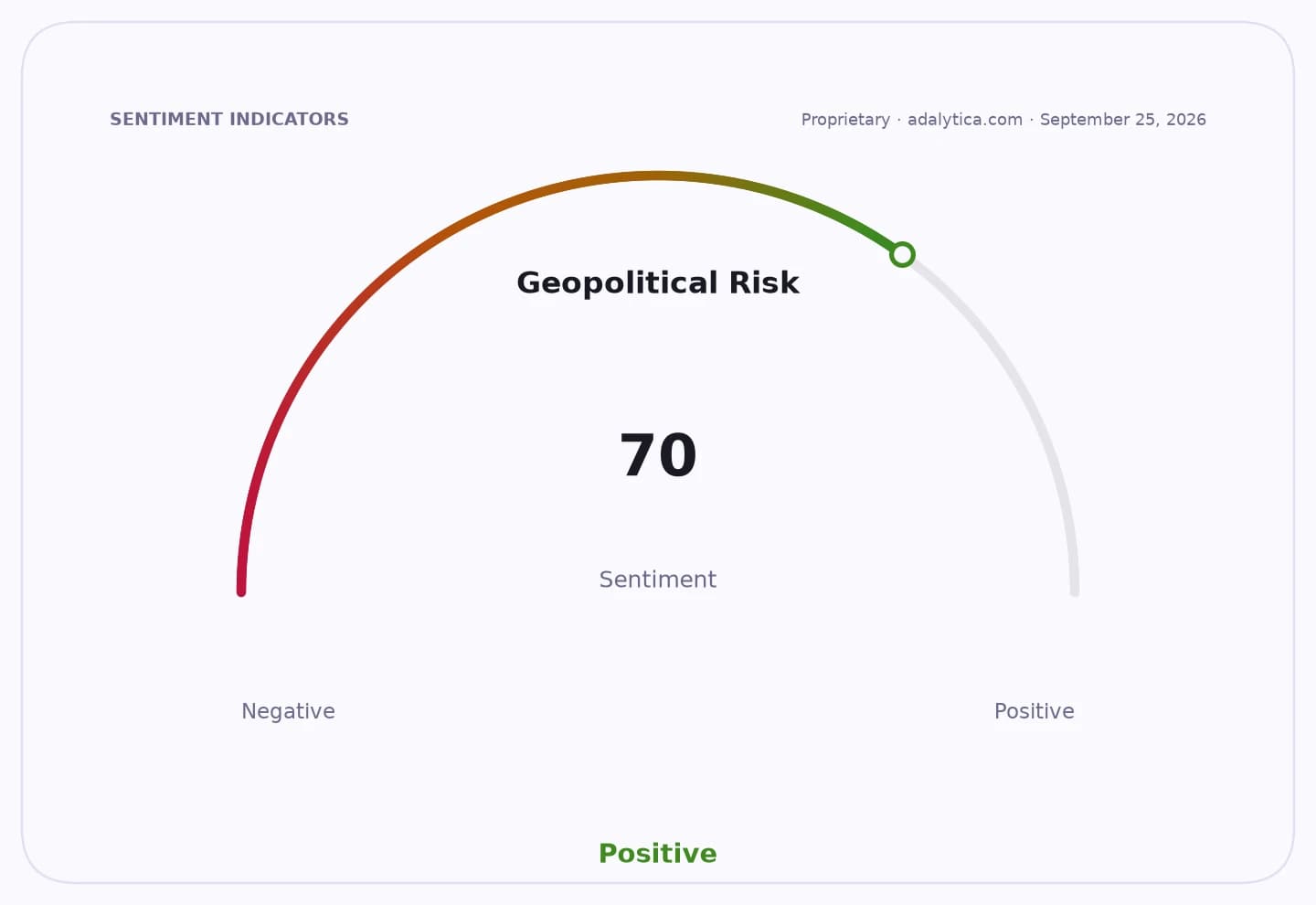
Sentiment IndicatorsⓘProprietary · adalytica.com · August 17, 2026
This is a snapshot — live sentiment, awareness and momentum for 130+ markets update continuously in the dashboard.Open AlphaPulse
For investors, the approval removes one of the larger execution risks hanging over Apple’s next product cycle. The market has been looking for evidence that AI can support device demand after a period in which Apple’s shares have traded well above the 50-day moving average and near the upper end of their recent range. The stock’s latest move suggests the market is already pricing some optimism around the company’s AI strategy, though technical readings are now stretched enough to leave room for volatility if rollout timelines slip or China demand disappoints.
The bigger economic point is that Apple is not just selling phones in China; it is competing inside a strategic technology market where software capability, local partnerships and regulatory alignment matter as much as hardware design. Alibaba’s involvement gives Apple a domestic ally with cloud, commerce and AI infrastructure scale, while also helping it navigate a policy environment that has become more selective about foreign AI services. For Beijing, the deal fits a broader pattern: allowing useful foreign technology into the market only when it is embedded with Chinese partners and constrained by local rules.
The move also underscores how the US-China AI contest is becoming less about headline frontier models and more about deployment rights. Washington has pushed allies to align with its technology stack and has tightened export controls, while China has been building a dense domestic AI ecosystem to reduce dependence on US firms. Apple’s approval shows that even one of the world’s most powerful consumer companies must now localize its AI strategy to stay relevant in China.
Alibaba stands to gain from being the gatekeeper for a marquee global platform, strengthening its position in China’s AI ecosystem and giving it a higher-profile role in consumer AI distribution. Apple gains access to a critical market and a better chance of turning AI from a marketing feature into a sales driver. The main loser, at least relatively, is any Chinese rival that would have benefited if Apple had remained boxed out of the market or forced to ship a weaker AI product.
The key question now is whether the partnership can translate regulatory approval into meaningful user adoption. If Apple can integrate Apple Intelligence smoothly into Chinese-language services and keep pace with local competitors, it could support iPhone replacement demand and improve the company’s China trajectory into 2026. If not, the approval will matter more as a geopolitical milestone than a commercial catalyst.
| Entity | Gains | Losses |
|---|---|---|
| Apple | ▲China AI access | ▼rollout delays |
| Alibaba | ▲strategic partnership | ▼none |
| Chinese handset rivals | ▲stronger local ecosystem | ▼Apple advantage |
| US AI rivals | ▲market validation | ▼fewer China openings |