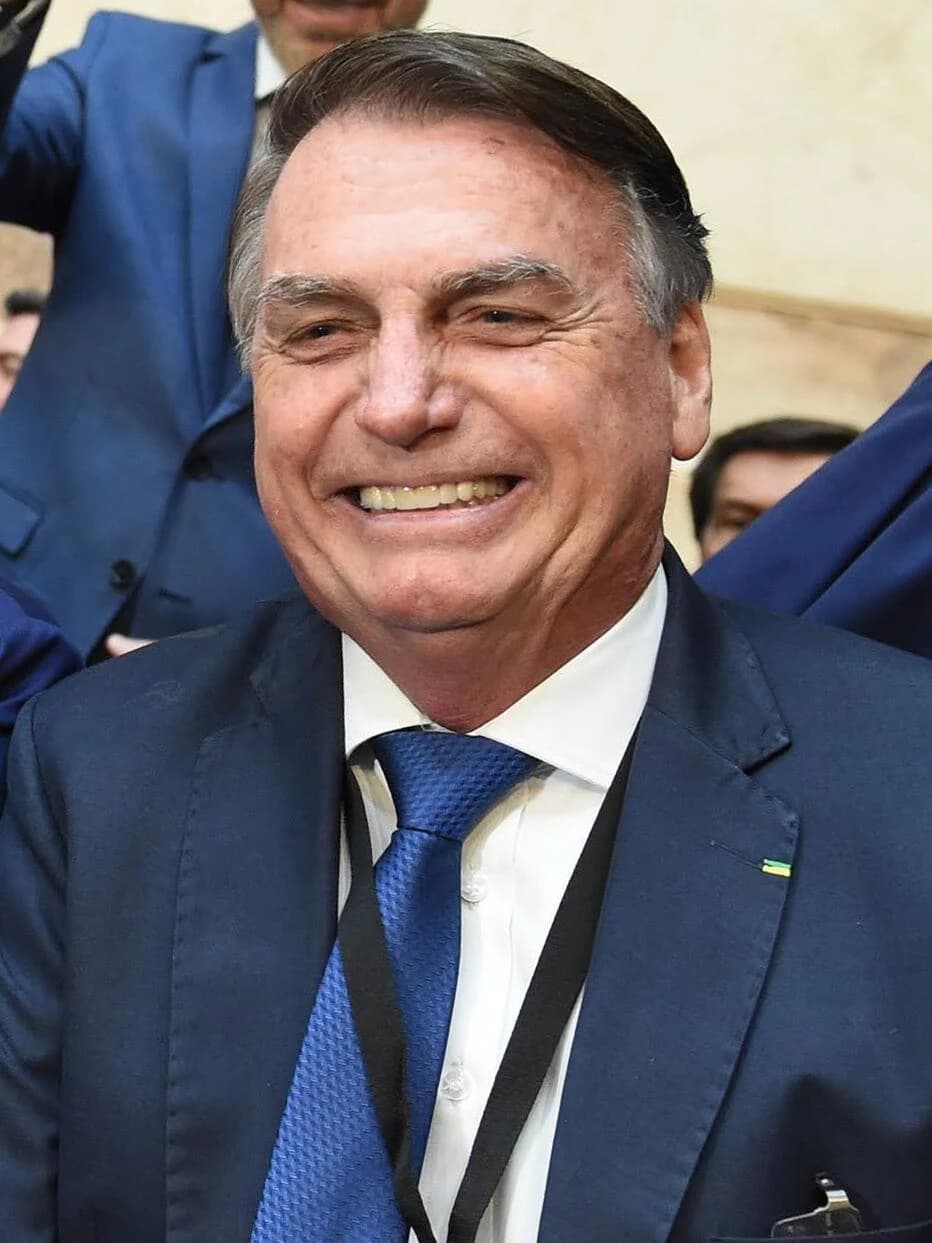
Javier Milei used the World Economic Forum in Davos to sharpen the ideological fight behind his economic overhaul, portraying Argentina’s reform drive as part of a broader global backlash against regulation, redistribution and social policy he says is sapping growth and freedom.
Argentina ARGT Falls as Milei Defends Reform Agenda
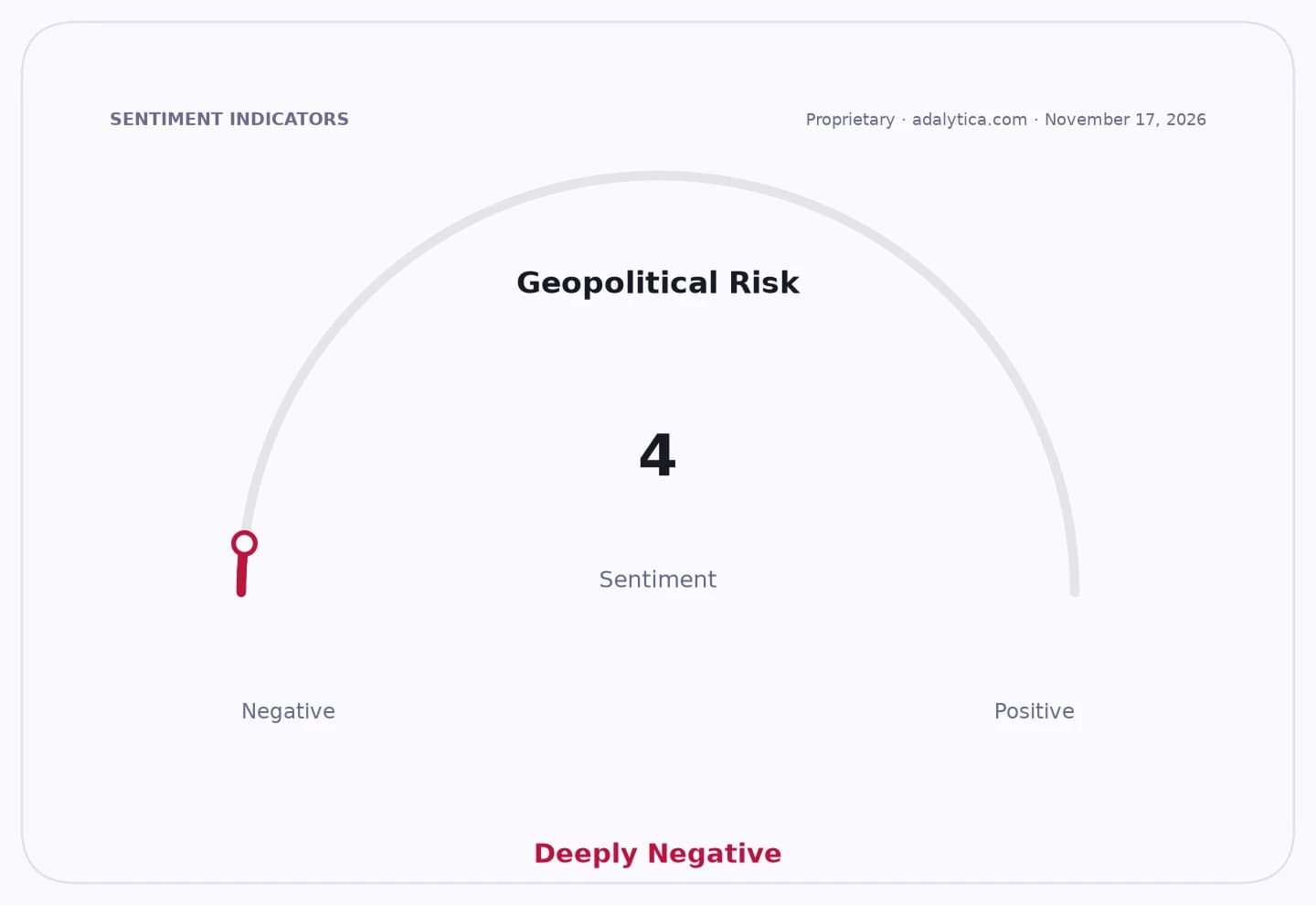
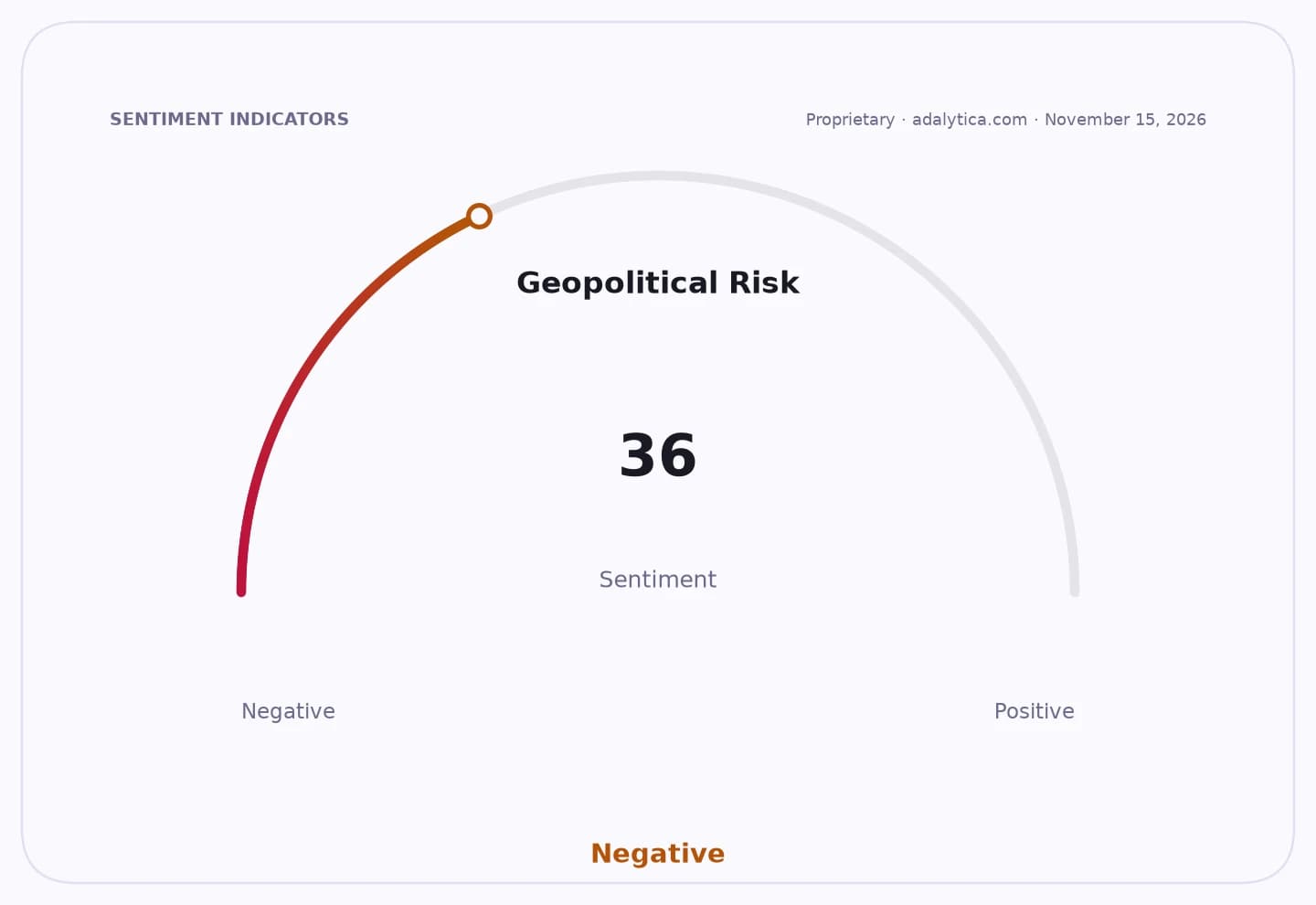
Geopolitical Risk
That matters because Milei is not just speaking to an audience in Switzerland. He is signaling to investors, creditors and allies that Argentina’s policy direction remains fixed on deep fiscal and regulatory retrenchment even as the country works to stabilize prices, restore market access and reverse years of capital flight. The message is aimed at both domestic supporters and foreign capital: Argentina will keep prioritizing market liberalization over consensus politics.
Sentiment Indicators
In his remarks, Milei attacked what he called “woke progressivism,” socialism and social justice, while widening the debate to abortion, feminism and immigration. He also cast himself as less isolated than a year ago, citing allies including Elon Musk, Nayib Bukele and Donald Trump, a framing designed to place Argentina’s government within a transnational anti-establishment movement rather than the Latin American policy mainstream.
The rhetoric may energize Milei’s base, but it also underscores the political risk around his program. Markets have so far cared far more about his fiscal stance than his cultural battles. Yet the two are linked: the more Milei polarizes the debate, the more he raises the stakes for congressional backing, social tolerance for austerity and the durability of reforms that depend on continued public support.
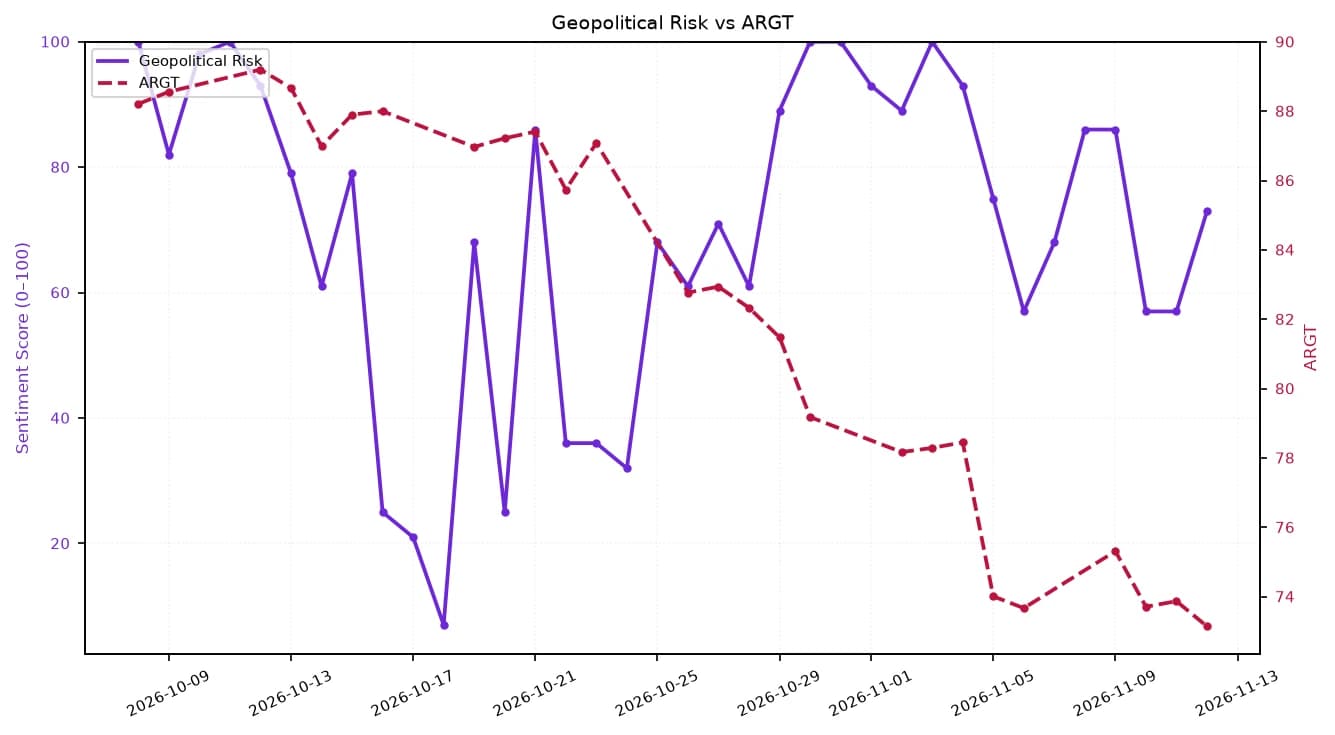
Geopolitical Risk vs ARGTadalytica.com
Explore this data interactively — full history, time series and cross-market comparisons.
That tension is visible in Argentine assets. The ARGT exchange-traded fund has fallen to $73.75 from $96.39 in July, while its 50-day moving average sits well below the 200-day average, a sign of a market still struggling to rebuild conviction. The fund’s relative strength index was deeply oversold recently, pointing to stress rather than confidence. Broader emerging-market sentiment has been more stable, with the EEM ETF trading around $60.92, but Argentina remains a highly specific bet on policy execution and credibility.
The macro backdrop is still fragile. Argentina has spent years battling inflation, weak reserves and recurrent defaults, so any government trying to reset expectations must convince investors that discipline will outlast the headlines. Milei’s Davos intervention helps reinforce that narrative, but it also reminds markets that reform in Argentina is as much a political project as an economic one.
For investors, the key question is whether the president’s confrontational style strengthens his mandate or limits the coalition needed to sustain it. If the administration can keep delivering fiscal restraint and market-friendly measures, the rhetoric may be dismissed as political theatre. If not, the Davos speech will be read as a sign that ideology is outrunning governability.
| Entity | Gains | Losses |
|---|---|---|
| Milei government | ▲Base support | ▼Moderate voters |
| Free-market reformers | ▲Policy momentum | ▼Social-policy advocates |
| Argentine equities/ARGT bulls | ▲Reform credibility | ▼Policy uncertainty |
| Opposition and civil groups | ▲Mobilizing issue | ▼Influence over agenda |