Argentina’s economy is becoming a political liability for Javier Milei, and the warning is coming not from opinion polls alone but from the way voters in the US and Brazil have recently punished incumbents who denied living-cost pain.
Argentina inflation and Milei political risk
Geopolitical Risk
The president still has time to reset his message, but the economic narrative is shifting against him: inflation remains volatile, growth is uneven, foreign reserves are a continuing concern and the recovery has not translated into broad enough gains in wages or jobs. That is the same gap that hurt Donald Trump after fuel prices fed an affordability backlash, and it is the gap Milei now risks widening by dismissing complaints that many Argentines — including some who backed him in 2023 — are struggling to make ends meet.
Sentiment Indicators
The political lesson from Brazil and the US is simple. Incumbents can survive difficult conditions if voters believe their daily reality is improving or at least being acknowledged. Lula’s comeback in Brazil showed the power of a disciplined campaign and a fear-based contrast with the opposition. Trump’s midterm setback showed the cost of insisting everything is going well while household costs keep climbing. Milei has largely followed the second script, telling critics that claims about people not reaching month-end were exaggerated and even absurd.
That matters economically because sentiment can become self-reinforcing. If households and small businesses expect little relief, consumption stays subdued, investment decisions are delayed and wage negotiations become more defensive. Argentina’s macro stabilization effort has made progress on fiscal discipline and inflation containment, but the political economy of austerity is unforgiving: voters eventually judge policy by purchasing power, not by balance-sheet repair.
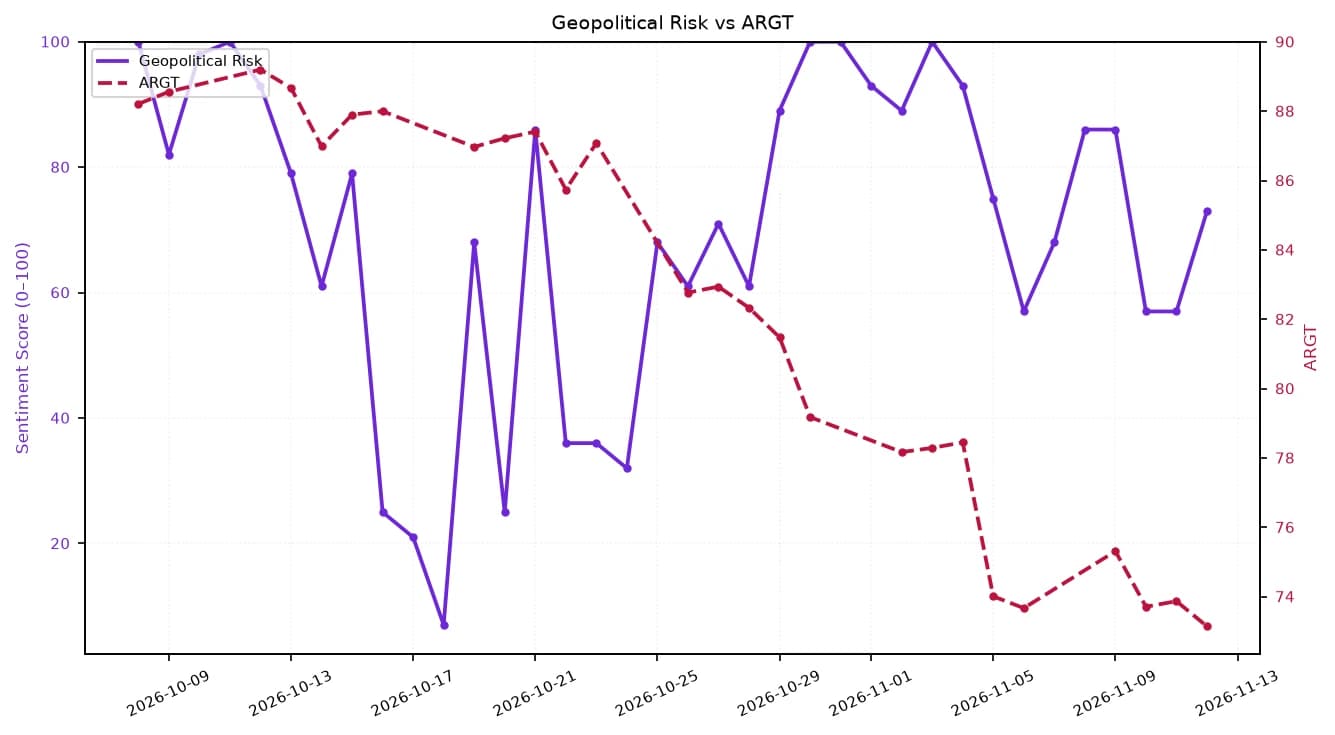
Geopolitical Risk vs ARGTadalytica.com
Explore this data interactively — full history, time series and cross-market comparisons.
There are signs the administration understands the risk, even if reluctantly. Karina Milei opened a business matchmaking event in Rosario aimed at linking roughly 2,500 small firms with larger projects benefiting from the government’s RIGI investment regime. Economy Minister Luis Caputo also said the ARCA tax authority would pause enforcement proceedings against struggling small and medium-sized companies for several months. Neither move changes the broader policy mix, but both suggest the government is trying to soften the image of an administration that has often spoken as if weaker firms should simply disappear.
For investors, the stakes are straightforward. Argentina assets remain highly sensitive to whether Milei can preserve political capital while keeping the disinflation story intact. Any widening disconnect between official rhetoric and household experience raises the risk of policy drift, weaker legislative support and renewed pressure on risk premiums. That would matter for local assets, dollar debt and sectors tied to domestic demand, even if the broader reform agenda remains in place.
The opposition is trying to learn from the same foreign elections, but its problems are deeper. Peronists are copying digital tactics from Lula’s campaign and building their own WhatsApp operations, yet they still lack a coherent leadership answer and a credible candidate with broad support. For now, that leaves Milei with the better political hand — but only if he stops treating affordability as a rhetorical nuisance and starts treating it as the main campaign issue.
The next phase will be judged less by ideological purity than by whether the government can narrow the gap between official messaging and the cost of daily life. If it can, Milei still has a path to re-election. If it cannot, the lesson from Washington and Brasília is that economic denial eventually costs incumbents votes.
| Entity | Gains | Losses |
|---|---|---|
| Milei government | ▲Time to reset message | ▼Credibility with voters |
| Argentine households | ▲Small relief measures | ▼Real purchasing power |
| Small businesses | ▲Tax enforcement pause | ▼Limited policy certainty |
| Peronist opposition | ▲Relevance from foreign playbooks | ▼Coherent leadership advantage |