Argentina’s central bank is trying to reassure investors that a fragile credit rebound is taking hold, with policymakers saying delinquencies are beginning to ease as lending rates fall and refinancing activity rises.
Argentina Central Bank Says Delinquencies Are Easing

That matters because household stress and tighter bank underwriting have been among the main brakes on private credit in Latin America’s No. 3 economy. If arrears are peaking and borrowing costs are coming down, banks can extend credit without immediately worsening asset quality — a key precondition for a broader economic recovery.
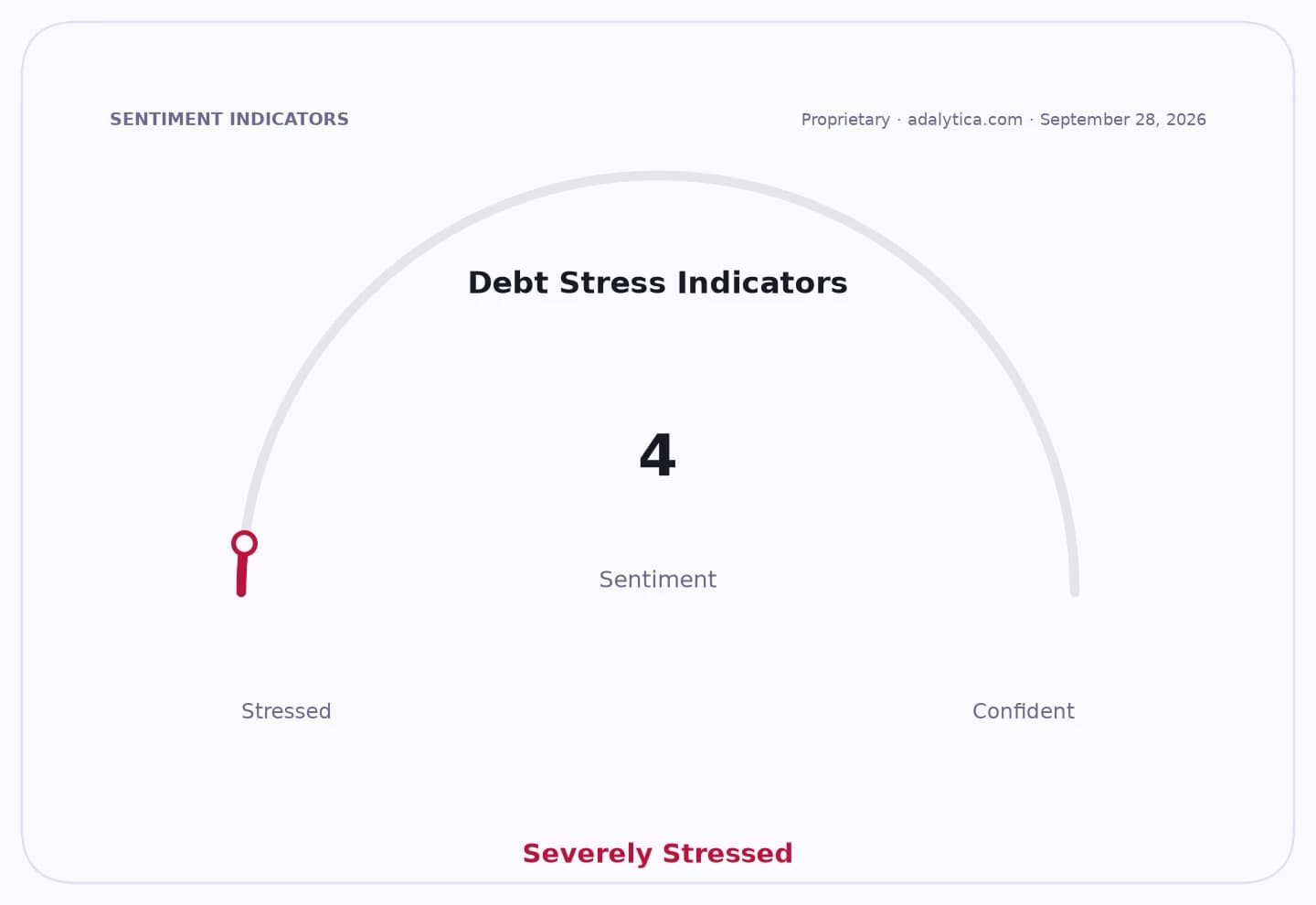
Sentiment IndicatorsⓘProprietary · adalytica.com · October 17, 2026
This is a snapshot — live sentiment, awareness and momentum for 130+ markets update continuously in the dashboard.Open AlphaPulse
Banco Central de la República Argentina Vice President Vladimir Werning told investors in Thailand on the sidelines of the IMF and World Bank meetings that nonperforming loans are declining when measured on a three-month moving average. The bank will publish its August banking report on Friday, which will give the first official reading after July data showed household delinquency rising 0.1 percentage point to 12.9% of total credit to families.
Werning’s message is aimed at calming concern that a still-high delinquency rate could force the regulator into relief measures or bank support. He said the central bank has no interest in “shortcuts” that carry hidden costs, rejecting ideas such as bank rescues, looser credit standards or changes to depositor protection. For investors, that is a signal the authorities want the credit cycle to heal through lower rates and refinancing rather than balance-sheet intervention.
The presentation also showed private-sector credit recovering between May and September, though the improvement was driven mainly by dollar loans, which rose through the period, while peso credit only expanded in June, July and August. That split is important: foreign-currency lending can revive volumes, but it also leaves the system more exposed to exchange-rate volatility and limits how broad-based the rebound can be.
At the same time, the central bank said lending conditions are improving, with real bank funding rates negative and loan rates falling for companies and starting to ease for households. That combination can support consumption and working capital demand, but it also raises the question of whether banks can protect spreads if credit growth accelerates before delinquencies normalize.
The BCRA is also widening the channels for lending. Werning pointed to measures meant to improve transparency, liquidity and predictability, and said the bank wants to deepen the link between the banking system and capital markets while removing regulatory asymmetries. It is working on changes to payroll-deducted lending for public employees and private-sector workers, a discount market for credit-card coupons for merchants, and a federal guarantee system to centralize collateral data for corporate loans.
For investors, the near-term read-through is mixed but constructive. A decline in delinquencies would ease pressure on provisioning and support bank valuations, while lower rates can revive loan growth. But the rebound is still narrow, household distress remains elevated and the reliance on dollar lending suggests Argentina’s credit repair is not yet fully self-sustaining.
The key test will be Friday’s August banking report. If it confirms that arrears are rolling over and credit continues to expand, it would strengthen the case that Argentina’s financial system is moving out of the worst of the stress phase — though not yet into a durable, broad-based expansion.
| Entity | Gains | Losses |
|---|---|---|
| Argentine banks | ▲Lower delinquency pressure | ▼Less case for rescue measures |
| Borrowers | ▲Lower financing costs | ▼Tighter scrutiny on arrears |
| BCRA | ▲Credibility on credit recovery | ▼Pressure to intervene |
| Investors in bank stocks | ▲Better earnings outlook | ▼Risk from dollar-loan exposure |