Argentina’s push to overhaul the central bank has become one of the clearest signals yet that Javier Milei wants to hard-wire his economic program into institutions, a move that could matter as much for inflation expectations as for the country’s battered assets.
Argentina central bank reform bill moves to Congress
The bill to reduce the Central Bank of Argentina to a minimal function is economically significant because it aims to change not just policy settings but the operating framework behind them. For a country where monetary financing, reserve losses and repeated currency interventions have long undermined credibility, a smaller and more constrained central bank would be designed to limit discretionary money creation and force tighter fiscal and monetary discipline.
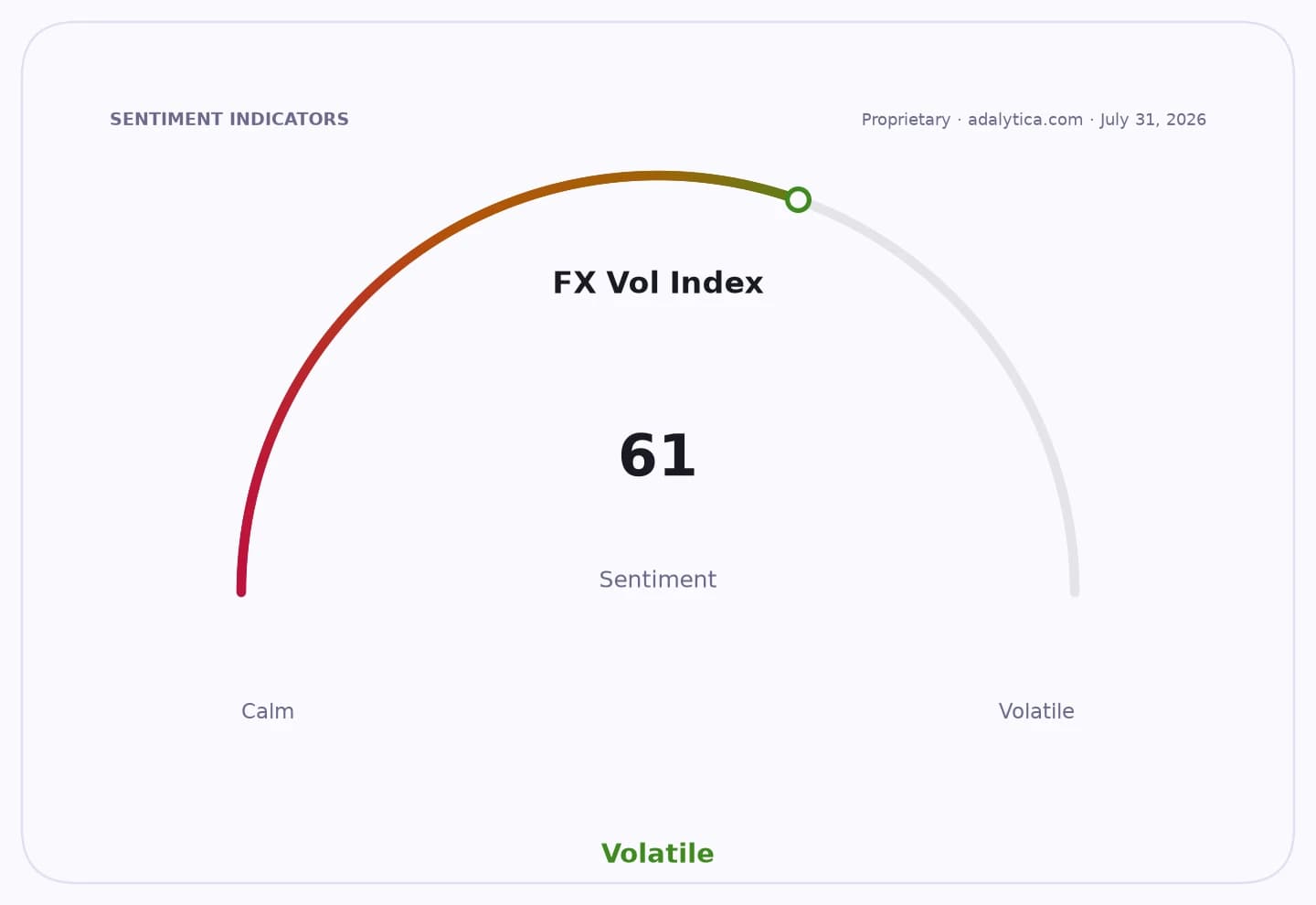
Sentiment IndicatorsⓘProprietary · adalytica.com · July 31, 2026
This is a snapshot — live sentiment, awareness and momentum for 130+ markets update continuously in the dashboard.Open AlphaPulse
That matters for investors because Argentina’s market story has increasingly been about whether the government can convince lenders, bondholders and equity buyers that stabilization is durable. Any reform that strengthens the central bank’s mandate, even if it strips out much of its historical room to maneuver, could support expectations for slower inflation, a steadier peso and lower sovereign risk premiums over time. The timing also helps: Argentina has just secured fresh external support, including a $4 billion financing guarantee from the Inter-American Development Bank and the World Bank, giving Milei more room to pursue institutional changes while the country is still dependent on outside funding.
The proposal now moves into parliamentary debate, and that is where the real test begins. Argentina’s Congress has been one of the main constraints on Milei’s agenda, and any watered-down version of the bill would reduce its signaling value for creditors. A full passage, by contrast, would reinforce the administration’s attempt to make austerity and anti-inflation policy more credible than previous stop-start stabilization efforts.
Markets are already treating Argentina as a high-beta reform trade. The Argentina ETF has climbed sharply from its 2025 lows and is still holding well above its 200-day moving average, while the 50-day average has also moved up, suggesting investors are willing to keep paying for reform optionality despite periodic pullbacks. The latest technical readings show the fund recovering from recent weakness, with momentum improving after a mid-year dip.
That said, the bullish case depends on execution. Shrinking the central bank’s role could help if it locks in discipline and curbs inflationary financing. The bear case is that institutional reform proves mostly symbolic if Congress delays the bill, fiscal slippage returns or political resistance forces compromises that leave Argentina’s policy framework only marginally stronger.
For investors, the key question is whether this is the start of a cleaner macro regime or another attempt to legislate credibility ahead of harder political and social choices. The next catalysts will be the shape of the bill in Congress, follow-on financing from multilaterals and whether inflation, reserves and the peso continue to stabilize enough to justify the market’s renewed optimism.
| Entity | Gains | Losses |
|---|---|---|
| Milei government | ▲Policy credibility | ▼Legislative flexibility |
| Argentina bonds and equities | ▲Lower risk premium | ▼Reform disappointment |
| Central bank independence advocates | ▲Clearer rules | ▼Central bank discretion |
| Currency and inflation bulls | ▲Stabilization potential | ▼Opponents of austerity |




