Argentina’s inflation is easing, but the political payoff for President Javier Milei is not arriving, keeping public frustration elevated even as markets price in a steadier macro backdrop.
Argentina Inflation Eases as GGAL Falls to $46.18

That disconnect matters because the government has made disinflation the centerpiece of its economic program. Slower price gains can support real incomes, improve planning for companies and reduce pressure on the central bank, but they do not automatically repair household sentiment after months of wage erosion, tariff increases and spending cuts.
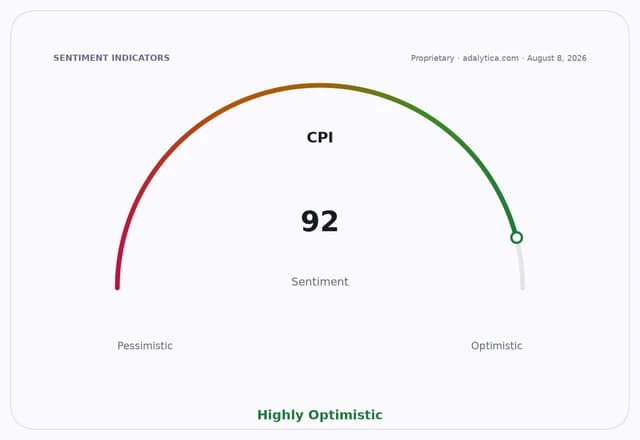
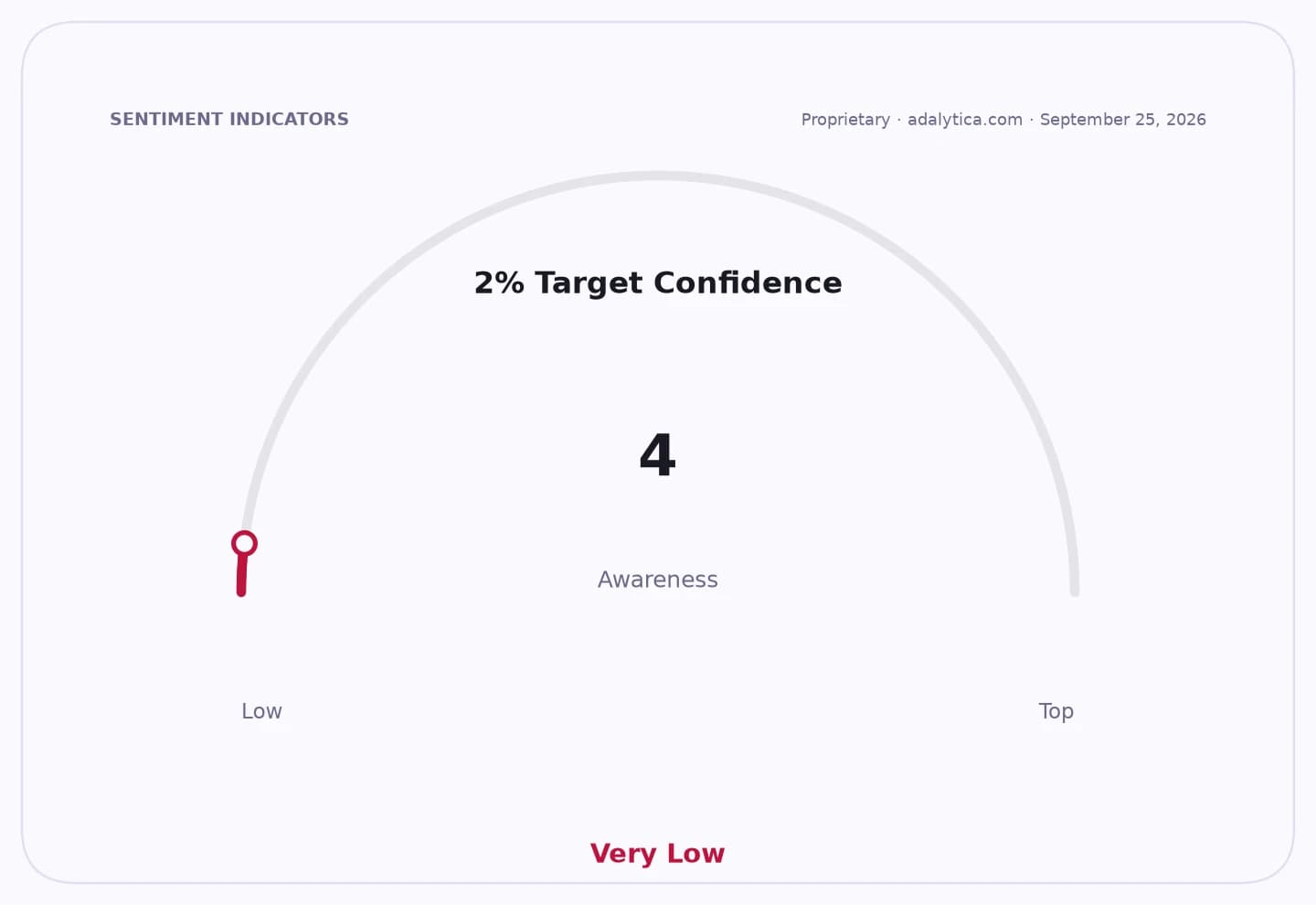
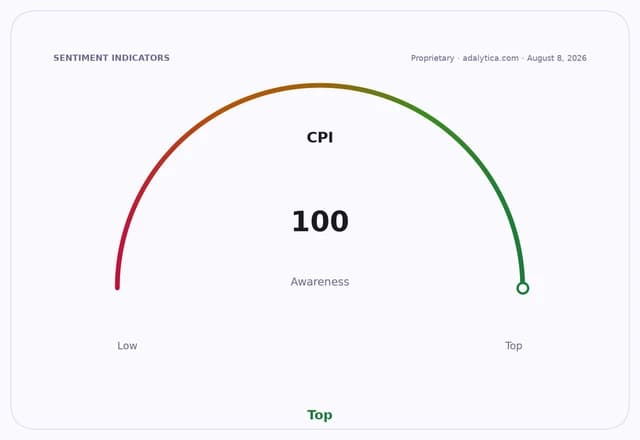
Adalytica’s CPI gauge shows extreme greed around the inflation theme, with sentiment at 92 and awareness at 100, underscoring how closely investors are watching the policy path. Confidence in the Fed’s 2% inflation target remains neutral at 61, but that is a separate signal; in Argentina, the key issue is whether falling inflation translates into political stability and consumption recovery.
For investors, the split between macro improvement and social unease is critical. Local assets can rally on lower inflation and better policy credibility, but if voters remain dissatisfied, Milei’s reform agenda may face resistance, delaying the recovery in retail spending, credit demand and corporate earnings.
CPI vs GGALadalytica.com
Explore this data interactively — full history, time series and cross-market comparisons.Open AlphaPulse
The stock action in Argentine names reflects that tension. Grupo Financiero Galicia, ticker GGAL, has fallen to $46.18 from a recent high of $58.69, while Loma Negra, ticker LOMA, has dropped to $10.44 from $12.70. Both stocks are now below key short-term technical levels, with GGAL slipping under its 50-day moving average near $50.68 and LOMA falling below its 50-day line around $11.56.
Momentum has also cooled. GGAL’s RSI is 39.8 after touching 92.7 earlier in the period, while LOMA’s RSI has slid to 38.4, and both names show weakening MACD readings. That suggests investors are taking profits after a strong Argentina trade and reassessing whether lower inflation alone is enough to sustain the rally.
The next catalyst is whether the disinflation trend broadens into higher real wages and firmer domestic demand. If it does, banks and industrials could regain traction; if social discontent persists, the market will likely continue to treat Argentina as a tradeable macro story rather than a durable recovery.
| Entity | Gains | Losses |
|---|---|---|
| Milei government | ▲Inflation credibility | ▼Social approval |
| Consumers | ▲Slower price pressure | ▼Weak wage recovery |
| GGAL shareholders | ▲Policy stability hopes | ▼Recent price momentum |
| LOMA investors | ▲Lower macro risk | ▼Domestic demand uncertainty |