Javier Milei’s 2027 re-election bid is running into its clearest political vulnerability so far: young women, a bloc that appears increasingly estranged from his government and could determine whether his austerity agenda survives the next election cycle.
Argentina Markets Track Milei's 2027 Re-election Risk
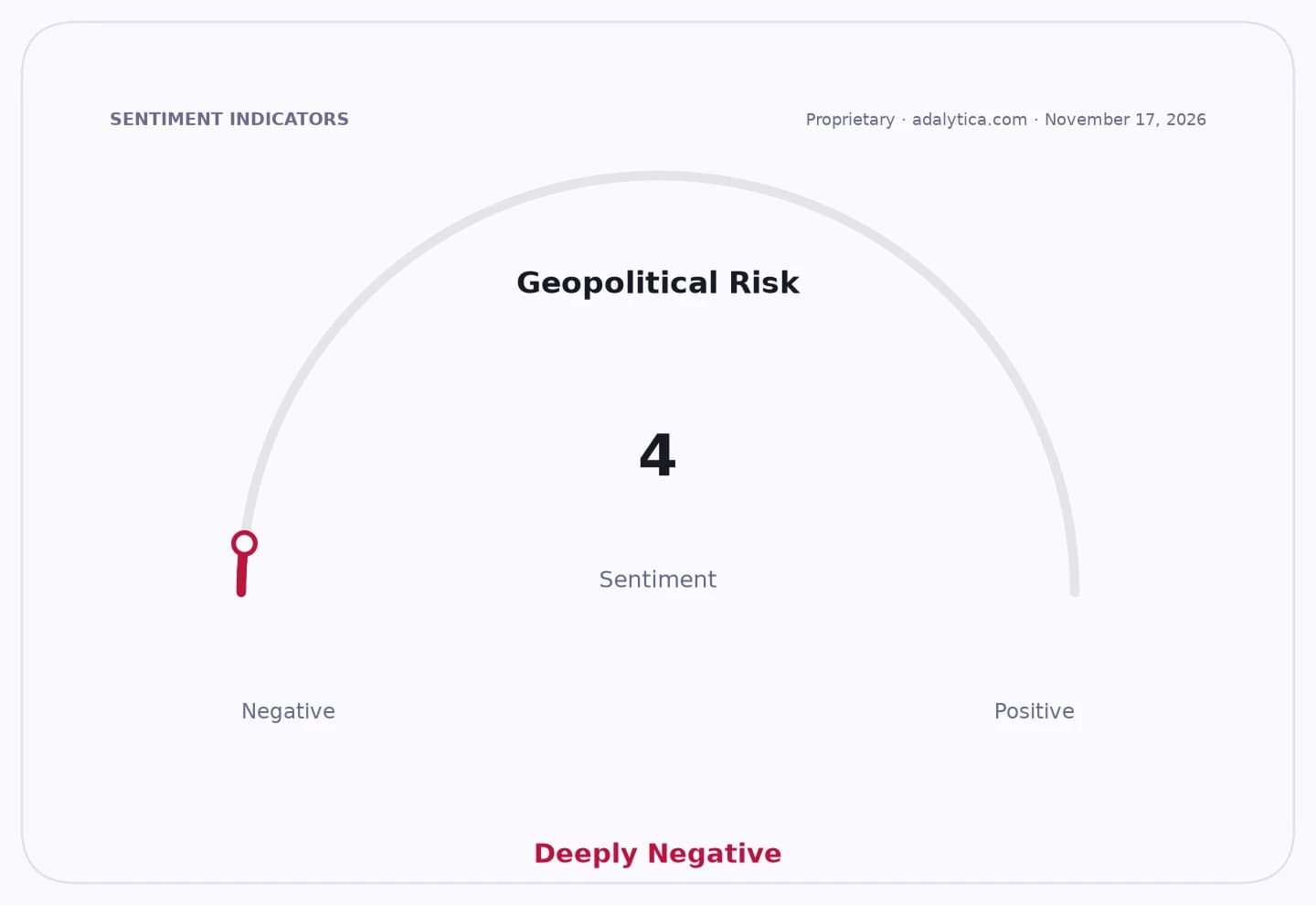
Geopolitical Risk
That matters economically because Milei’s overhaul of Argentina hinges on political durability. His programme has relied on deep spending cuts, deregulation and a willingness to absorb social pain in exchange for lower inflation and eventual growth. If the coalition backing that tradeoff narrows, investors have to price not just the pace of reform, but the odds that reforms are slowed, softened or reversed before they fully take hold.
Sentiment Indicators
The stakes extend well beyond campaign optics. Argentina remains one of the world’s most fragile macro stories, with policy credibility still the main support for local assets. Any erosion in Milei’s base raises the risk premium on everything from sovereign debt to the peso and local equities, because it revives the possibility of a future government that could undo hard-won fiscal gains. For foreign investors, that is the difference between a rehabilitation story and another stop-start adjustment cycle.
Market moves underline how quickly political confidence can swing. The ARGT exchange-traded fund, which tracks Argentine equities, has fallen to $64.78 from $96.39 in late July, with the 50-day average now far below the 200-day average and the RSI in deeply oversold territory. The ETF’s slide mirrors a broader retreat in Argentina-related risk appetite, even as U.S. markets have been steadier. EWW, the Mexico ETF, was little changed around $72.49, while China’s FXI also weakened, showing Argentina’s underperformance is not simply part of a wider emerging-market selloff.
Geopolitical Risk vs ARGTadalytica.com
Explore this data interactively — full history, time series and cross-market comparisons.
The technical picture reflects a market that has already started to discount political strain. ARGT’s latest close sits below both its 50-day and 200-day moving averages, and momentum indicators have deteriorated sharply. That does not by itself predict the election outcome, but it does show how thin sentiment is around Argentina’s reform story.
The political narrative is equally important. Milei won power by tapping frustration with inflation, stagnation and the traditional political class. But the groups most open to a punitive message about social spending cuts may not be the same groups that are benefiting quickly from disinflation or fiscal repair. Young women are often more sensitive to questions of household stress, employment insecurity and public services, and they have also been among the voters most likely to punish leaders seen as combative or socially regressive.
That creates a difficult balance for Milei. His supporters can argue that macro stabilization eventually broadens opportunity and restores real incomes. His critics will say the pain is front-loaded and unevenly shared, with women and younger voters bearing much of the adjustment cost while gains remain abstract. Both cases matter because they determine whether the reform coalition widens as inflation eases or fractures before the benefits are visible.
The immediate investor question is whether Milei can convert macro stabilization into a durable political mandate. If he can, Argentina keeps the chance of a multi-year credibility trade that could support lower inflation, tighter bond spreads and a stronger equity rerating. If he cannot, markets will likely begin pricing a higher probability of policy drift, weaker asset performance and a renewed battle over the direction of the economy.
For now, the lesson is simple: Argentina’s next major market catalyst may not come from the central bank or the IMF, but from whether Milei can stop losing the voters least inclined to forgive him.
| Entity | Gains | Losses |
|---|---|---|
| Milei reform agenda | ▲Political continuity | ▼If women’s support erodes |
| Argentine bondholders | ▲Reform credibility | ▼Policy reversal risk |
| Argentine equity investors | ▲Lower inflation, rerating | ▼Higher risk premium |
| Young women voters | ▲Greater policy leverage | ▼Austerity’s adjustment costs |