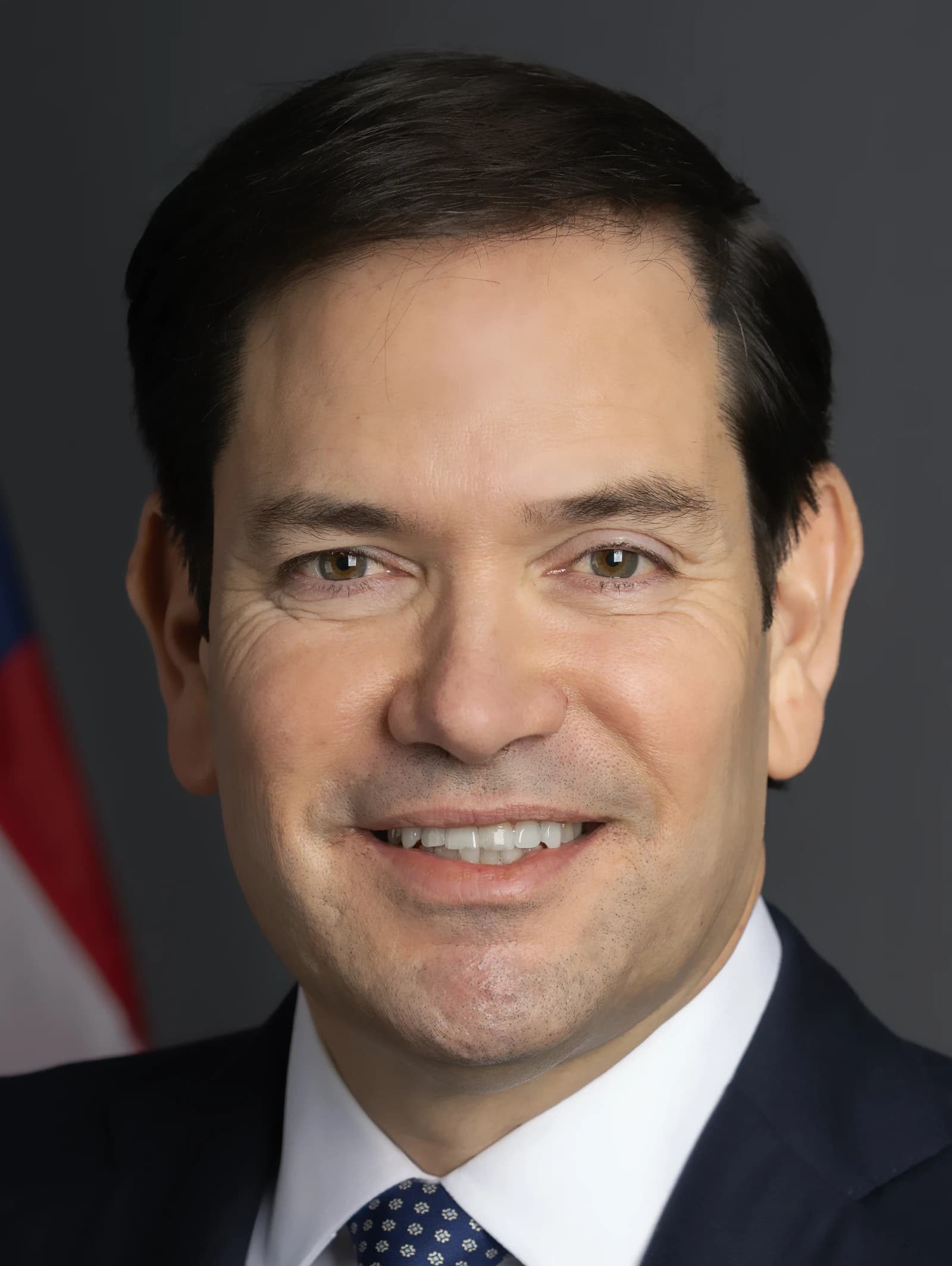
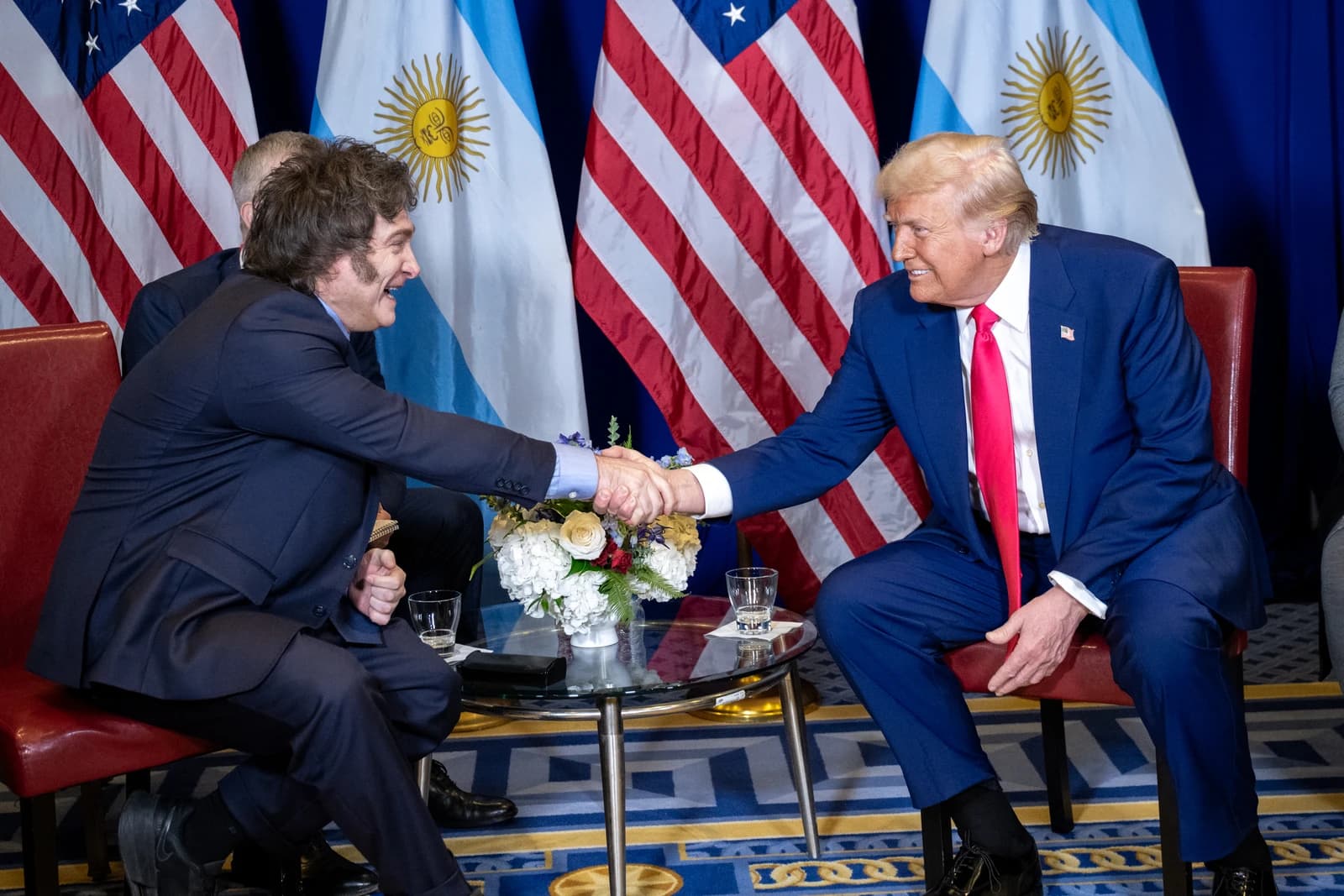
Argentina’s President Javier Milei and U.S. Senator Marco Rubio have reinforced their bilateral alliance at a moment when Washington is reshaping its approach to the Malvinas dispute, a shift that could affect Argentina’s diplomatic leverage and investor perception of political risk.
Argentina, Milei and Rubio meet as Malvinas debate shifts
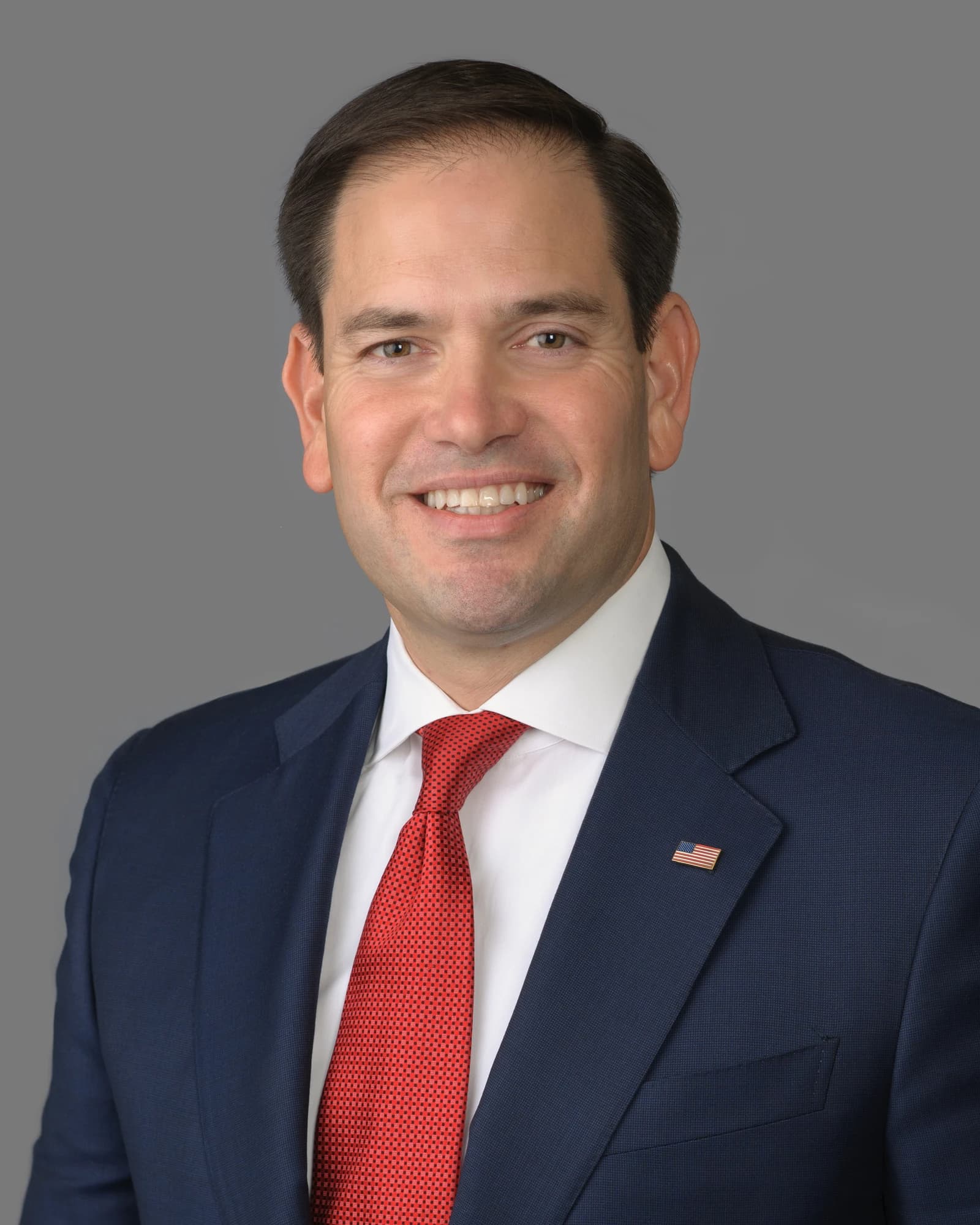
The meeting matters because the U.S. has proposed dissolving the UN Special Committee on Decolonization, the main multilateral forum where Buenos Aires presses its claim over the Falkland Islands. If Washington follows through, Argentina loses an important diplomatic venue just as Milei is trying to tighten alignment with the U.S. on trade, security and foreign policy.
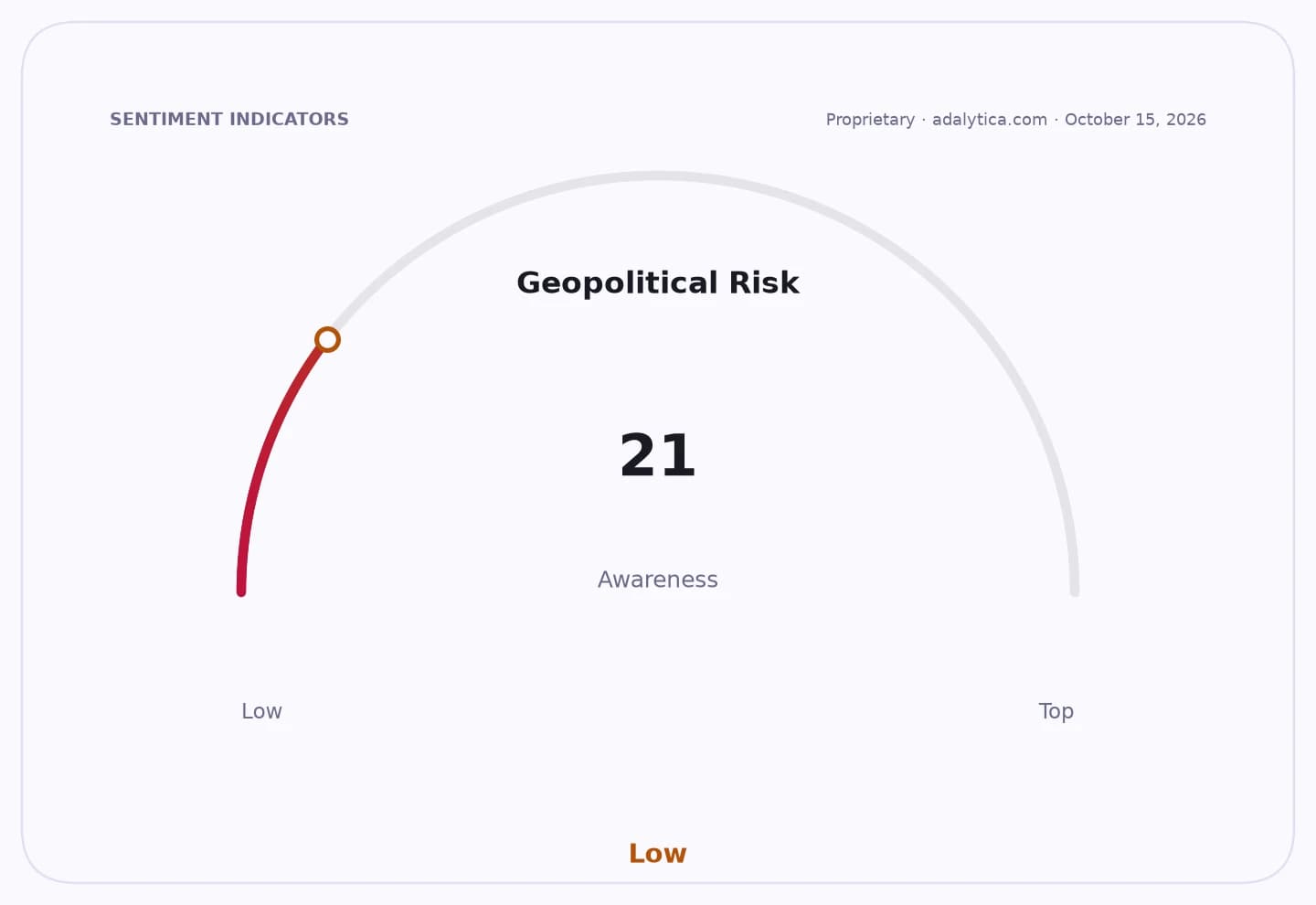
Sentiment IndicatorsⓘProprietary · adalytica.com · October 20, 2026
This is a snapshot — live sentiment, awareness and momentum for 130+ markets update continuously in the dashboard.Open AlphaPulse
That geopolitical pivot is being watched closely by investors because Argentina’s assets remain highly sensitive to changes in external support, sovereign-risk perception and policy credibility. The country’s U.S.-listed gauge, the ARGT ETF, closed at $86.97 on Oct. 19, below its 50-day moving average of $91.55 and 200-day average of $92.21, suggesting the market is still treating Argentina as a high-risk trade despite the diplomatic thaw.
Individual Argentine names have also cooled after recent swings. YPF ended at $50.69, below its 50-day moving average of $51.90 and well off its Sept. 15 peak of $57.61, while Grupo Financiero Galicia slipped to $35.09 from $36.47 on Oct. 15 and sits far under its 50-day average of $40.93. Both names remain tethered to expectations for currency policy, capital access and broader country risk rather than local fundamentals alone.
Geopolitical Risk vs ARGTadalytica.com
Explore this data interactively — full history, time series and cross-market comparisons.Open AlphaPulse
The backdrop is a fragile global risk tone, with Adalytica’s Global Stability Sentiment sitting at 68, or neutral, while its U.S. dollar trade signal shows fear at 26, reflecting a softer dollar impulse and unstable cross-asset conditions. For Argentina, that makes any improvement in Washington ties more valuable, but also means any setback in the UN dispute could feed back quickly into local stocks, bonds and the peso.
The key question now is whether the Milei-Rubio alignment becomes a concrete policy and economic partnership or stays a political gesture. Investors will be watching for follow-up moves on trade, security cooperation and Argentina’s standing in Washington, as well as any signs that the Malvinas issue is being downgraded in U.S. diplomacy.
| Entity | Gains | Losses |
|---|---|---|
| Milei government | ▲U.S. backing | ▼Diplomatic autonomy |
| Argentina markets | ▲Lower risk premium | ▼If alliance stalls |
| U.S. policymakers | ▲Regional influence | ▼Neutrality on Malvinas |
| Malvinas claimants | ▲— | ▼UN forum leverage |