ASEAN can still draw on both American and Chinese AI ecosystems, but only if its members move beyond opportunistic neutrality and build enough domestic capacity to make that posture credible.
ASEAN AI Hedging Faces U.S.-China Pressure
That is becoming harder as Washington and Beijing turn artificial intelligence into a contest over supply chains, access and standards. A Reuters-viewed draft letter showing the U.S. preparing to tell partners in its Pax Silica framework that “to be part of everything is to be part of nothing” captures the direction of travel: the era of loose, two-track participation may be ending.
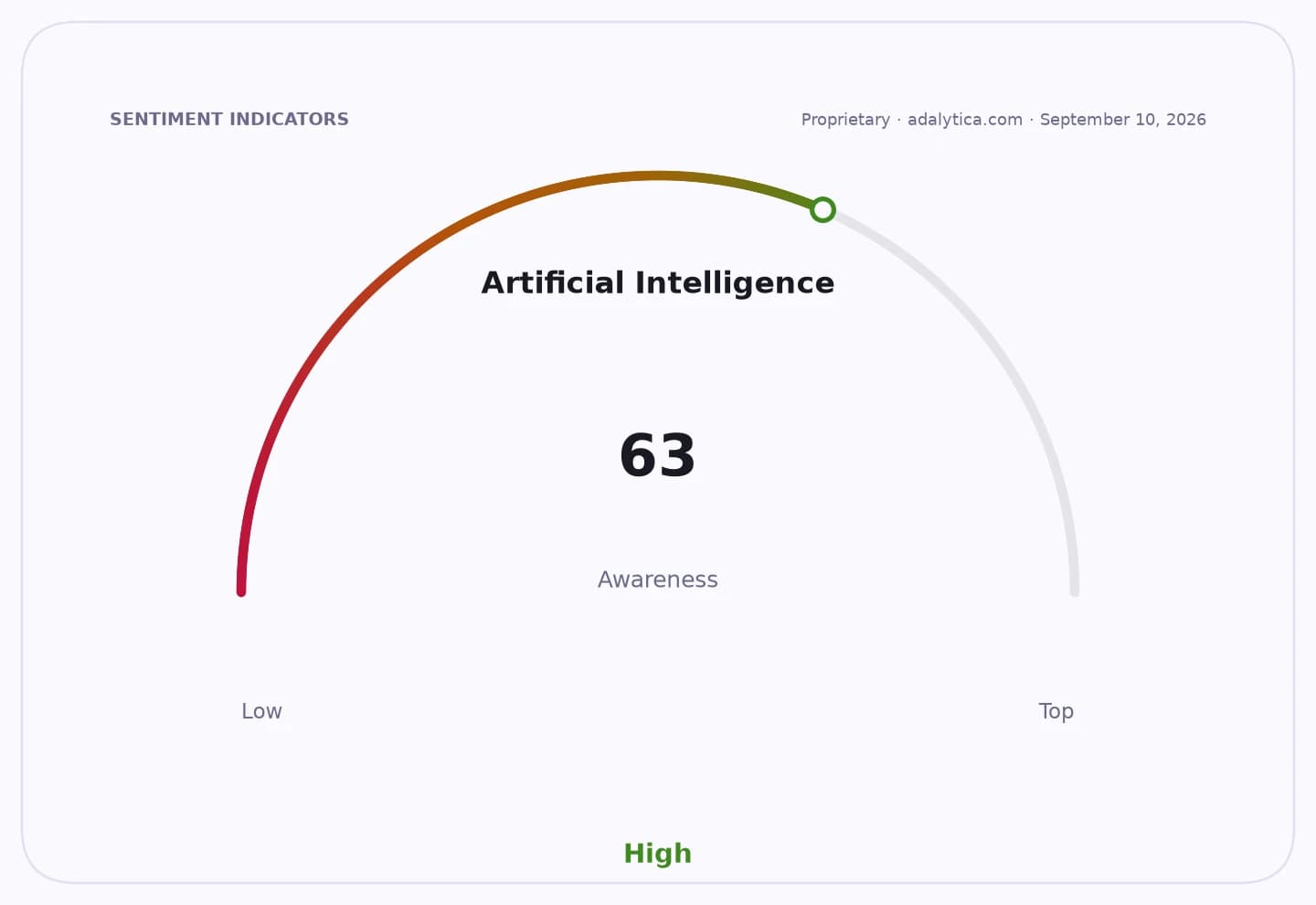
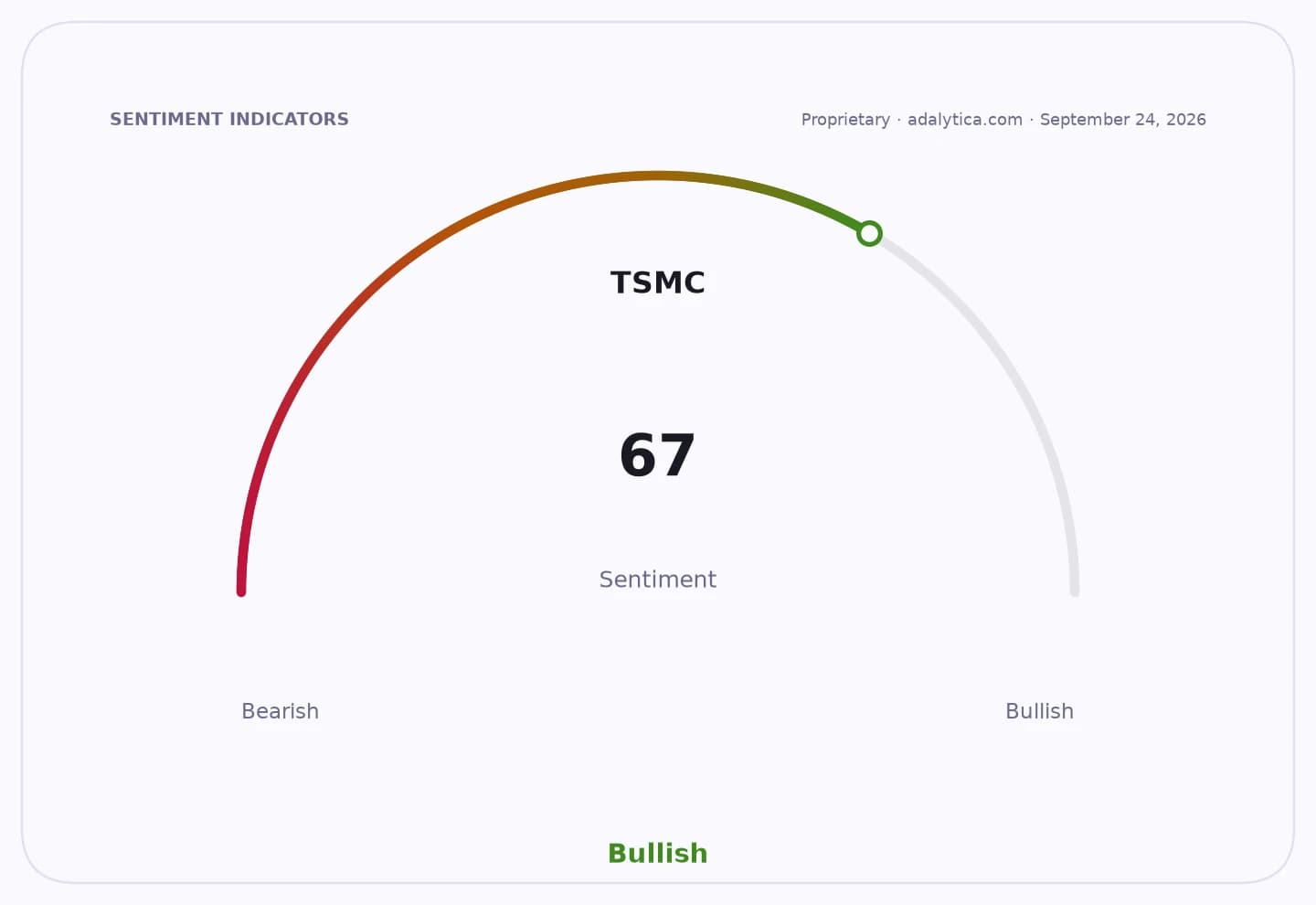
Sentiment IndicatorsⓘProprietary · adalytica.com · September 6, 2026
This is a snapshot — live sentiment, awareness and momentum for 130+ markets update continuously in the dashboard.Open AlphaPulse

For Southeast Asia, that matters because the region’s economic role in AI is no longer limited to being a passive buyer of chips or cloud services. ASEAN markets now sit on key parts of the infrastructure stack — semiconductor assembly in Malaysia, data-center hosting in Singapore and Indonesia, electronics manufacturing in Thailand, and a growing pool of digital users across the bloc. That makes the region valuable to both Washington and Beijing, but also vulnerable to pressure from both.
The stakes are economic as much as geopolitical. Malaysia accounts for 13% of global outsourced semiconductor assembly, testing and packaging, while its electrical and electronics sector makes up 44.3% of exports. Singapore has turned scarce land, energy and labor into leverage over data-center rules and sustainability standards. Indonesia is offering land and power to AI developers, including a 360 MW Batam campus that will run 170,000 Nvidia accelerators from the first quarter of 2027. These are not abstract alignments; they are the foundations of future investment, trade and productivity.
The U.S. is signaling it can still draw a firmer line on access than many ASEAN governments would like. In June, Washington ordered Anthropic to restrict access to its frontier models to U.S. nationals only, before lifting the order. The episode showed that even companies and countries that rely on American technology can have access constrained when policy priorities shift. That is a warning to ASEAN states that see hedging as simple shopping around.
China, meanwhile, brings a different advantage: lower-cost models, more efficient designs and stronger diffusion into manufacturing and logistics. For ASEAN governments and startups that want fast, cheap deployment rather than frontier prestige, Chinese systems can be compelling. That is especially true in economies where the immediate gains from AI lie in industrial automation, supply-chain management and basic application layers rather than cutting-edge research.
But the region’s ability to keep that balance depends on whether it can solve its own bottlenecks. Talent gaps are severe: Malaysia needs 50,000 engineers but produces only 5,000 engineering graduates a year. Energy is another constraint, with coal and gas still supplying about 70% of generation across the top six ASEAN data-center markets. Indonesia’s mid-2026 blackouts highlighted how fragile power security remains. Without better grids, more renewables and clearer nuclear pathways, ASEAN risks becoming a location for AI infrastructure without capturing much of the value.
That is why the most important part of the story is not whether ASEAN chooses Washington or Beijing. It is whether the bloc can turn hedging into a strategy rather than a reflex. So far, only Singapore and the Philippines — both U.S. security allies — have signed on to Pax Silica, while Malaysia, Indonesia and Thailand have stayed outside. That suggests room for maneuver, but also a lack of regional coordination and a shortage of domestic capabilities needed to negotiate from strength.
Investors should read that as both opportunity and risk. The opportunity sits in the buildout: data centers, power generation, grid equipment, semiconductor packaging, cooling systems and AI-enabled manufacturing. The risk is policy fragmentation, export-control spillovers and a race to the bottom in which ASEAN hosts the infrastructure while the economic rents flow elsewhere. If Washington hardens its rules and China keeps widening its price and deployment advantage, the region could find itself squeezed unless it upgrades its own industrial base.
| Entity | Gains | Losses |
|---|---|---|
| ASEAN states with strong infrastructure | ▲Investment and AI hosting demand | ▼Policy flexibility if rules tighten |
| U.S.-aligned cloud and chip suppliers | ▲Market access in allies and partners | ▼Reach in countries hedging with China |
| Chinese AI firms | ▲Cheaper deployment and diffusion | ▼Premium frontier access in U.S.-led systems |
| ASEAN governments lacking talent or power capacity | ▲Short-term hosting fees | ▼Long-term value capture and bargaining power |