A looming shortage of semiconductor equipment is becoming the next bottleneck in the AI buildout, and that matters because it can delay wafer output, stretch lead times and keep pricing power in the hands of the industry’s most indispensable suppliers.
ASML, TSMC and chip equipment shortage outlook
That is the real message investors should take from remarks tied to ASML and TSMC: the chip cycle is no longer just about demand for AI accelerators, it is about whether the world can physically add enough lithography, deposition and etch capacity fast enough to meet that demand. If equipment supply stays tight until 2028, foundries and memory makers will have to ration capex, and that pushes the value chain toward the companies that sell the tools rather than the chips themselves.
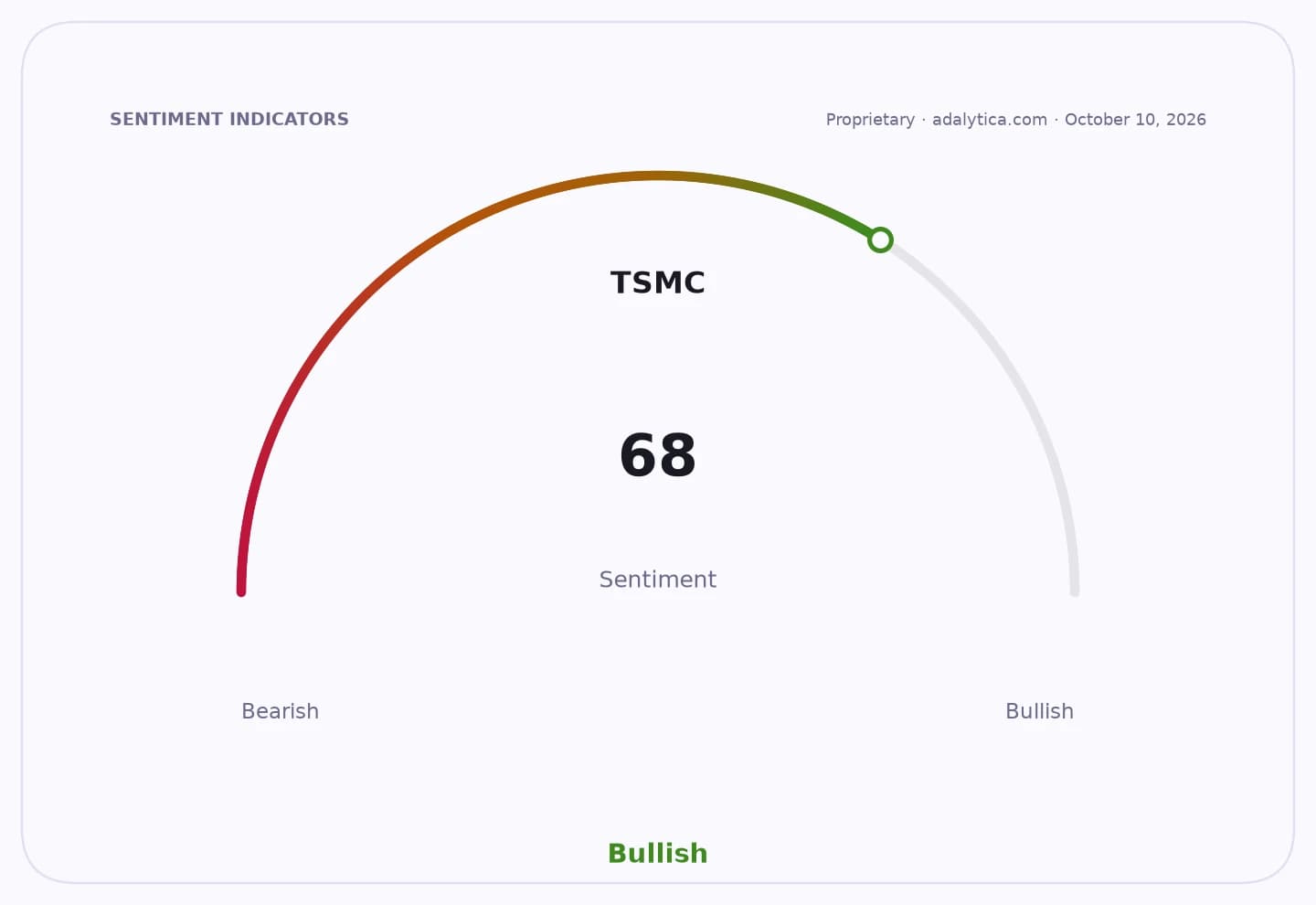
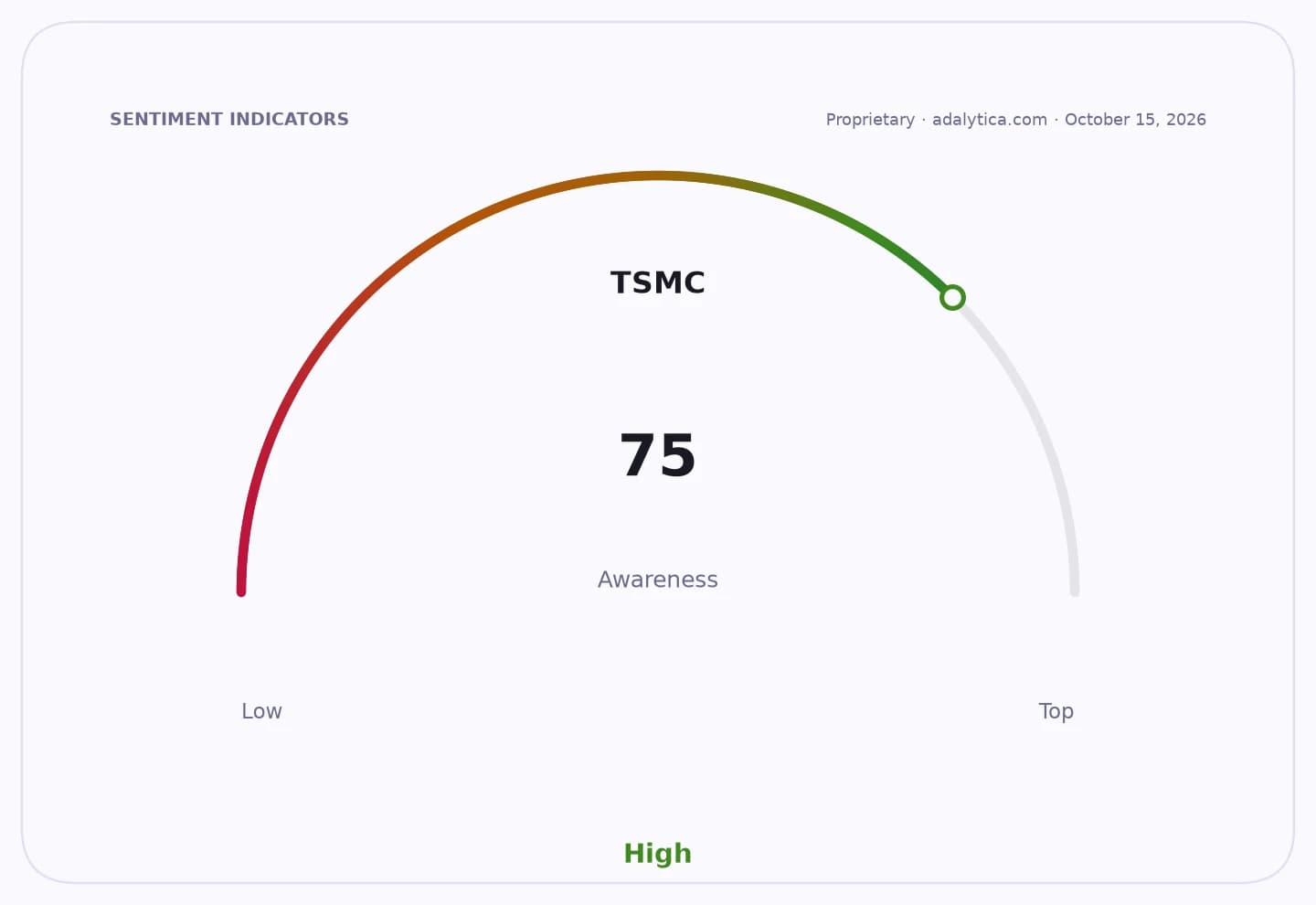
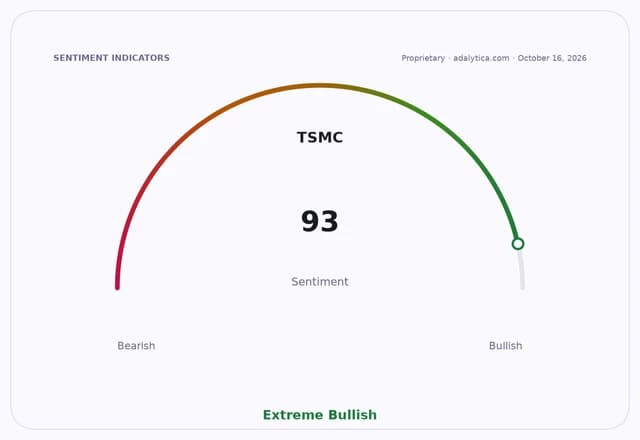
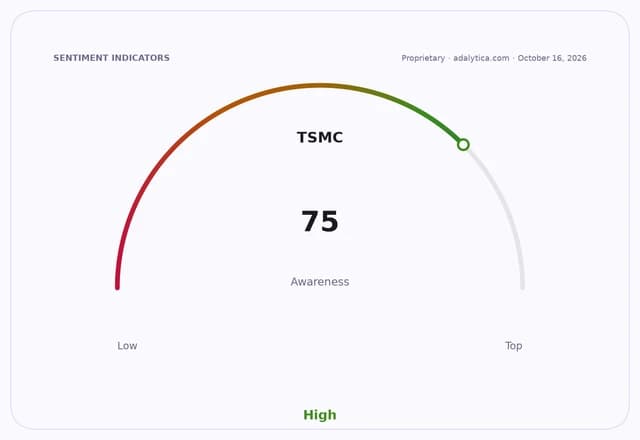
Sentiment IndicatorsⓘProprietary · adalytica.com · October 16, 2026
This is a snapshot — live sentiment, awareness and momentum for 130+ markets update continuously in the dashboard.Open AlphaPulse
The market has spent much of the past two years pricing AI as an earnings story for Nvidia and the hyperscalers. But a prolonged equipment shortage turns this into an infrastructure story. Every extra fab, advanced packaging line and node migration depends on a narrow set of suppliers with long order books and limited manufacturing slack. That is why ASML remains the critical choke point in advanced lithography, while Applied Materials and other equipment names stand to benefit from a multi-year capex cycle that looks less cyclical and more structural.
The price action in those names reflects that tension. ASML has pulled back to around 1,657 euros, below its 50-day moving average of 1,741 euros, after a sharp run earlier in the year, while TSMC has slipped to about $422 from a summer high near $476, even though its shares remain well above the 200-day average. Applied Materials has also retraced to roughly $430 from above $700 in June, leaving it near its lower Bollinger Band and beneath its 50-day average. In other words, the equity market is no longer paying peak enthusiasm multiples, even as the underlying bottleneck story is getting more acute.
TSMC — 30-day sentimentadalytica.com
Explore this data interactively — full history, time series and cross-market comparisons.Open AlphaPulse
That disconnect is exactly where the opportunity lies. Investors who focus only on near-term share-price volatility risk missing the second-order winners of the AI boom: the toolmakers, the substrate suppliers, the advanced packaging enablers and the equipment vendors whose order books can stay elevated even if chip stocks wobble. Adalytica’s sentiment snapshot underscores how crowded the broader AI trade remains, with NVIDIA still at extreme-greed levels, while ASML and equipment peers are trading more like consolidation names than structural winners.
For long-term investors, the message is simple: if semiconductor equipment supply really stays constrained into 2028, then the market is still underestimating the durability of capex across the semiconductor ecosystem. I believe the better way to play AI over the next several years is not to chase every chip rally, but to own the picks-and-shovels companies that benefit each time a foundry, memory maker or logic giant is forced to expand.
The next catalyst will be any evidence that foundries are extending delivery schedules, lifting capex plans or locking in more long-dated equipment orders. That is where the upside should compound fastest. Buy the infrastructure, not just the headlines.
| Entity | Gains | Losses |
|---|---|---|
| ASML | ▲pricing power, backlog visibility | ▼near-term sentiment swings |
| Applied Materials | ▲multi-year equipment demand | ▼customers facing capex delays |
| TSMC | ▲long-term capacity moat | ▼short-term cost and lead-time pressure |
| Chip buyers | ▲future supply security | ▼higher equipment and wafer costs |