Australia’s jump in unemployment to 4.7% has sharpened the market’s attention on the Reserve Bank’s next move, because the central bank may still lift rates again even as the labour market weakens and inflation remains stuck above target.
Australia unemployment rises to 4.7% as RBA weighs rates
That is the policy bind investors have been waiting for: the RBA is trying to cool demand quickly enough to beat inflation, but every extra hike risks pushing the jobless rate higher and turning a soft landing into a harder one. September’s reading was the highest since October 2021 and came with 39,300 jobs lost, a much weaker print than economists expected and a clear sign the economy is losing momentum.
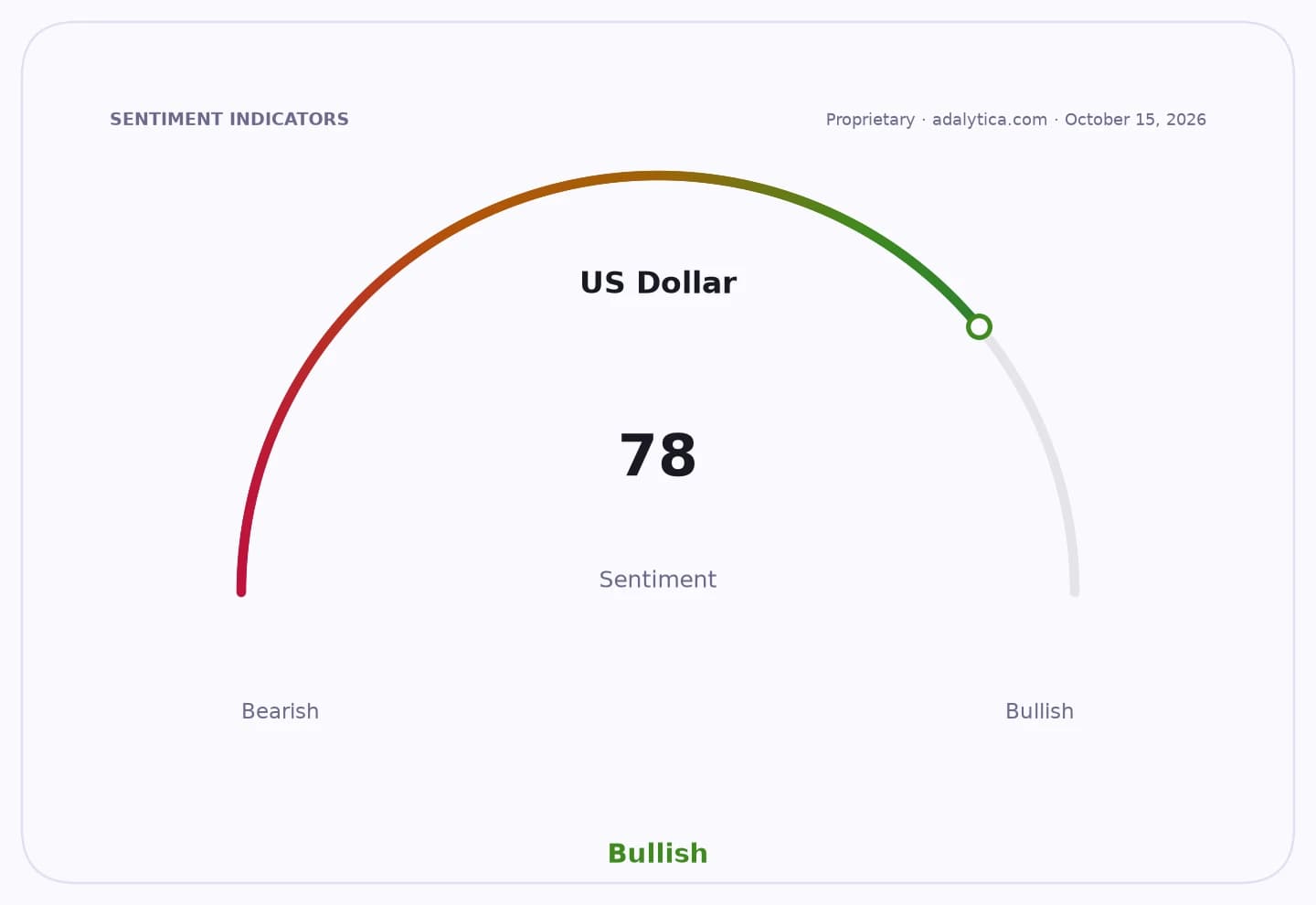
Sentiment IndicatorsⓘProprietary · adalytica.com · October 16, 2026
This is a snapshot — live sentiment, awareness and momentum for 130+ markets update continuously in the dashboard.Open AlphaPulse
The stakes are unusually high because inflation is still running at 4%, its 13th straight month above the RBA’s 2% to 3% target band. The central bank raised the cash rate to 4.6%, a 15-year high, and Governor Michele Bullock has already argued Australia is not in stagflation. But the new unemployment data makes that distinction harder to defend. If the RBA hikes again on November 3, it will be doing so with joblessness already at a five-year high and likely heading higher.
For investors, that means the trade is no longer just about one more rate increase. It is about the widening gap between policy and the real economy. A more hawkish RBA may support the Australian dollar and keep front-end yields elevated for longer, but it also raises the risk of further pressure on consumer spending, housing, bank credit growth and domestic cyclicals. The labour market is now close to full-employment assumptions breaking down, which changes the earnings outlook for businesses tied to household demand.
The regional split reinforces that message. Victoria’s 5.1% unemployment rate and Tasmania’s 5% show the pain is not evenly distributed, while resource-heavy Western Australia remains relatively resilient at 4.2%. That divergence argues for a two-speed Australian market: resources and exporters are better insulated, while retailers, discretionary names and rate-sensitive sectors face a tougher backdrop if policy stays tight.
The market’s real focus now shifts to inflation and the November meeting. If price pressures do not ease, the RBA may choose to sacrifice more jobs to preserve credibility on inflation. That is why the current setup is so investable: the consensus still underestimates how long the central bank may stay restrictive, but also how quickly labour-market weakness can feed through to growth-sensitive assets. In this environment, investors should favor balance-sheet strength, pricing power and global earnings over domestically exposed names that rely on an intact consumer.
| Entity | Gains | Losses |
|---|---|---|
| RBA hawks | ▲Inflation credibility | ▼Labour market softness |
| Bond investors | ▲Higher yields | ▼Growth-sensitive sectors |
| Banks | ▲Net interest margins | ▼Credit demand |
| Australian consumers | ▲None | ▼Jobs and spending power |