Australian household spending rose 0.6% in September, a firmer-than-expected rebound that points to consumers still carrying the economy even as higher fuel costs and seasonal health outlays lift prices at the checkout.
Australian household spending rose 0.6% in September
The increase followed a 0.1% fall in August and was broad-based across both essential and discretionary categories, according to the Australian Bureau of Statistics. Transport and health each climbed 1.5%, while recreation and culture gained 0.8%, suggesting households are still spending on travel and services despite a patchy cost-of-living backdrop.
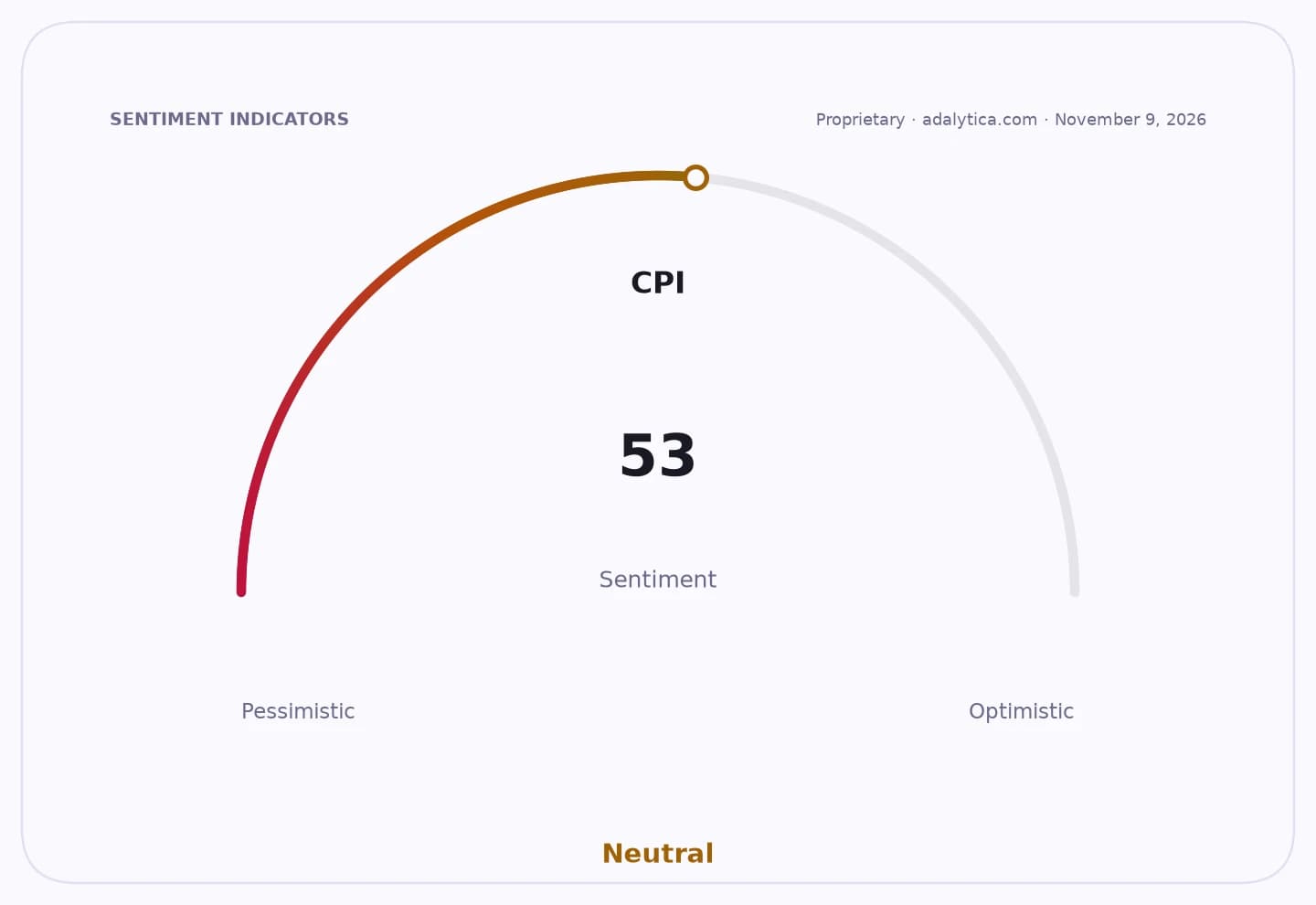
Sentiment Indicators
Fuel was a key driver, with spending up 5.4% after global oil prices rose and fuel excise relief ended on Aug. 3. The ABS said the volume of fuel purchased actually fell 2.2% in September, underscoring that the nominal spending rise was being boosted by prices rather than stronger consumption alone.
Health spending also rose as Australians made more doctor, dental and optometric visits and bought more pharmaceuticals and toiletries. The bureau said late flu activity likely added to demand for medical consultations and medicines, while transport spending was supported by fuel, vehicle repairs and domestic air travel tied to major sporting events.
On a quarterly basis, household spending rose 0.7% in the September quarter, the fourth straight quarterly increase. Seven of the nine spending categories advanced, led by transport, which climbed 1.6% on stronger air travel.
The data matters for investors because Australian consumer demand has been a crucial offset to higher interest rates and slower housing activity. A spending pulse of this kind supports growth in retail, transport and leisure-linked sectors, but it also complicates the outlook for inflation and the Reserve Bank of Australia’s policy path if price-sensitive categories keep rising.
For markets, the key question is whether September marks a genuine turn in household demand or just a temporary boost from fuel and health costs. If real spending holds up, it would reinforce the case for resilient domestic activity; if not, it would point to consumers becoming more cautious as borrowing costs and living expenses stay elevated.
| Entity | Gains | Losses |
|---|---|---|
| Australian retailers | ▲Higher sales volumes | ▼Margin pressure if costs rise |
| Transport and travel firms | ▲Stronger demand | ▼Fuel-cost sensitivity |
| Reserve Bank of Australia | ▲Clearer read on demand | ▼Harder inflation policy tradeoff |
| Cost-conscious households | ▲Essential access to services | ▼Bigger bills at the pump and pharmacy |