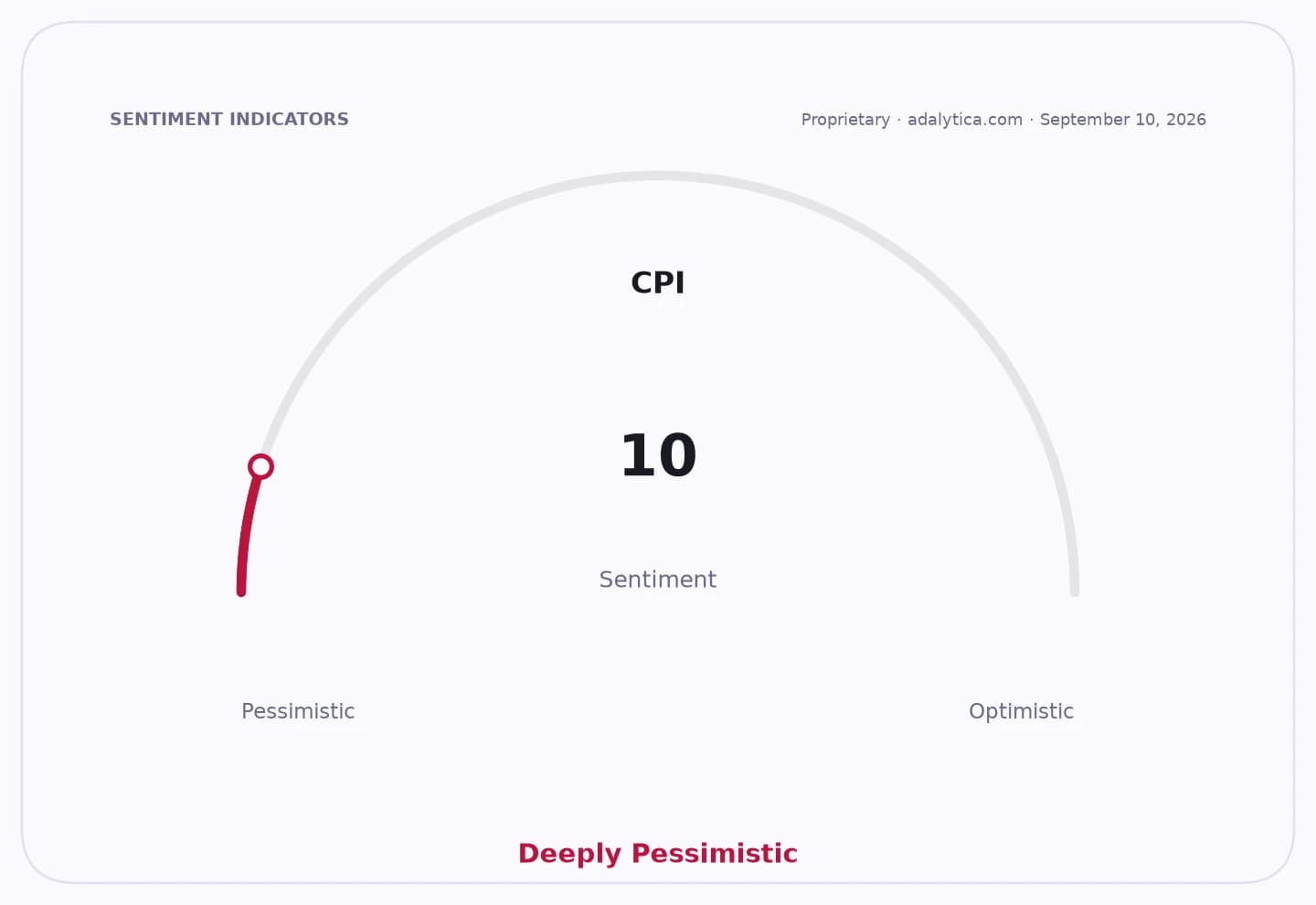
Austria’s inflation accelerated to 3.2% in August, underscoring how energy costs and sticky services inflation are keeping price pressures elevated even after food tax cuts briefly eased the pain for households.
Austria Inflation Rises to 3.2% in August

The rise from 2.8% in July matters because it shows Austria is moving further away from the European Central Bank’s 2% goal, leaving policymakers with little room to argue that inflation risks have fully faded. For consumers, the biggest drivers were higher fuel and heating-oil prices, with transport strengthening its role as the main annual inflation engine. Fuel prices were 26.3% higher than a year earlier, a sharp reminder that headline inflation can reaccelerate quickly when energy markets turn.
Sentiment IndicatorsⓘProprietary · adalytica.com · September 18, 2026
This is a snapshot — live sentiment, awareness and momentum for 130+ markets update continuously in the dashboard.Open AlphaPulse
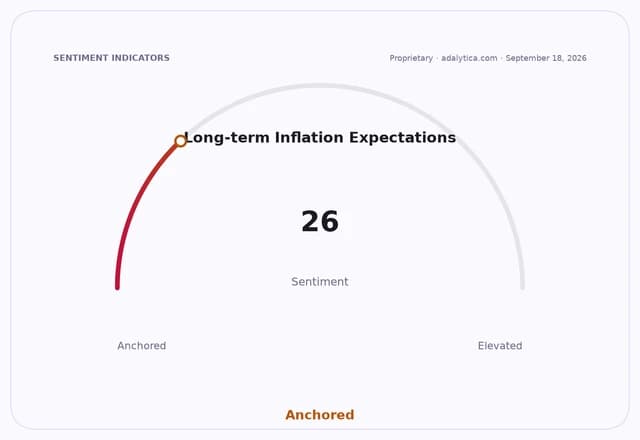
The data also shows how uneven disinflation has become. A value-added tax cut on basic food items, in force since July, helped hold down grocery prices and kept food cheaper than a year earlier, according to Statistik Austria. But that relief was not enough to offset the broader cost pressures coming from services and transport. That mix is important economically: services inflation is typically more persistent than goods inflation because it is tied more closely to wages and domestic demand than to global commodity prices.
For investors, the Austrian print is a small but telling signal of the region’s inflation backdrop. Persistent inflation in a euro-area member state supports the case for the ECB to keep policy restrictive for longer, even if growth remains uneven. That can keep pressure on rate-sensitive assets, from government bonds to real estate and highly leveraged companies, while helping sectors with pricing power and inflation-linked revenues.
The broader narrative is that Europe’s disinflation story is still vulnerable to energy shocks and service-sector stickiness. If fuel prices remain elevated, Austria could stay above target for longer, complicating the ECB’s easing path and reinforcing market demand for inflation hedges and defensive cash flows.
| Entity | Gains | Losses |
|---|---|---|
| Energy producers | ▲Higher fuel margins | ▼Softer demand risk |
| Austrian consumers | ▲Food tax relief | ▼Higher transport bills |
| ECB hawks | ▲Tighter-for-longer case | ▼Dovish easing hopes |
| Inflation-linked assets | ▲Better hedge demand | ▼Nominal bond prices |