A Bahraini newspaper is using a routine staff exchange to reinforce a broader strategic relationship with China, highlighting how Beijing’s soft-power outreach is reaching into media institutions even as geopolitical scrutiny of China intensifies elsewhere.
Bahrain newspaper sends staff to China training
Al-Bilad said it is sending Ali Al-Muhafdha, who oversees smart content production, and Ali Hilal, head of the archive and information department, to China for a training and familiarization program under an invitation from the Chinese embassy in Bahrain. The trip is designed to expose the pair to Chinese media and institutional practices, but the larger significance is diplomatic and commercial: it underscores Beijing’s effort to broaden influence through professional, educational and cultural channels, not just trade and investment.
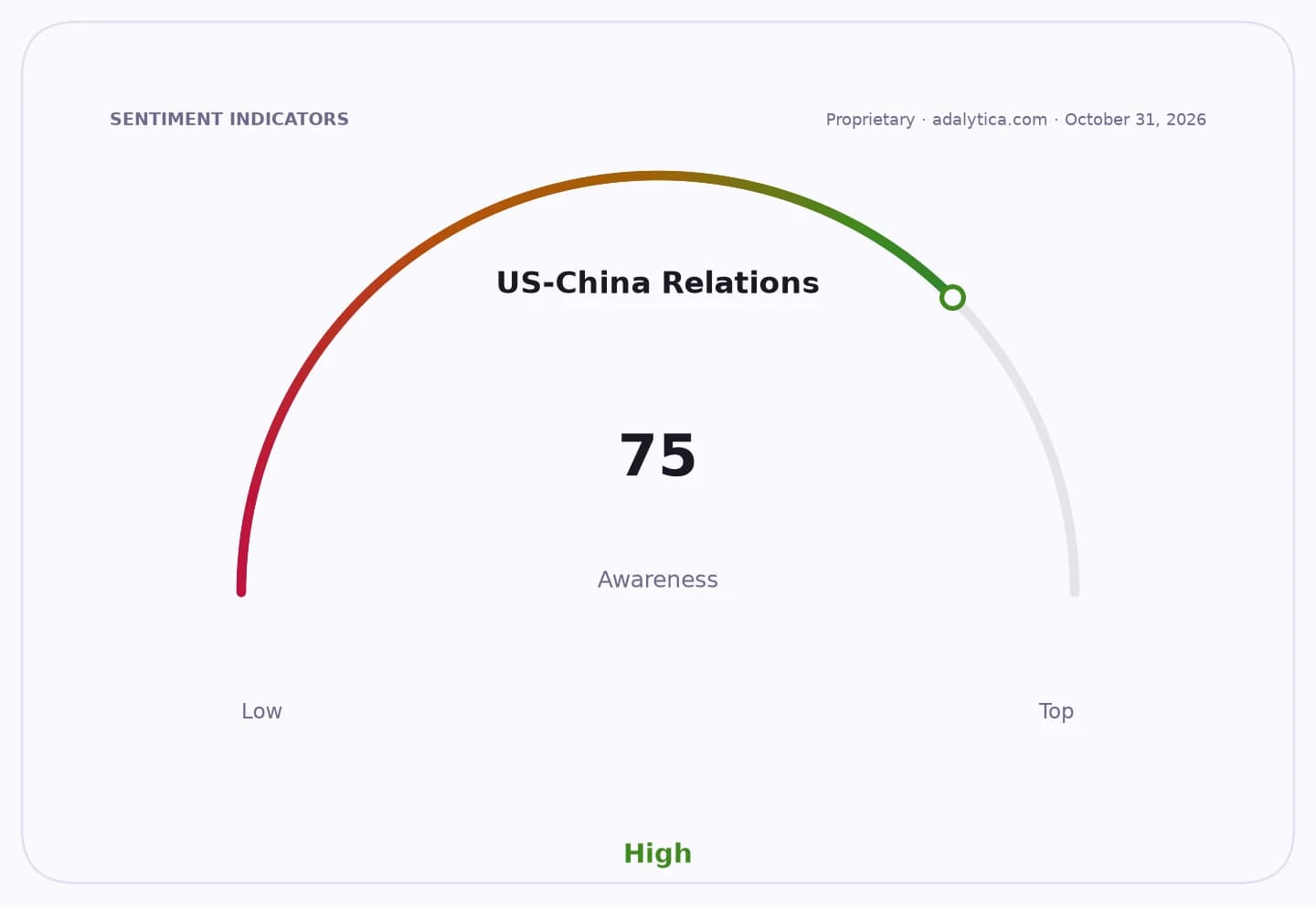
Sentiment Indicators
For Bahrain, the exchange fits a pattern of hedging and engagement with major powers. Gulf states have increasingly sought to deepen links with China as they diversify economic partnerships beyond the West, and media cooperation is one of the less visible tools in that strategy. Such programs can strengthen institutional ties, expand access to information and create channels for future collaboration in technology, content production and official communications.
The move also comes against a backdrop of elevated geopolitical sensitivity around China-related relationships. Adalytica’s US–China Relations Sentiment gauge is in neutral territory at 68, but awareness remains in “extreme fear” territory, showing how quickly outside attention can shift when China is involved. That makes even small institutional exchanges politically meaningful, particularly as governments and companies weigh the benefits of cooperation against the reputational and regulatory risks of being seen as too close to Beijing.
For Al-Bilad, the immediate impact is internal rather than financial: staff development, digital capability building and access to new editorial workflows. But for investors watching the region, the more important signal is that China’s engagement with the Gulf is broadening beyond energy and infrastructure into information ecosystems, where influence can be built quietly and over time. In that sense, the trip is less about two journalists visiting China than about how Beijing continues to embed itself in regional networks that shape public discourse.
| Entity | Gains | Losses |
|---|---|---|
| Al-Bilad | ▲Staff training | ▼Short-term newsroom absence |
| China | ▲Soft-power reach | ▼More scrutiny |
| Bahrain–China ties | ▲Institutional cooperation | ▼Policy sensitivity |
| Western-aligned rivals | ▲Limited benefit | ▼Greater Chinese influence |