Inflation has become a major economic risk for Bangladesh, with Commerce Minister Khandaker Abdul Muktadir flagging higher prices as a central policy concern just as the country faces slower growth, banking stress and mounting external pressures.
Bangladesh inflation risk rises amid taka pressure
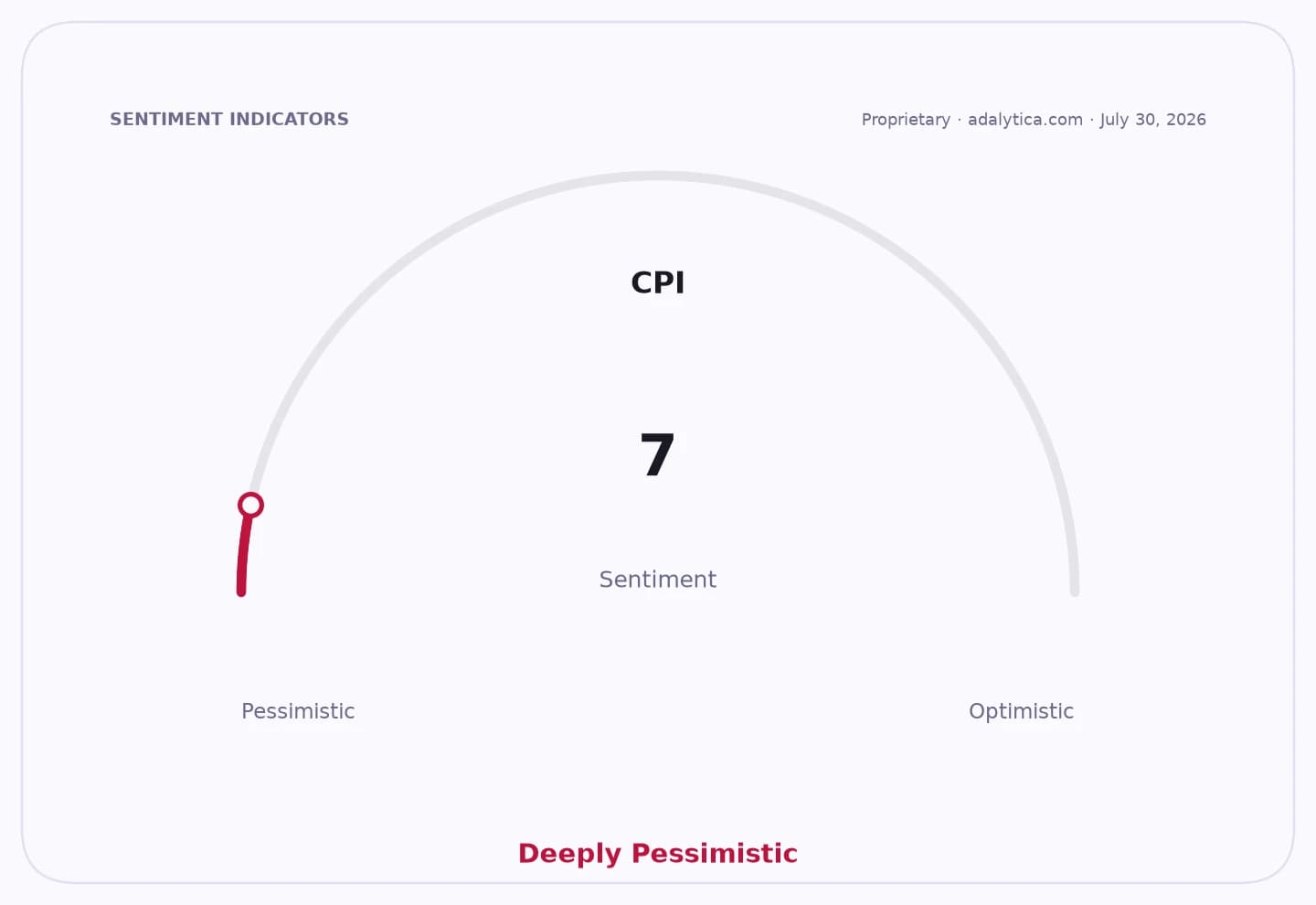
That matters because persistent inflation erodes household purchasing power, complicates monetary policy and can weaken investment sentiment in an economy that is trying to preserve growth momentum and attract capital. For Bangladesh, where consumer prices feed directly into living costs and business margins, the issue is not just one of macro stability but of social and political resilience.
Sentiment IndicatorsⓘProprietary · adalytica.com · July 30, 2026
This is a snapshot — live sentiment, awareness and momentum for 130+ markets update continuously in the dashboard.Open AlphaPulse
The warning comes against a backdrop of broader vulnerability. S&P has already cut Bangladesh’s outlook to negative, citing strains in the banking system and energy risks, while the World Bank has warned that climate-linked heat waves could shave as much as 7% from South Asia’s economy by 2050, including Bangladesh. Together, those pressures add up to a difficult mix: higher prices, tighter financing conditions and rising climate costs.
Recent market signals also underscore the challenge. The taka has been under pressure, trading around 122.83 per dollar in the latest available data, well above levels seen a year earlier, which can intensify imported inflation by making fuel, food and other essentials more expensive. Crude oil’s rebound to the high-$80s a barrel in the latest forecast also matters for a country that relies heavily on imports for energy and transport needs.
For policymakers, the inflation problem is especially awkward because Bangladesh is still pursuing an ambitious long-term growth strategy, including a goal of becoming a trillion-dollar economy by 2034. That requires stable prices, predictable exchange rates and enough confidence to keep domestic consumption and foreign investment flowing. If inflation remains elevated, the government may be forced to choose between supporting growth and tightening policy to defend price stability.
Investors will read the minister’s comments as another sign that Bangladesh’s near-term macro profile remains fragile. A tougher inflation backdrop can weigh on bank asset quality, consumer demand and corporate margins, while increasing the risk of policy missteps if authorities lean too hard on administrative controls rather than broader reforms. The immediate question is whether price pressures ease enough to restore confidence, or whether inflation becomes a more entrenched drag on the country’s growth story.
| Entity | Gains | Losses |
|---|---|---|
| Export-oriented firms | ▲Stronger local pricing power | ▼Higher input and logistics costs |
| Households | ▲— | ▼Lower real incomes |
| Bangladesh government | ▲Policy urgency for reforms | ▼More pressure to defend growth |
| Importers | ▲— | ▼Costlier fuel and essentials |