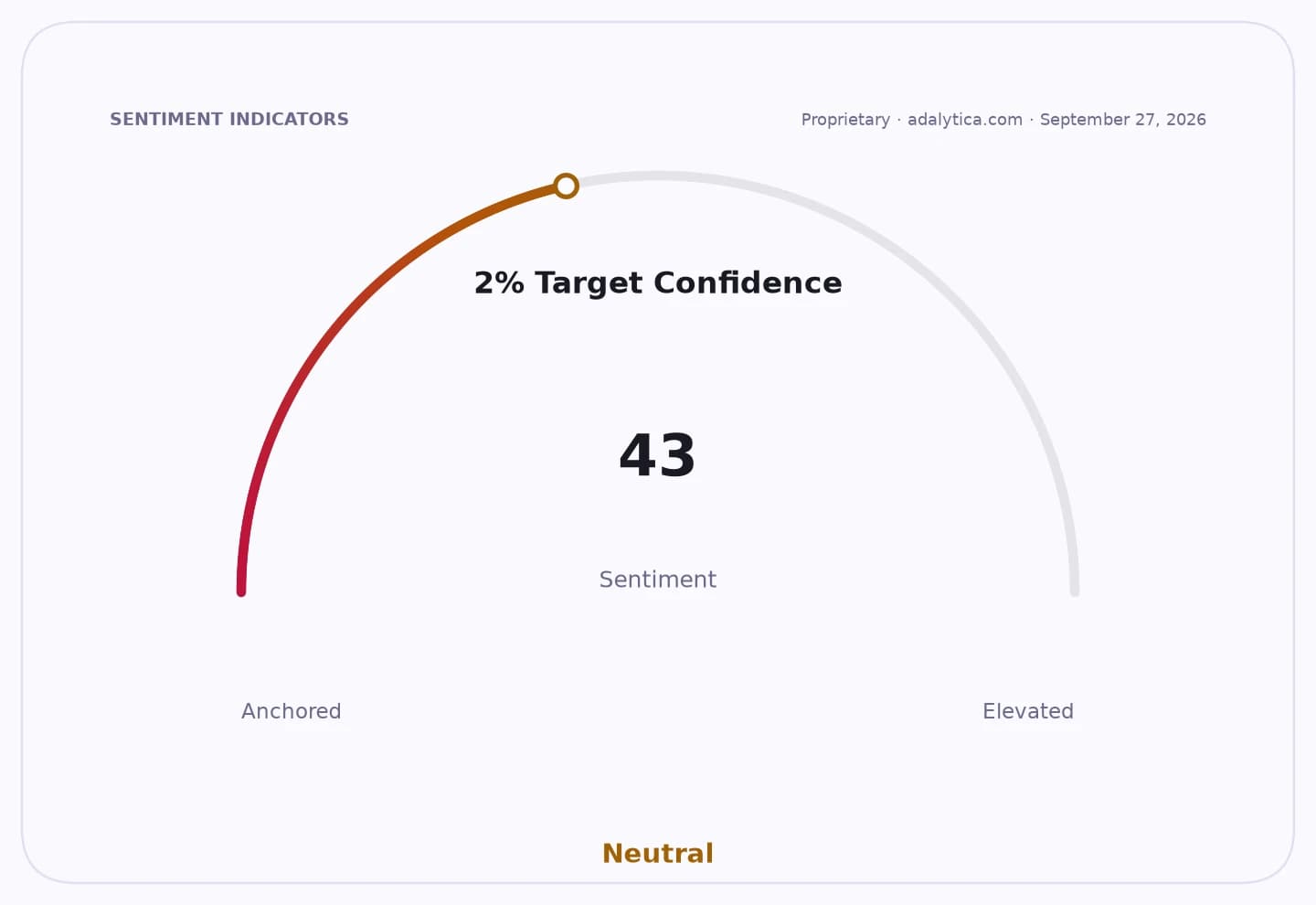
The Bank of Ghana kept its medium-term inflation target at 8% plus or minus 2%, saying headline inflation is still expected to return to the band over time despite a third straight monthly increase in price pressures.
Bank of Ghana Keeps 8% Inflation Target
That leaves the central bank on watch rather than in tightening mode, but the message matters for borrowers, bondholders and the cedi because it suggests policymakers still see the current pickup as manageable barring fresh shocks. The committee pointed to relatively favorable domestic conditions, even as it flagged elevated external risks from the global economy.
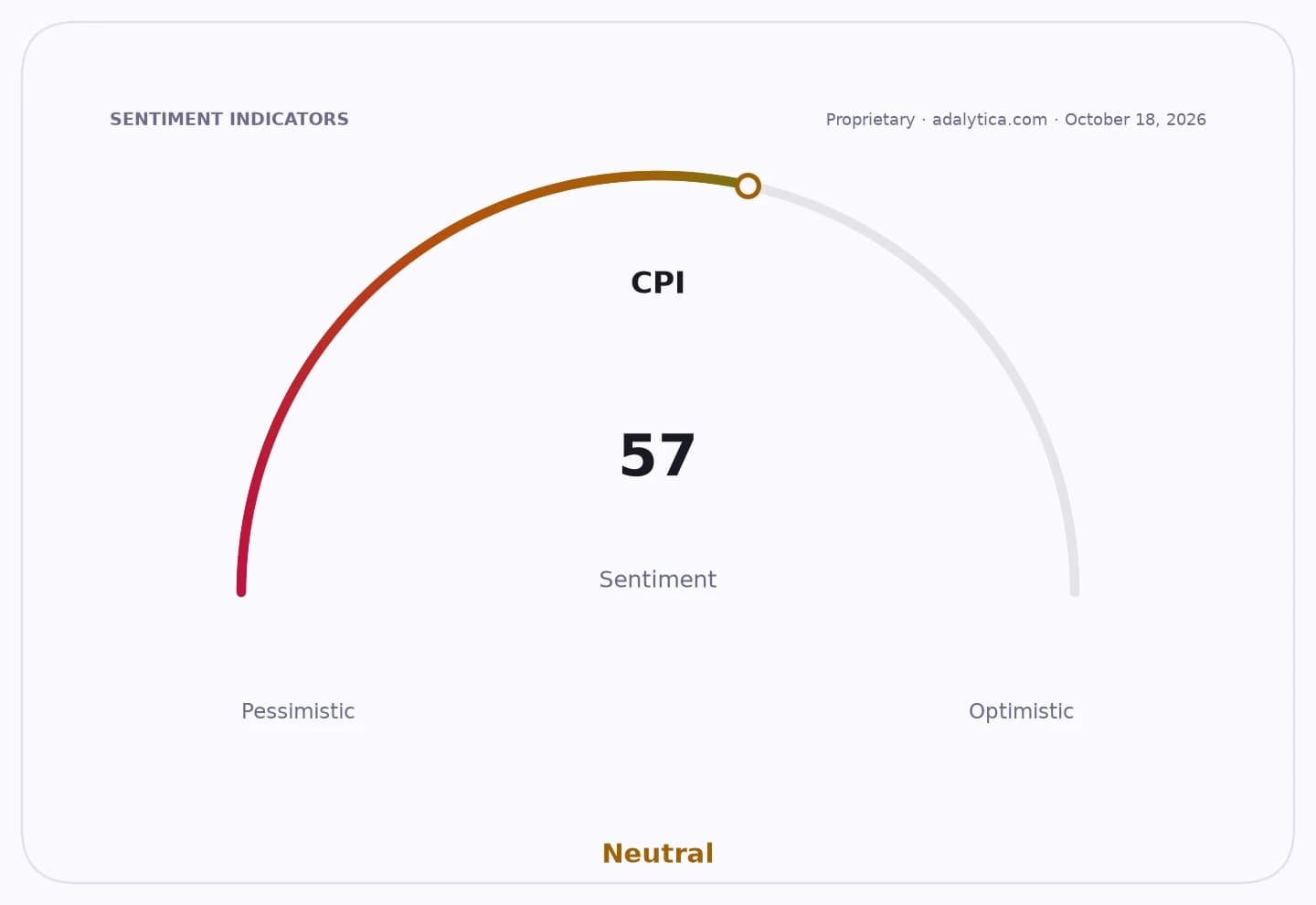
Sentiment IndicatorsⓘProprietary · adalytica.com · October 18, 2026
This is a snapshot — live sentiment, awareness and momentum for 130+ markets update continuously in the dashboard.Open AlphaPulse
Headline inflation rose to 5.2% in September from 5.0% in August, with consumer prices increasing 1.1% month on month after easing in the prior period. Food inflation accelerated to 4.0% from 3.0%, while non-food inflation, which had driven the August pickup, eased to 6.2% from 6.8%.
The MPC said easing inflation expectations and lower core inflation indicate underlying price pressures are moderating, but it also warned that utility tariff increases, higher pump prices, a stronger U.S. dollar and global supply-chain spillovers could push inflation higher. Those risks are partly offset by fiscal consolidation, better food supply and exchange-rate stability, underscoring how much Ghana’s inflation path still depends on currency and imported-cost dynamics.
For investors, the signal is that the BoG is trying to preserve policy credibility while avoiding an unnecessary squeeze on growth. A stable target and a statement that inflation remains on course to fall back into range should support local debt sentiment, but any renewed cedi weakness or imported inflation could quickly change that calculus.
The market reaction will likely hinge on whether the disinflation trend holds into the next MPC meetings and whether global dollar strength keeps feeding through to domestic prices.
| Entity | Gains | Losses |
|---|---|---|
| Bank of Ghana | ▲Inflation credibility | ▼Policy flexibility |
| Ghana bondholders | ▲Target stability | ▼Unexpected rate risk |
| Ghana consumers | ▲Lower inflation outlook | ▼Higher utility and fuel costs |
| Importers | ▲Cedi stability | ▼Stronger dollar pressures |