Senegal’s annual inflation slowed to 1% in September, reinforcing the case for a continued pause in monetary policy as the West African economy absorbs uneven food prices, higher fuel costs and targeted government support for households.
Senegal inflation slows to 1% in September
The figure, down from 1.2% in August, shows price growth remaining well below the 3% ceiling used in UEMOA surveillance and beneath the government’s own 2026-2028 inflation assumption of 1.7% on average. For investors, that matters because subdued inflation reduces pressure on the BCEAO to tighten further, helping keep financing conditions relatively stable for sovereign borrowers and domestic businesses even as fiscal risks remain elevated.
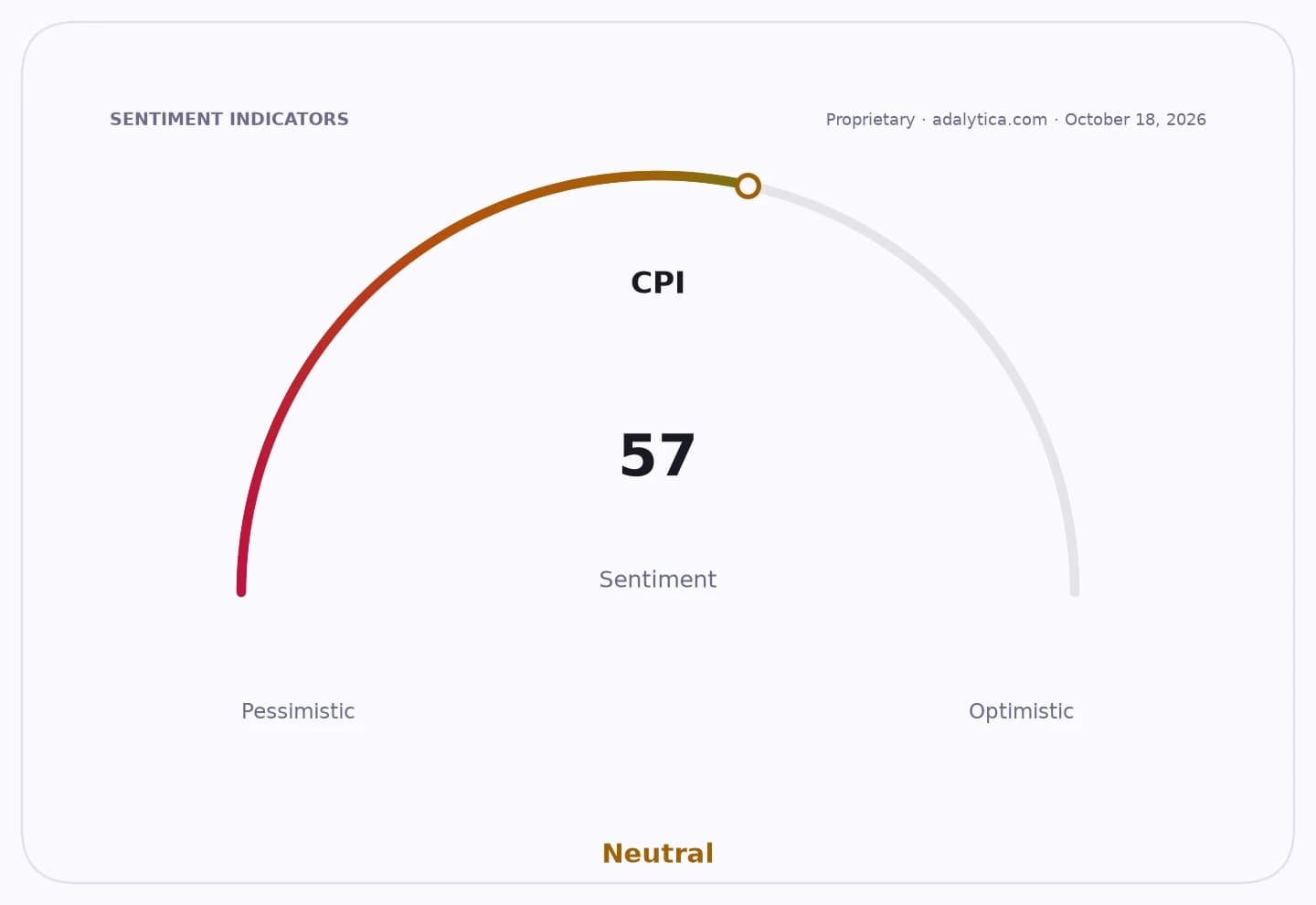
Sentiment IndicatorsⓘProprietary · adalytica.com · October 21, 2026
This is a snapshot — live sentiment, awareness and momentum for 130+ markets update continuously in the dashboard.Open AlphaPulse
The moderation also suggests Senegal is not facing the kind of broad-based price spiral that forces central banks into aggressive action. The core rate, which strips out fresh food and energy, also held at 1%, pointing to contained underlying demand pressures. That said, the monthly data were less benign: consumer prices rose 1.1% in September, led by food, housing, transport and utilities, including a 4.4% jump in fuel prices and a 3.8% increase in electricity.
The mix matters. Imported goods fell 0.2% from a year earlier, while locally produced items rose 1.4%, indicating the latest inflation reading is being shaped more by domestic supply conditions than by a generalized external shock. Food remains the key swing factor: fresh leafy vegetables surged 23.9% in the month, even as citrus prices dropped 10.1%, underscoring how volatile agricultural supply can still distort headline numbers.
For households, the cooling annual rate offers some relief after a period in which the government has been forced to intervene with more than 7.2 billion FCFA in transfers, food kits and livestock aid to vulnerable families. Authorities have also moved to better target energy subsidies and re-start family safety-net payments, aiming to preserve purchasing power without broadening fiscal costs unnecessarily. That balance is important in a country already under scrutiny over debt and budget discipline.
For bondholders, the inflation data are supportive but not decisive. Senegal’s eurobonds have recently been pressured by political friction over the budget amendment and by ongoing uncertainty around debt restructuring. Stable inflation can help anchor nominal growth and preserve real household incomes, but it does little by itself to resolve fiscal financing needs or the broader credibility questions hanging over the budget process. The BCEAO’s decision to hold its main policy rate at 3% fits that cautious backdrop.
The near-term outlook hinges on whether food inflation stays contained through the lean season and whether the government can maintain subsidy reform without stoking social pressure. If prices remain close to current levels, Senegal should be able to defend its growth story and keep borrowing costs from rising further. If food and energy prices re-accelerate, the inflation respite could prove short-lived.
| Entity | Gains | Losses |
|---|---|---|
| Senegal households | ▲Buying power preserved | ▼Little immediate relief from food spikes |
| BCEAO | ▲Policy room to hold rates | ▼Less urgency for easing |
| Senegal sovereign bonds | ▲Stable inflation backdrop | ▼Fiscal and political risk persists |
| Food- and energy-sensitive consumers | ▲Smoother price outlook | ▼Volatile produce and fuel costs |