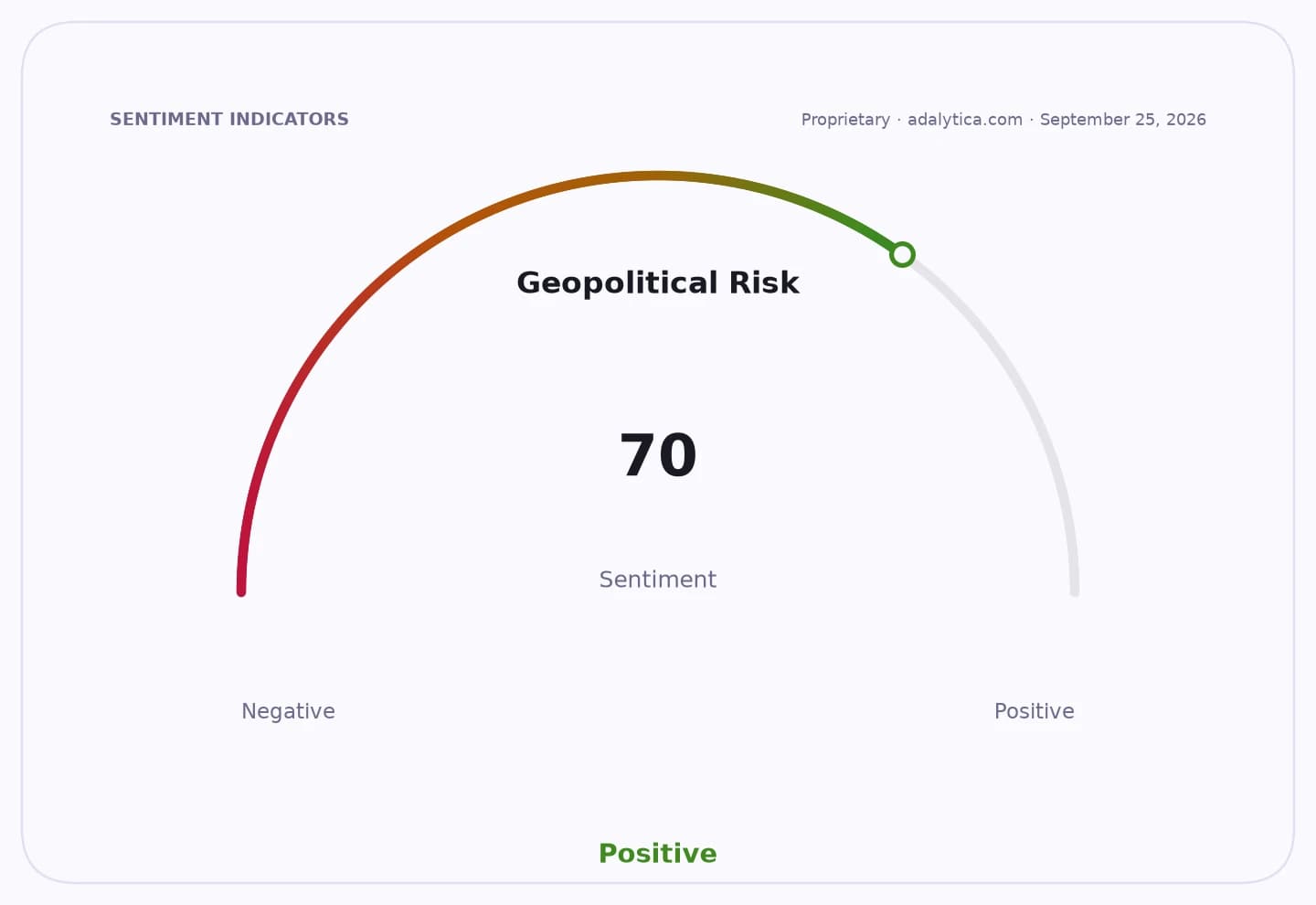
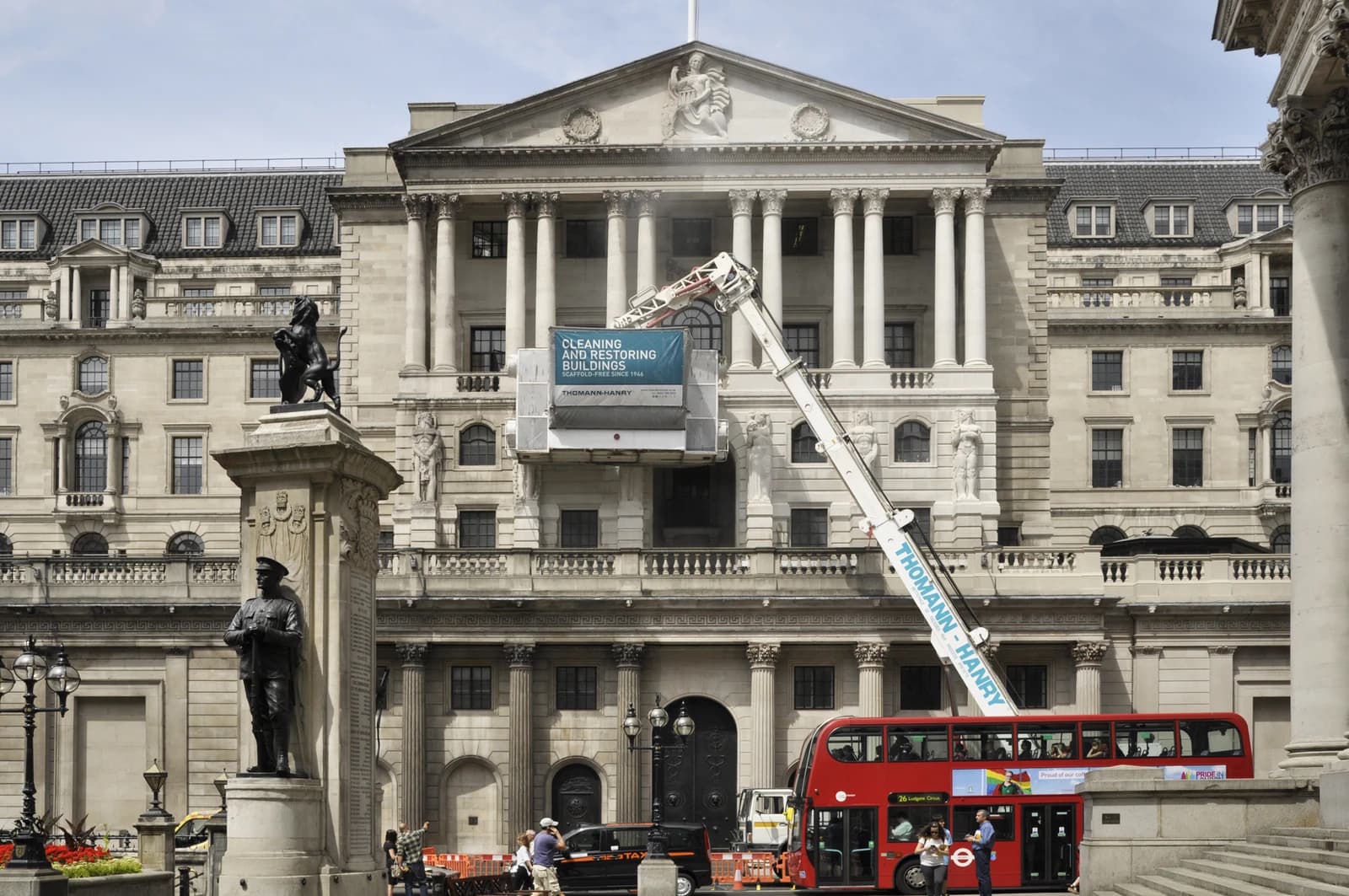
The Bank of England is widely expected to leave interest rates unchanged, with the real policy problem now coming from oil’s violent swings rather than any obvious collapse in demand.
Bank of England Holds Rates as Oil Swings Near $100
That matters because crude has become the swing factor in the inflation outlook just as policymakers are trying to judge whether Britain can absorb easier policy later this year. Oil briefly surged above $100 a barrel on geopolitical fears tied to US-Iran tensions and Red Sea attacks, then retreated below $87 as supply talk changed and traders reassessed the near-term shock. That kind of volatility feeds directly into fuel costs, transport prices and eventually headline inflation, forcing the BoE to stay cautious even if underlying growth is softening.
Sentiment IndicatorsⓘProprietary · adalytica.com · July 30, 2026
This is a snapshot — live sentiment, awareness and momentum for 130+ markets update continuously in the dashboard.Open AlphaPulse

For investors, the message is that the central bank’s next move depends less on one data print than on whether energy markets settle down. The latest context still points to a sticky inflation backdrop: US CPI is running far above pre-pandemic norms, and 10-year Treasury yields remain elevated near 4.6%, underscoring how hard it is for policymakers to declare victory over price pressure. A stable rate decision from Threadneedle Street would therefore not be a sign of comfort, but of restraint in an environment where a fresh oil spike could quickly revive inflation expectations and delay any easing cycle.
The market implications run well beyond UK gilts. Higher-for-longer policy would keep pressure on rate-sensitive sectors, support sterling relative to riskier currencies if the BoE stays more hawkish than peers, and keep duration assets vulnerable if energy prices reaccelerate. Bond funds such as TLT are already trading below their 200-day moving average, a reminder that investors have not fully embraced a clean disinflation story. In Europe, ECB policy sentiment remains alert to the same energy shock risk, while the dollar is flashing extreme fear in the latest Adalytica trade signals, showing how quickly currency and rate expectations can shift when oil moves.
DCOILWTICO vs CPIAUCSL — macro contextadalytica.com
Explore this data interactively — full history, time series and cross-market comparisons.Open AlphaPulse

The deeper narrative is that oil is once again acting as the tax on the global economy that central banks cannot ignore. If crude stabilizes in the high-$80s, the BoE can still move toward cuts later. If geopolitics push it back toward $100, the easing cycle gets pushed out and the winners shift toward energy producers, defense and other inflation hedges, while consumers, transport names and long-duration bonds take the hit. My view is simple: own the assets that benefit from sticky energy prices, because the market is underestimating how fast oil can turn a benign policy path into a delayed one.
| Entity | Gains | Losses |
|---|---|---|
| Oil producers | ▲Higher realized prices | ▼Demand-sensitive consumers |
| UK consumers | ▲Nothing | ▼Fuel and utility bills |
| BoE hawks | ▲Policy cover | ▼Rate-cut advocates |
| Duration bonds | ▲Safe-haven bids if growth slows | ▼If oil reignites inflation |