A prominent banker is sounding the alarm on U.S. equities even as he points investors toward Germany, a call that lands at a moment when Treasury yields are still pinning the discount rate on stocks close to 4.5% and equity sentiment has faded sharply.
Banker Warns on U.S. Stocks, Favors Germany
That backdrop matters because higher long-term yields make rich U.S. valuations harder to defend, especially after the S&P 500’s recent run left the index vulnerable to any shift in rate expectations. The 10-year Treasury yield was last at 4.529%, according to the latest forecast, only a touch below the recent 4.55% reading, keeping borrowing costs elevated for companies and pressure on price-to-earnings multiples intact.
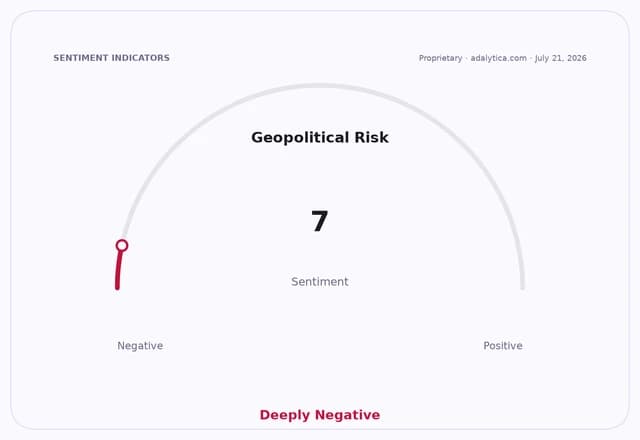
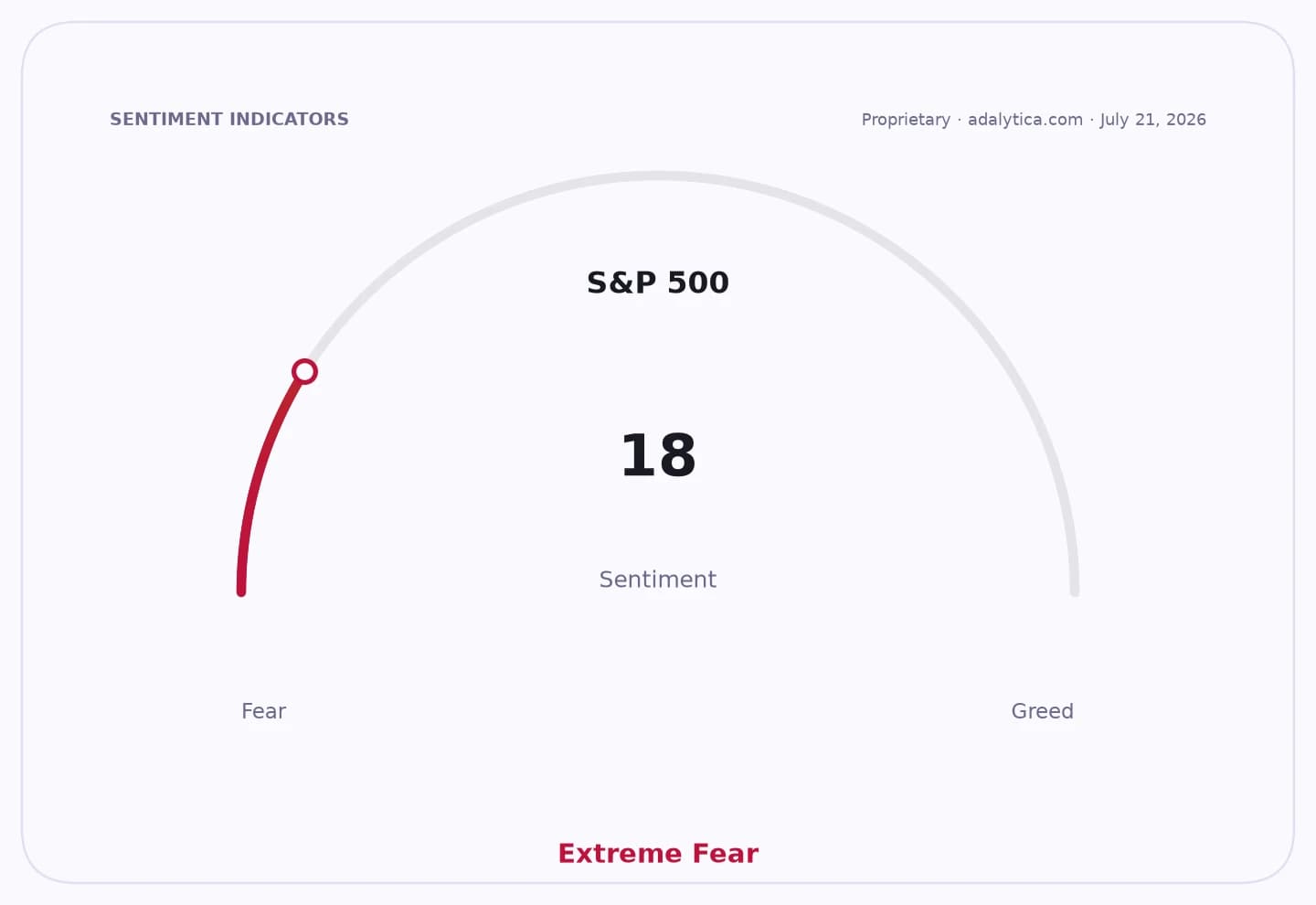
Investors are already showing signs of caution. Adalytica’s S&P 500 Trade Signals snapshot shows sentiment at 18, labeled “Fear,” down 59 points over 30 days, while the global stability gauge sits at 7, or “Extreme Fear.” That kind of risk-off tone usually favors markets with cheaper valuations and more cyclical upside than the U.S. has offered for much of the year.
Germany is the clearer beneficiary in that setup. The DAX has held near 43.75, just above its 50-day moving average of 44.32 and slightly over its 200-day average of 44.04, suggesting a market that is consolidating rather than breaking down. The iShares MSCI Germany ETF, EWG, has also stayed relatively resilient at 40.87 versus a 50-day moving average of 41.59 and a 200-day of 41.18, giving investors a liquid way to express a rotation away from expensive U.S. growth names.
The macro case for that trade is straightforward: Europe’s largest economy is less exposed than the U.S. to some of the valuation pressure created by lofty tech multiples, while any stabilization in global growth or easing in inflation could support German cyclicals. U.S. inflation, measured by the CPI series, remains far above pre-pandemic levels, with the latest reading at 332.568 and a forecast for 335.512, reinforcing the idea that the Federal Reserve is unlikely to deliver a quick return to ultra-easy money.
For investors, the message is less about one hot trade than about regime shift. If rates stay near current levels and fear persists in U.S. stocks, capital is more likely to migrate toward cheaper European equities, particularly Germany, while the S&P 500 may struggle to sustain leadership without another leg lower in yields.
The next catalyst is whether U.S. bond yields retreat further or stay stubbornly high; if they do not, the banker’s warning on Wall Street looks more like an early warning than an outlier.
| Entity | Gains | Losses |
|---|---|---|
| German equities / DAX | ▲Cheaper valuations attract rotation | ▼Smaller upside if global risk appetite returns |
| EWG ETF holders | ▲Liquid exposure to Germany trade | ▼Exposure to Europe-specific slowdown |
| U.S. stocks / SPY | ▲None if rates fall | ▼Higher discount rates, valuation pressure |
| Treasury bulls | ▲Capital gains if yields ease | ▼Losses if yields stay near 4.5% |