Banks have raised mortgage prices again, extending a six-month climb that is tightening affordability for homebuyers and keeping U.S. housing activity under pressure.
Banks Raise Mortgage Rates Again as Costs Stay High
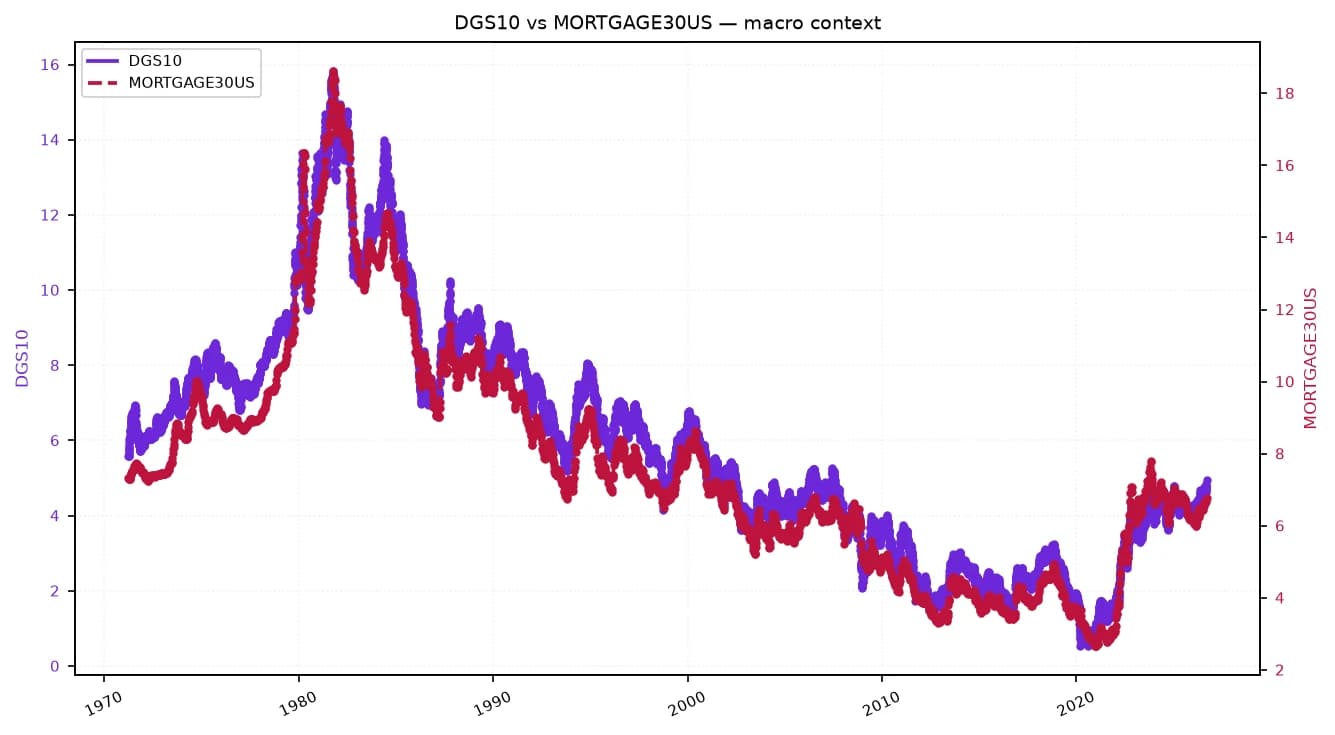
In September, several lenders lifted fixed mortgage rates by 0.2 to 0.4 percentage point, underscoring how little room there is for broad-based discounting while banks’ funding costs remain elevated. The average 30-year fixed mortgage rate in the U.S. rose to 6.71%, the highest since July last year, according to the data provided, while the benchmark 10-year Treasury yield was around 4.8%, reflecting a still-sticky level for long-term borrowing costs.
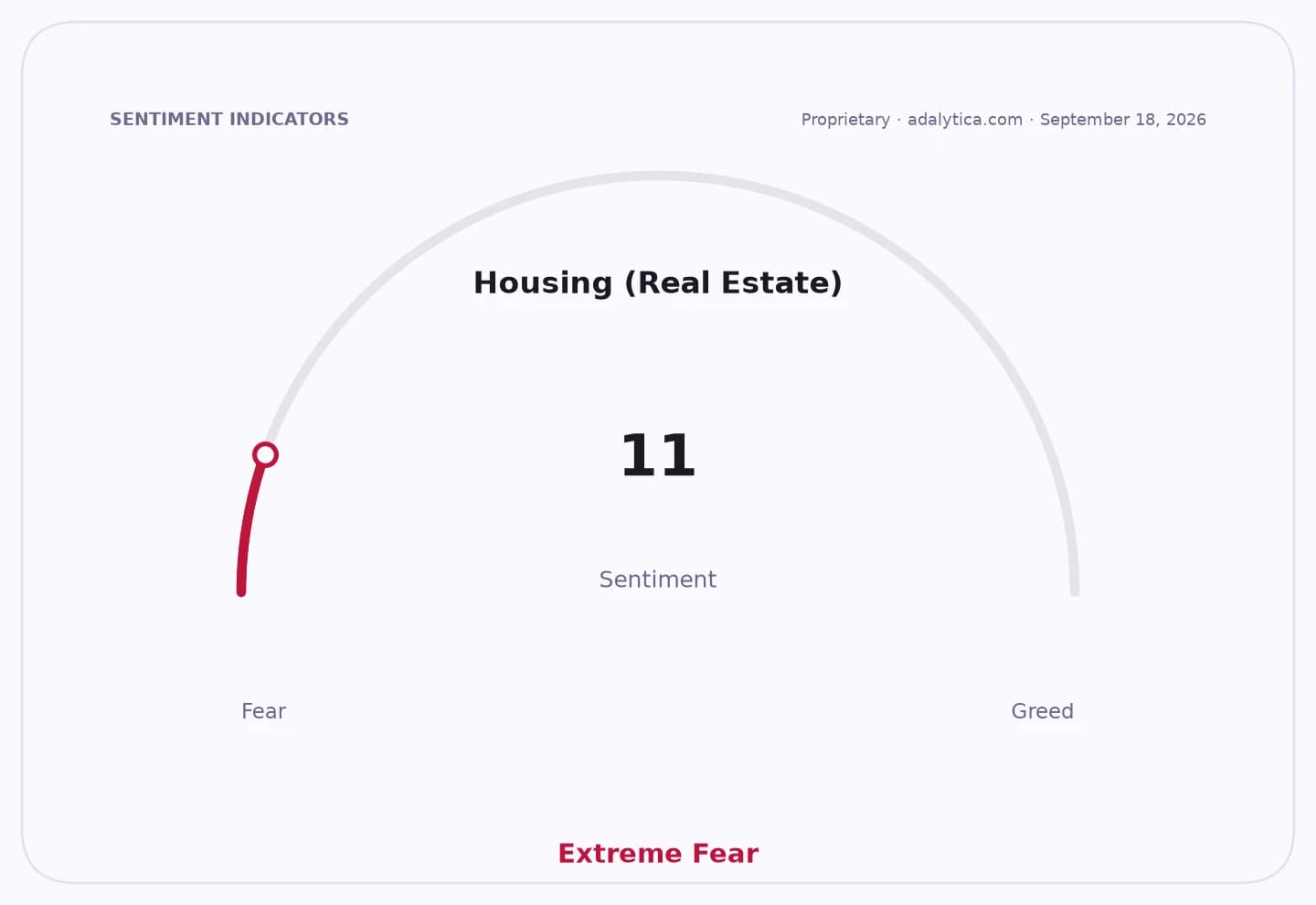
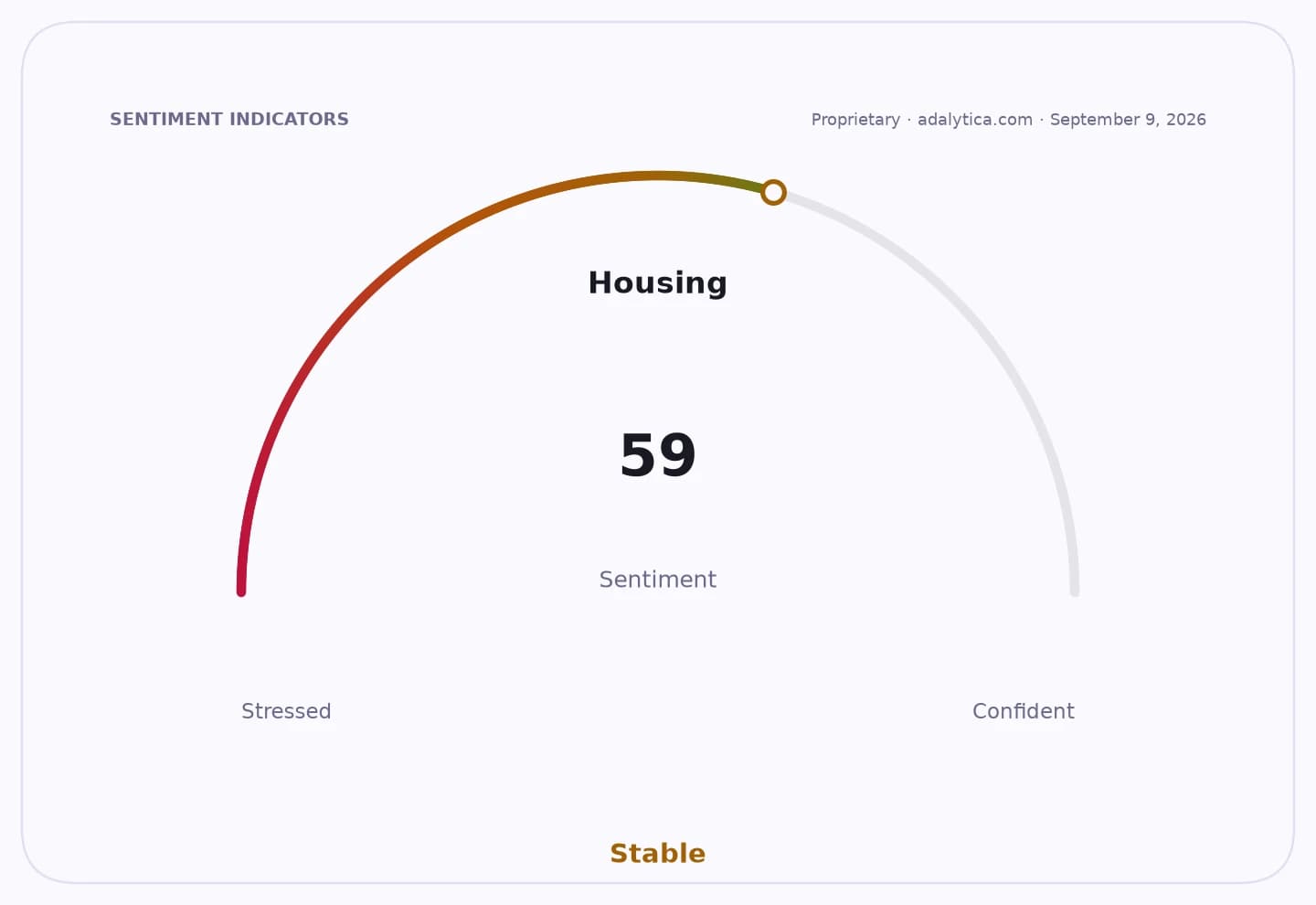
Sentiment IndicatorsⓘProprietary · adalytica.com · September 9, 2026
This is a snapshot — live sentiment, awareness and momentum for 130+ markets update continuously in the dashboard.Open AlphaPulse
The economic significance is straightforward: higher mortgage rates raise monthly payments, reduce purchasing power and make it harder for households to move or buy their first home. In the Czech market cited in the source article, a model mortgage of 3.5 million koruna over 25 years carried a monthly payment of about 21,520 koruna in September, up 1,280 koruna since banks began repricing in March. That kind of increase can quickly disqualify marginal buyers, especially in markets where wages are not keeping pace with financing costs.
The current round of repricing is being driven less by bank policy choices than by the underlying cost of money between lenders. Interest-rate swaps — the price banks pay to hedge or fund long-term loans — have climbed on fears of higher inflation, a concern reignited by the escalation in tensions between the U.S. and Iran and the accompanying rise in oil prices. That linkage matters because mortgage pricing usually tracks swap markets closely; if swaps stay high, lenders cannot easily cut rates without sacrificing margin.
DGS10 vs MORTGAGE30US — macro contextadalytica.com
Explore this data interactively — full history, time series and cross-market comparisons.Open AlphaPulse
For investors, the story reaches beyond housing demand. Lenders with large mortgage books face a trade-off between preserving margins and defending market share, while homebuilders, brokers and mortgage originators are exposed to weaker volume if demand cools further. The pricing backdrop also tends to support banks’ lending profitability in other segments, such as corporate credit, but it can deepen the slump in housing turnover and refinance activity.
There is some seasonal relief potential. Banks typically compete harder for clients in the autumn, and analysts quoted in the source said borrowers may still be able to negotiate individualized discounts. But that is a narrow, lender-by-lender contest, not a broad easing cycle. If swap costs and inflation expectations remain elevated, meaningful rate relief looks unlikely in the near term.
The key question now is whether the latest rise in oil-driven inflation fears proves temporary or becomes embedded in longer-dated funding markets. If the pressure persists, mortgage rates could stay near current highs or move higher still, prolonging the squeeze on housing affordability into next year.
| Entity | Gains | Losses |
|---|---|---|
| Banks | ▲Wider lending margins | ▼Slower mortgage demand |
| Homebuyers | ▲Potential autumn discounts | ▼Higher monthly payments |
| Homebuilders | ▲Limited benefit from rate competition | ▼Weaker affordability and sales |
| Borrowers with existing housing plans | ▲Some negotiating leverage | ▼Delayed purchases or refinancing |