Belarusian President Alexander Lukashenko said Western sanctions have failed to break Belarus or Russia, underscoring how the two economies are adapting through deeper industrial integration and trade with partner states.
Belarus Says Sanctions Failed as Trade Shifts East
The message matters because sanctions are no longer just a diplomatic tool — they are reshaping supply chains, capital flows and commodity markets. Lukashenko’s remarks in Minsk, alongside a Russian-heavy industrial showcase, are meant to prove that the region is building a parallel economic system with enough scale to keep factories running, even as the West tries to isolate Moscow and Minsk.
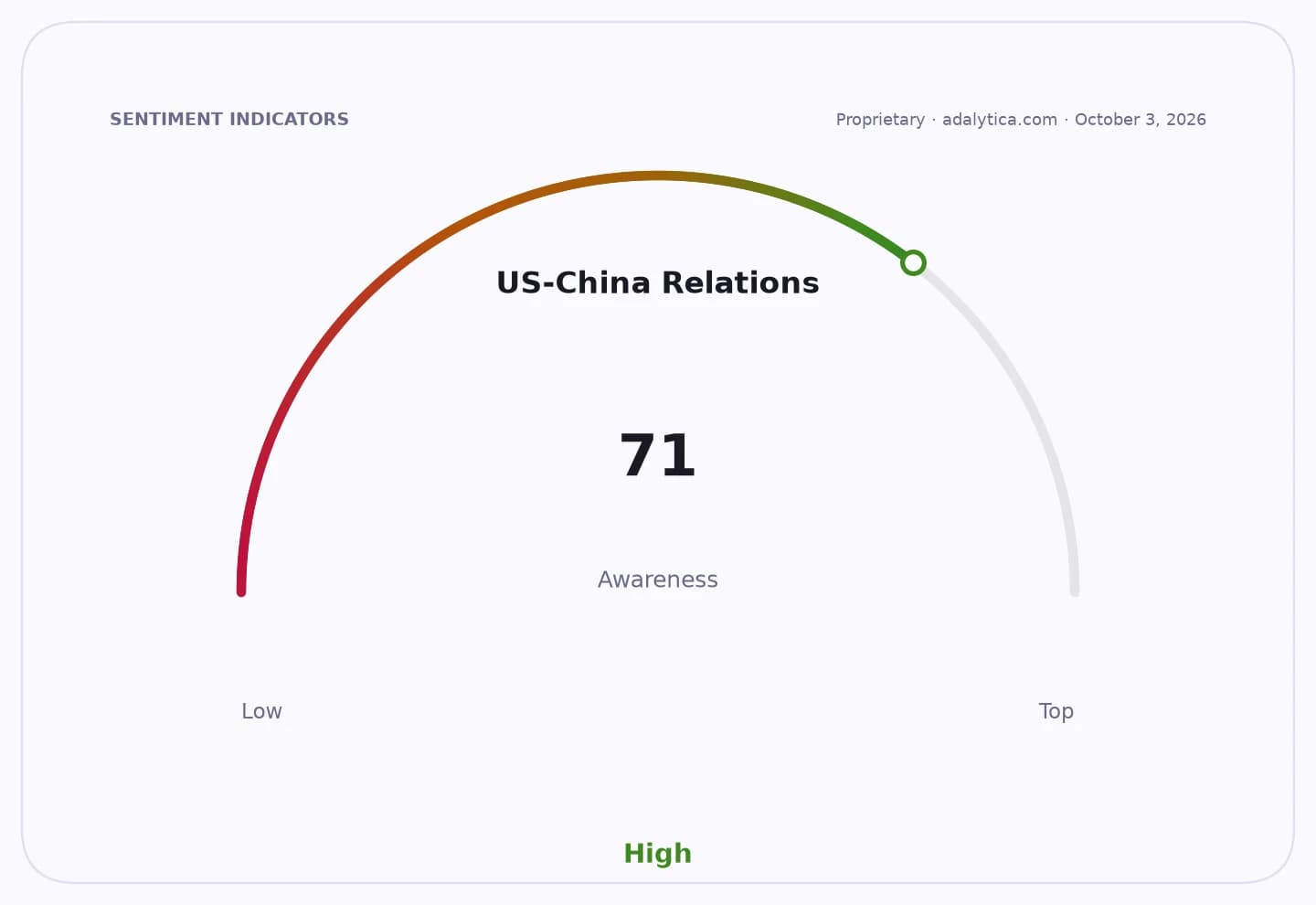
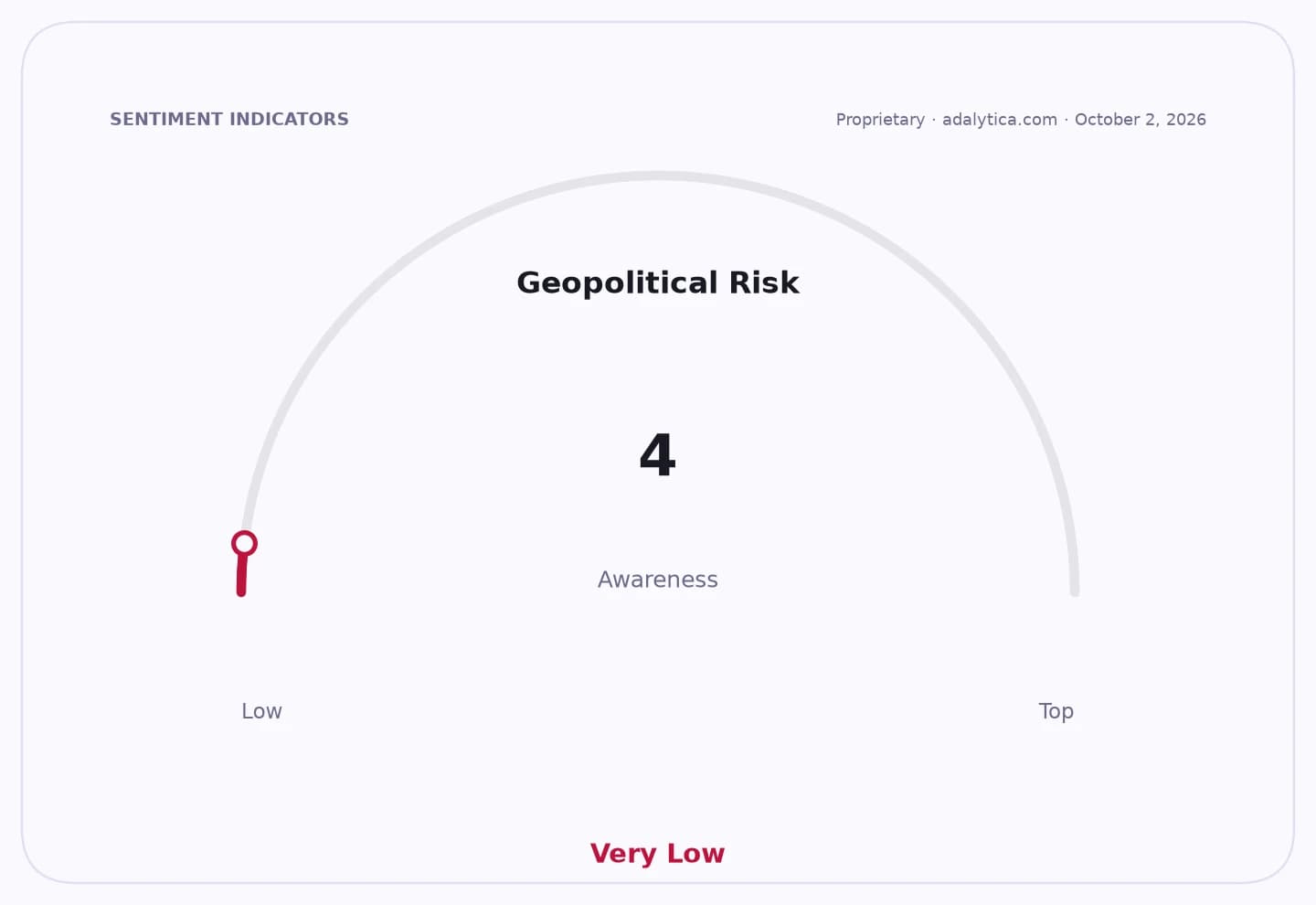
Sentiment IndicatorsⓘProprietary · adalytica.com · October 2, 2026
This is a snapshot — live sentiment, awareness and momentum for 130+ markets update continuously in the dashboard.Open AlphaPulse
His example was telling: about half the products on display at the “Innoprom. Belarus” exhibition this week were made with Russian components, including metal, parts and assemblies bought in Russia and other partner countries. That is more than political theater. It points to an industrial base that is becoming increasingly self-reinforcing, with technology on one side and resources on the other. For investors, the implication is that sanctions pressure can redirect demand rather than destroy it, benefiting alternative trade corridors, domestic manufacturers and commodity-linked suppliers outside the Western bloc.
That dynamic also helps explain why oil and gold remain core geopolitical hedges. Brent-linked BNO has been volatile but firm enough to reflect persistent war-risk pricing, while gold demand remains supported by what Adalytica’s Global Stability Sentiment flags as extreme greed in risk assets and extreme fear in gold — a classic sign that markets are still underpricing tail risk. In other words, the market may be assuming adaptation is the same as normalization. It is not.
The bigger investment lesson is that sanctions create winners and losers, but rarely in a straight line. Russia and Belarus can keep parts of their industrial machine going, yet they do so by leaning harder on domestic production, friendly suppliers and wartime substitution. That is bullish for select energy, metals, freight and defense-adjacent names in non-Western supply chains, and bearish for firms still exposed to lost Western access, financing and technology.
Lukashenko’s claim that the West “cried” because sanctions did not work may be political boasting, but it captures a real market shift: the sanction wall is turning into a rerouted trade map. The best opportunity now is to position where that rerouting creates durable pricing power — energy, commodities, defense and the infrastructure that connects them — rather than assume the old economic order will snap back.
| Entity | Gains | Losses |
|---|---|---|
| Belarus, Russia | ▲Industrial substitution | ▼Western pressure campaign |
| Non-Western suppliers | ▲New demand channels | ▼European market share |
| Oil and gold | ▲Geopolitical bid | ▼Risk-on complacency |
| Western exporters | ▲Sanctions leverage weakens | ▼Direct access to Russia, Belarus |