Artificial intelligence spending is forcing even the most profitable U.S. technology companies to tap debt markets at a time when Treasury yields are near 4.8%, raising the cost of financing the next wave of data centers, servers and network buildouts.
Big Tech AI spending faces higher borrowing costs

That matters because the AI race is no longer being funded mostly from cash flow. The biggest spenders — including Alphabet, Microsoft, Amazon and Meta — are committing tens of billions of dollars to infrastructure and, in some cases, adding debt to keep pace, turning what began as a software-driven boom into a balance-sheet story.
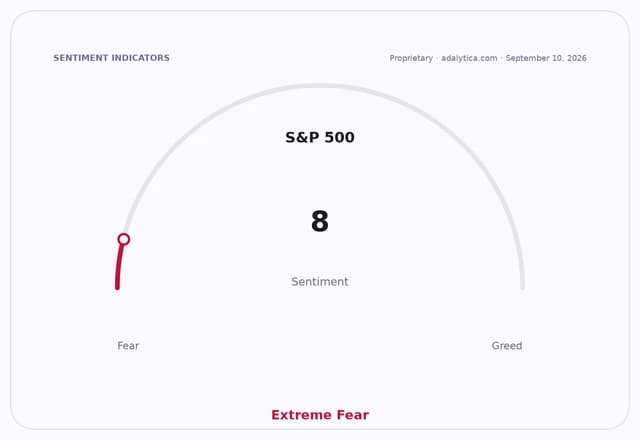
Sentiment IndicatorsⓘProprietary · adalytica.com · September 10, 2026
This is a snapshot — live sentiment, awareness and momentum for 130+ markets update continuously in the dashboard.Open AlphaPulse

The 10-year Treasury yield was 4.83% on Sept. 9 and was forecast at 4.827% on Sept. 10, keeping corporate borrowing costs elevated. The high-yield credit spread sat at 2.71 percentage points, while U.S. investment-grade bond ETF LQD fell to 104.36 and high-yield ETF HYG slipped to 78.62, signaling investors are pricing in a more expensive funding backdrop even as the AI trade stays intact.
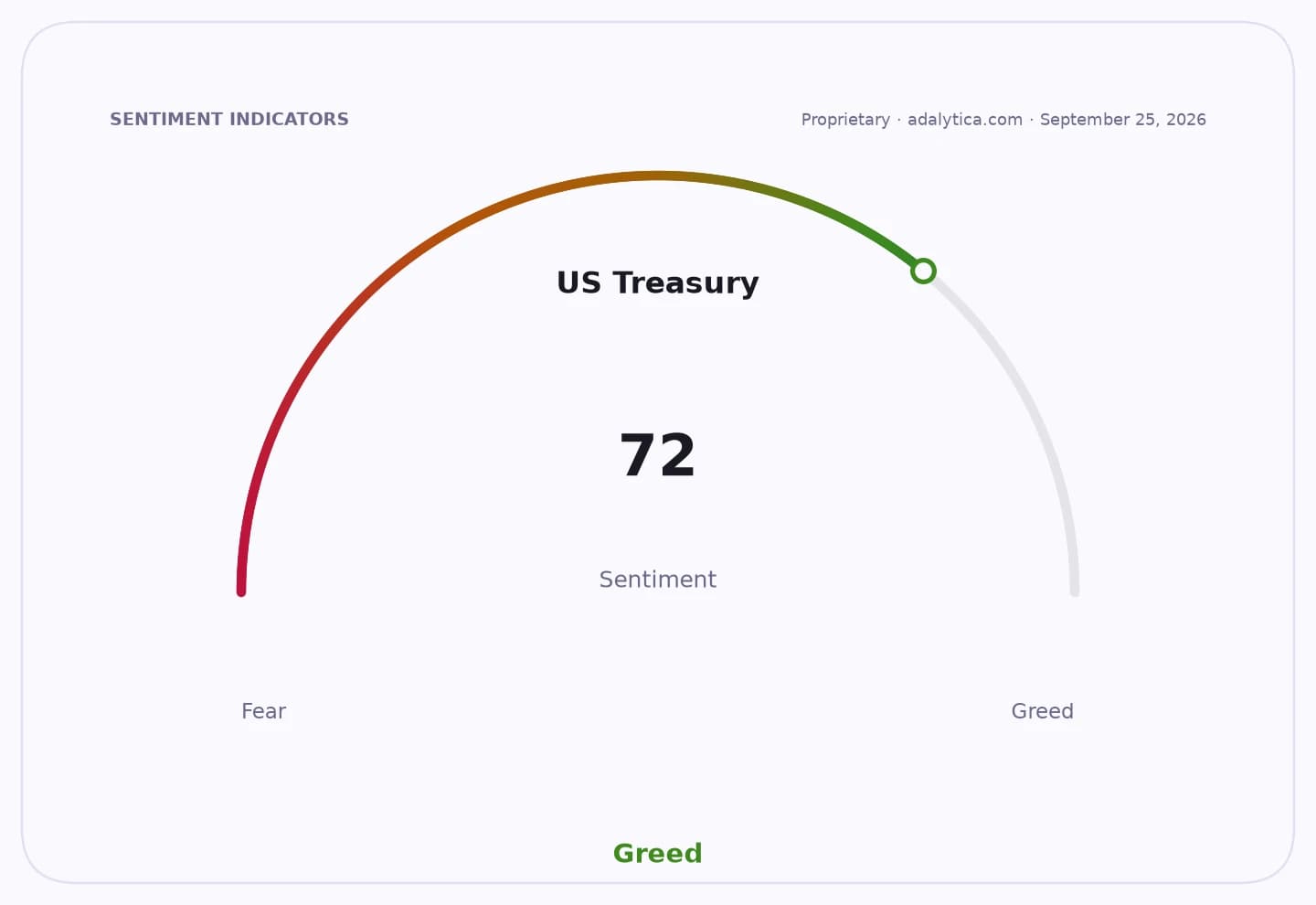
That pressure is showing up across the market. The S&P 500, according to Adalytica.com trade signals, is in “Extreme Fear,” while U.S. Treasury bonds show “Extreme Greed,” a combination that suggests investors are leaning toward safety as they assess whether AI capex can keep scaling without squeezing margins and cash generation.
DGS10 vs BAMLH0A0HYM2 — macro contextadalytica.com
Explore this data interactively — full history, time series and cross-market comparisons.Open AlphaPulse
For the sector, the issue is not demand. AI infrastructure remains one of the biggest capital-allocation priorities in U.S. markets, but the funding model is changing as borrowing costs remain well above the near-zero-rate era that helped power the last decade’s tech expansion. More debt means more fixed obligations, and that raises the bar for returns on every new data center and chip deployment.
The risk is broader than one industry. Higher debt issuance from cash-rich tech leaders helps tighten financial conditions at the margin, especially if the buildout continues to spill into suppliers, utilities and data-center developers. It also adds another layer of vulnerability if AI monetization slows or if bond yields stay elevated.
Investors will be watching whether megacap tech firms rely more on debt, how quickly capex grows, and whether the yield backdrop eases enough to keep the AI expansion from becoming a margin problem as well as a growth story.
| Entity | Gains | Losses |
|---|---|---|
| Big Tech AI spenders | ▲More compute capacity | ▼Higher financing costs |
| Bond investors | ▲More issuance supply | ▼Credit risk if returns lag |
| Treasuries | ▲Demand from safety buyers | ▼Higher yields pressure prices |
| AI hardware/data-center suppliers | ▲More capex demand | ▼Risk of slower spending if debt gets costly |