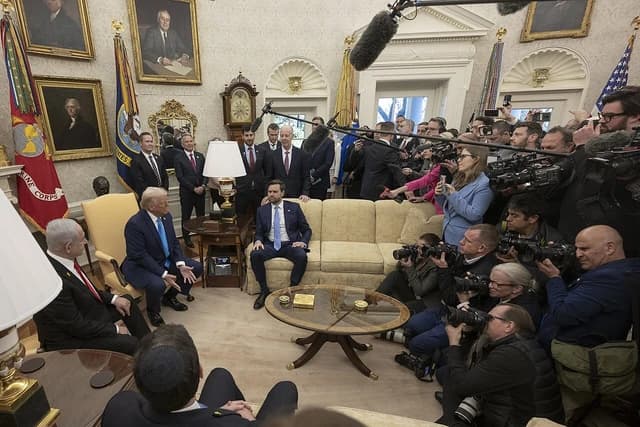
Bitcoin and Dogecoin edged higher while Ethereum and XRP slipped after President Donald Trump issued his latest warning to Iran, giving crypto traders a fresh geopolitical catalyst even as the market remains far from a clear reversal.
Bitcoin at $63,806 after Trump Iran warning

The move shows how quickly digital assets can still trade as a risk barometer when headlines inject uncertainty into global markets. But the split performance also underscores that the recent bounce in bitcoin is not yet convincing enough to establish a durable low, especially with the token still trading below its 200-day moving average and its MACD line still below the signal line.
Bitcoin was last around $63,806, up from $62,763 on Aug. 1, while Dogecoin held near $0.07. Ethereum traded at $1,866 and XRP fell in step with the broader altcoin lag, reflecting a market that is willing to buy selective upside on safe-haven-style narratives without fully embracing a sustained crypto recovery.
The macro backdrop remains mixed. The 10-year US Treasury yield has climbed to about 4.75%, near the highest levels in years, while West Texas Intermediate crude has hovered in the high $80s a barrel after a volatile run. Higher yields typically pressure speculative assets by lifting the opportunity cost of holding them, while firmer oil prices can feed inflation expectations and keep the Federal Reserve cautious. That combination is not ideal for a broad risk rally.
Bitcoin’s technical picture reflects that uncertainty. At current levels, it is only slightly above its 50-day moving average of about $63,313, but still well below the 200-day average near $70,966. RSI readings in the low-40s suggest the market is no longer oversold, yet not strong enough to confirm a trend change. For traders, that means the latest geopolitical bounce may be more a short-covering move than the start of a lasting uptrend.
Ethereum’s softer tone is more telling for crypto strategists. The asset has generally been more sensitive than bitcoin to shifts in liquidity and speculative appetite, and its failure to keep pace suggests investors are still favoring the sector’s highest-beta names only selectively. Dogecoin’s steadiness fits the same pattern: meme-coins can rally on headline-driven sentiment, but they remain highly vulnerable if the broader market turns defensive again.
That is why the analyst warning that bitcoin’s bottom is not yet confirmed matters. A real floor would usually be accompanied by stronger volume, improving momentum, and a reclaiming of long-term trend indicators. Instead, the market is reacting to outside shocks in a way that looks tactical rather than structural.
For investors, the next tests are whether Iran-related headlines intensify, whether oil stays elevated, and whether bitcoin can hold above near-term support around its 50-day average. If it cannot, the rally risks fading back into the wider downtrend. If it does, the current split between bitcoin and the altcoins could be the first sign that capital is rotating back into the most liquid crypto asset before confidence returns to the rest of the market.
| Entity | Gains | Losses |
|---|---|---|
| Bitcoin holders | ▲Geopolitical bid | ▼Confirmation of bottom |
| Dogecoin traders | ▲Risk-on momentum | ▼Sustained conviction |
| Ethereum holders | ▲— | ▼Relative underperformance |
| XRP holders | ▲— | ▼Altcoin weakness |